4/4/2026Why Skilled Riveting Still Matters in Turbine Blade Assembly
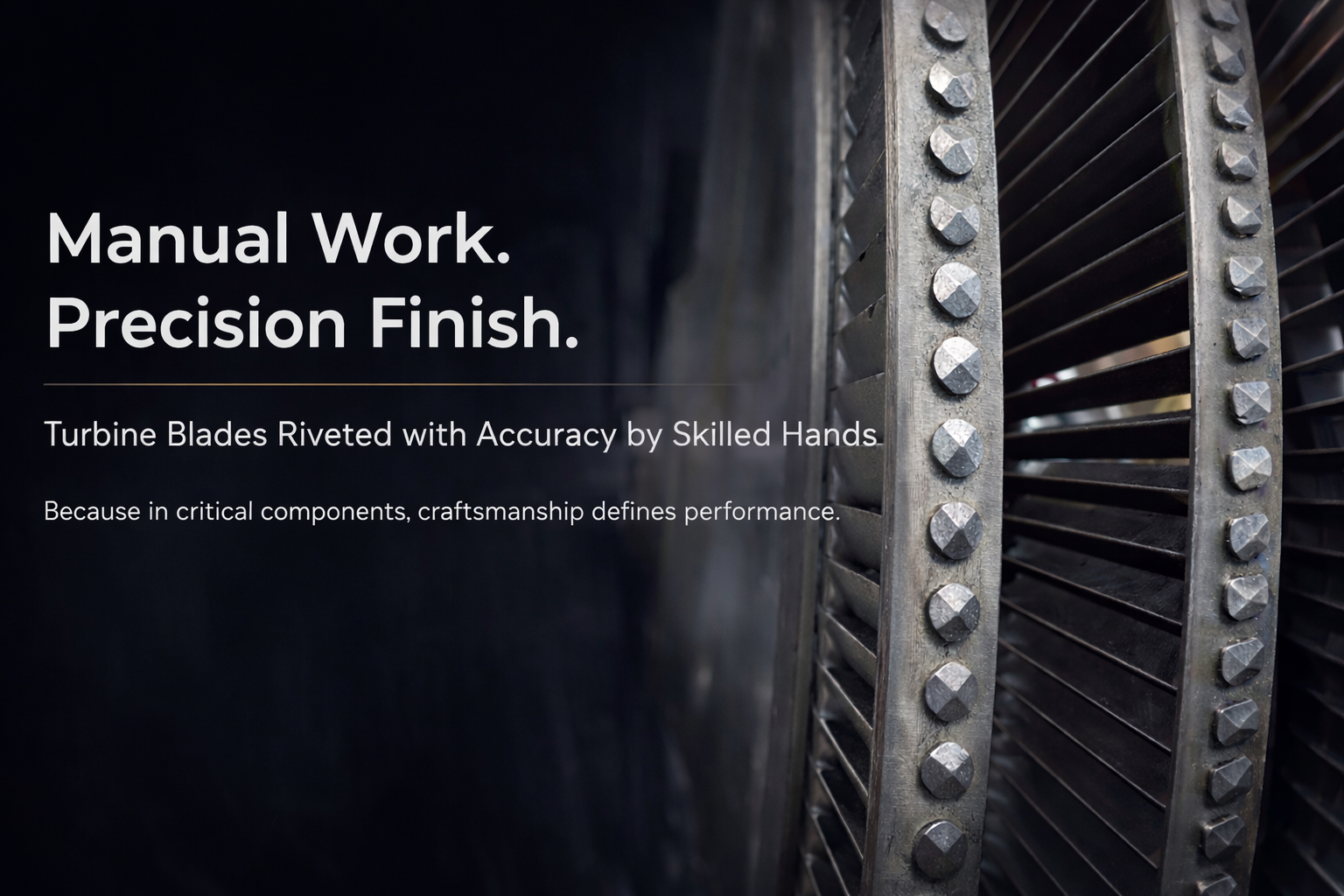
In an era driven by automation, there are still areas in heavy engineering where human skill remains irreplaceable. One such critical process is the manual riveting of turbine blades—a task where precision, experience, and craftsmanship directly influence performance and reliability.The Role of Turbine Blades in PerformanceTurbine blades are not just components—they are the core of energy conversion in steam turbines. Operating under extreme conditions of:High temperatureHigh pressureContinuous rotational stressEven the smallest imperfection in blade assembly can lead to:Efficiency lossesVibration issuesLong-term structural damageWhy Manual Riveting Still MattersWhile automated systems dominate modern manufacturing, manual riveting continues to play a vital role in turbine blade assembly for several reasons:1. Precision Beyond MachinesExperienced technicians can detect subtle variations that machines might overlook. This includes:Micro-alignment adjustmentsSurface feel and fit accuracyReal-time correction during assembly2. Adaptability in Complex SituationsNo two repair or maintenance scenarios are exactly the same. Manual work allows:Custom fitting during retrofitsAdjustments in worn or aged componentsHandling non-standard geometries3. Controlled Force ApplicationRiveting requires exact pressure control. Skilled hands ensure:No over-tightening (which can cause stress cracks)No under-tightening (which can lead to loosening during operation)Where Skill Makes the DifferenceIn critical industries like power generation, small details define long-term success.Manual turbine blade riveting ensures:Enhanced structural integrityReduced maintenance frequencyImproved operational safetyIt’s not just about assembling parts—it’s about ensuring reliability under extreme conditions.The Human Factor in Industrial ExcellenceBehind every perfectly assembled turbine lies the expertise of professionals who understand the material, the machinery, and the margin for error.Their contribution brings:Consistency in high-stakes environmentsCraftsmanship built over years of experienceConfidence in system performanceFinal ThoughtsAutomation improves speed—but precision craftsmanship ensures perfection.In turbine blade assembly, manual riveting stands as a reminder that:Technology may lead the process, but human expertise perfects it.
Read Article
.webp)
.webp)
















.jpg)
.jpg)