8/24/2026
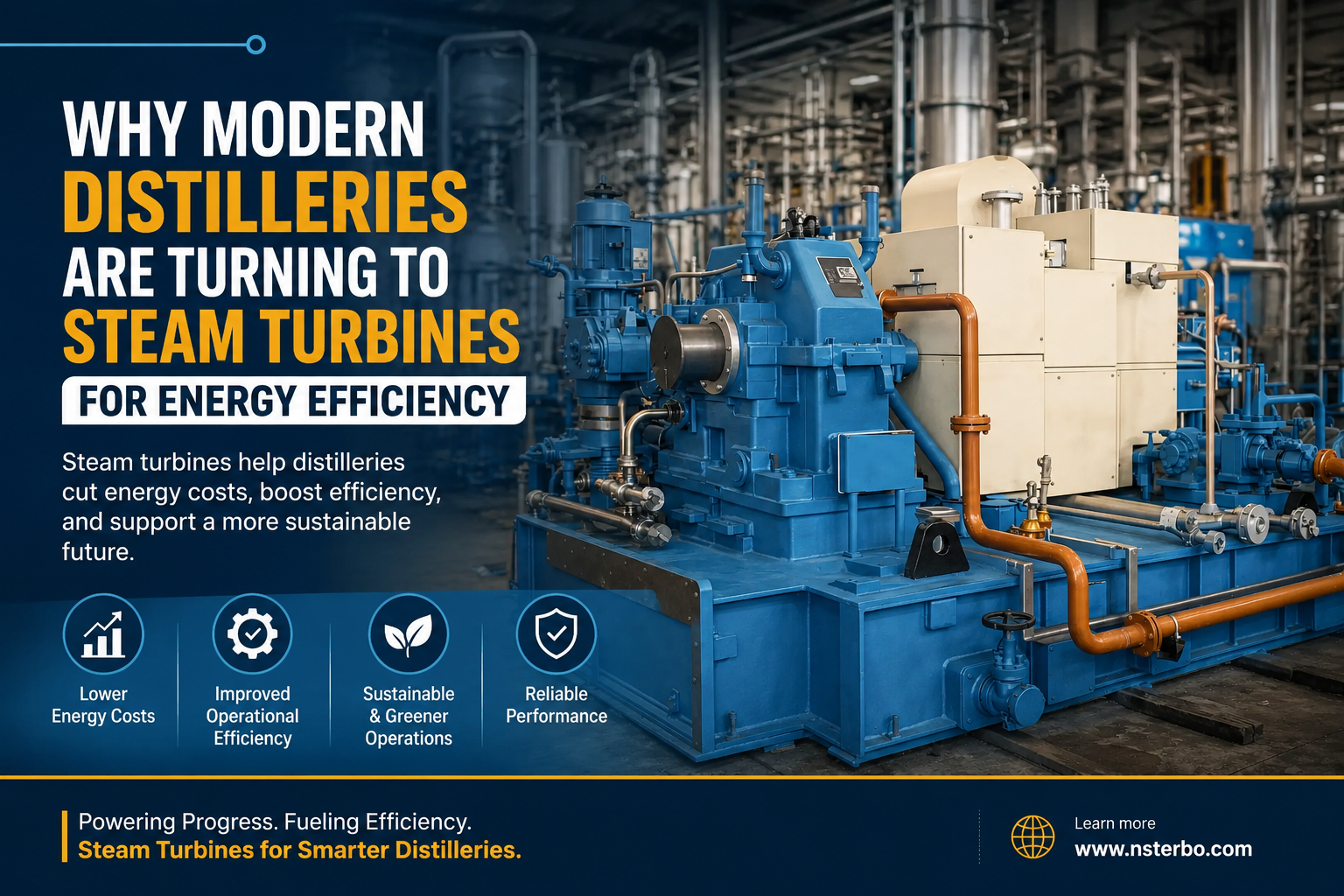
Why Modern Distilleries Are Turning to Steam Turbines for Energy Efficiency
Discover how a distillery steam turbine improves energy efficiency, generates power, and optimizes process steam utilization in modern distillery plants.
Modern distilleries are under increasing pressure to reduce energy costs, improve plant efficiency, and make better use of available resources. One technology helping distilleries achieve these goals is the distillery steam turbine.
Distillery plants generate and consume significant amounts of steam during processes such as fermentation, distillation, evaporation, and drying. Instead of allowing high-pressure steam to be reduced through conventional pressure-reducing systems, a steam turbine can utilize that pressure difference to generate useful mechanical power or electricity.
This makes steam turbine power generation an attractive solution for distilleries looking to improve energy utilization while reducing dependence on external power.
What Is a Distillery Steam Turbine?
A distillery steam turbine is a turbine system designed to convert the thermal and pressure energy of steam into mechanical energy. When connected to an electrical generator, the mechanical energy can be converted into electricity for use within the distillery.
Depending on the plant's steam requirements, a distillery may use a back-pressure, extraction, or condensing steam turbine configuration.
In many applications, a back pressure steam turbine for distillery operations is particularly useful because the exhaust steam can continue to be used for process heating.
This creates an efficient combined approach:
High-Pressure Steam → Steam Turbine → Power Generation → Process Steam
Instead of treating steam only as a heating medium, the plant can extract additional value from it.
Why Is Energy Efficiency Important for Distilleries?
Energy is one of the major operating considerations in distillery and ethanol production facilities. Steam is required across multiple stages of production, while electricity is needed for pumps, motors, conveyors, control systems, cooling systems, and other equipment.
When electricity and steam are generated and consumed separately, there can be opportunities for energy losses.
A properly designed distillery steam turbine system can help integrate steam and power requirements more efficiently.
The objective is not simply to generate electricity. The larger goal is to optimize the overall energy balance of the plant.
How Does a Steam Turbine Improve Distillery Energy Efficiency?
1. Converts Steam Pressure into Useful Power
High-pressure steam contains significant energy. A steam turbine allows the plant to utilize part of this energy before the steam reaches downstream process equipment.
The turbine converts pressure and thermal energy into rotational power, which can then drive a generator.
This makes steam turbine energy efficiency an important consideration when designing an integrated distillery power system.
2. Supports On-Site Power Generation
Distilleries require electricity throughout their operations.
With an appropriately sized turbine-generator system, part of the plant's electricity requirement can be produced internally.
Distillery power generation can therefore reduce reliance on external electricity sources and provide greater control over energy consumption.
The actual power output depends on factors such as:
Steam flow rate
Inlet steam pressure
Inlet steam temperature
Exhaust pressure
Turbine efficiency
Operating conditions
Generator configuration
A detailed steam and energy balance should therefore be performed before selecting the turbine.
3. Makes Better Use of Process Steam
One of the biggest advantages of a well-designed system is that the steam leaving the turbine can potentially remain useful for the process.
For example, a back-pressure turbine can reduce steam pressure while generating power. The lower-pressure exhaust steam can then be supplied to process applications that require it.
This is why a steam turbine for distillery plant applications can provide both power generation and useful process steam.
4. Reduces Energy Wastage
Traditional pressure reduction arrangements can reduce steam pressure without recovering the available pressure energy as mechanical power.
A turbine can perform the pressure reduction while simultaneously extracting useful energy.
This approach can improve overall distillery energy efficiency, provided the turbine is properly matched to the plant's steam demand.
Steam Turbine for Ethanol Plant Applications
Ethanol plants are among the important applications for steam turbine technology because steam plays a central role in the production process.
A steam turbine for ethanol plant operations can be integrated with the plant's boiler and process steam network.
Depending on the configuration, generated electricity may be used for:
Pumps
Motors
Feed systems
Cooling equipment
Conveyors
Material handling systems
Auxiliary equipment
Plant lighting and control systems
The turbine system can therefore become an important component of an integrated ethanol plant steam turbine setup.
Back Pressure Steam Turbine for Distillery Operations
A back pressure steam turbine for distillery applications is designed to exhaust steam at a pressure suitable for downstream process requirements.
This configuration can be especially useful when a distillery has a continuous requirement for low- or medium-pressure process steam.
The turbine generates power while reducing the steam pressure required by the process.
This creates a form of cogeneration where both electricity and useful heat are produced from the same steam source.
Simplified Process
Boiler → High-Pressure Steam → Steam Turbine → Electricity
Steam Turbine Exhaust → Process Steam → Distillery Operations
The correct exhaust pressure is critical because the downstream process must receive steam at the required conditions.
Distillery Cogeneration System: A More Integrated Approach
A distillery cogeneration system combines thermal and electrical energy production.
Instead of viewing electricity and steam as two separate requirements, cogeneration considers them as interconnected energy streams.
A typical system may include:
Boiler
Steam turbine
Generator
Condenser or process steam network
Pumps
Cooling system
Steam and condensate handling equipment
Electrical control and protection systems
The exact arrangement depends on the plant's capacity, steam conditions, process requirements, and operating philosophy.
Key Benefits of Steam Turbine Power Generation in Distilleries
Implementing steam turbine power generation can provide several potential benefits.
Improved Energy Utilization
The turbine recovers useful energy from steam pressure that would otherwise be reduced without power generation.
On-Site Electricity Generation
Electricity produced by the turbine-generator can support internal plant loads.
Better Steam Utilization
In suitable configurations, exhaust steam can continue to serve process heating requirements.
Reduced Dependence on Grid Power
Generating part of the plant's electricity internally can reduce dependence on external electricity.
Improved Overall Plant Efficiency
A properly engineered system can optimize the relationship between steam generation, power production, and process steam consumption.
Potential Operating Cost Reduction
Better utilization of available steam can contribute to lower overall energy costs, depending on the plant's operating conditions and energy tariffs.
How to Select the Right Steam Turbine for a Distillery
Selecting a turbine should not be based only on the desired electrical output.
A proper engineering assessment should consider the complete steam system.
Important parameters include:
Steam Flow:
What is the normal, minimum, and maximum steam flow?
Inlet Pressure:
What pressure is available at the turbine inlet?
Inlet Temperature:
What is the available steam temperature?
Exhaust Pressure:
What pressure is required by downstream process equipment?
Power Requirement:
How much electricity does the plant need to generate?
Operating Hours:
How many hours per year will the turbine operate?
Steam Variation:
Does the steam demand remain constant or fluctuate significantly?
Process Requirement:
How much steam must remain available after turbine expansion?
These factors determine whether a back-pressure, extraction, condensing, or other turbine configuration is appropriate.
Why Proper Turbine Sizing Matters
Oversizing or undersizing a turbine can affect system performance.
An oversized turbine may operate away from its optimum operating range when steam demand is low. An undersized turbine may fail to utilize the available steam energy effectively during high-load operation.
Therefore, turbine selection should be based on actual operating data rather than only the boiler's maximum capacity.
A detailed steam balance covering different operating conditions can help determine the appropriate turbine capacity.
Steam Turbine Energy Efficiency: What Should Be Monitored?
After installation, performance monitoring is essential.
Important parameters include:
Steam inlet pressure
Steam inlet temperature
Steam flow
Exhaust pressure
Turbine speed
Generator output
Steam consumption per kWh
Vibration
Bearing temperature
Turbine efficiency
Generator efficiency
Regular monitoring helps identify performance deviations and allows maintenance teams to take corrective action before small issues become major problems.
Maintenance of a Distillery Steam Turbine System
A steam turbine operates under high temperature, pressure, and rotational conditions. Regular maintenance is therefore essential for reliable operation.
Maintenance programs may include:
Lubrication system inspection
Bearing inspection
Vibration monitoring
Rotor inspection
Blade condition assessment
Steam leakage checks
Valve inspection
Gland sealing inspection
Coupling alignment
Generator inspection
Control system testing
Periodic inspection and planned steam turbine overhauling can also help maintain performance and reliability over the operating life of the equipment.
The Role of Steam Turbines in More Sustainable Distilleries
Energy efficiency is becoming increasingly important for industrial plants.
For distilleries, improving energy utilization can support both operational and sustainability objectives.
A properly engineered distillery steam turbine can help extract additional value from existing steam generation infrastructure without changing the fundamental production process.
Rather than viewing steam only as a process requirement, the plant can use it as an energy resource for combined power and heat utilization.
Conclusion
Modern distilleries need to continuously improve productivity while controlling energy consumption. A distillery steam turbine can play an important role by converting available steam energy into useful power while, in suitable configurations, continuing to provide process steam.
From distillery power generation to improved steam utilization, the technology can support a more integrated and efficient energy system.
For plants evaluating a steam turbine for distillery plant applications, the first step should be a detailed assessment of steam flow, pressure, temperature, process requirements, power demand, and operating conditions.
The right turbine is not simply the one that generates the most electricity—it is the one that delivers the best overall energy utilization for the distillery's actual process requirements.
Frequently Asked Questions
1. What is a distillery steam turbine?
A distillery steam turbine converts the energy of high-pressure steam into mechanical power, which can be used to generate electricity or drive equipment within the plant.
2. Why are steam turbines used in distilleries?
Steam turbines allow distilleries to recover useful energy from steam while supporting electricity generation and, in suitable configurations, supplying process steam.
3. Which steam turbine is commonly used in distilleries?
Back-pressure steam turbines are commonly considered where the turbine exhaust steam is required for downstream process heating. The appropriate configuration depends on the plant's steam balance.
4. Can a steam turbine generate electricity for an ethanol plant?
Yes. An appropriately designed ethanol plant steam turbine can be coupled with a generator to produce electricity for plant operations.
5. How can distilleries improve energy efficiency with steam turbines?
By optimizing steam pressure, flow, turbine capacity, exhaust conditions, and process steam requirements, a distillery can recover more useful energy from its existing steam system.