8/29/2026
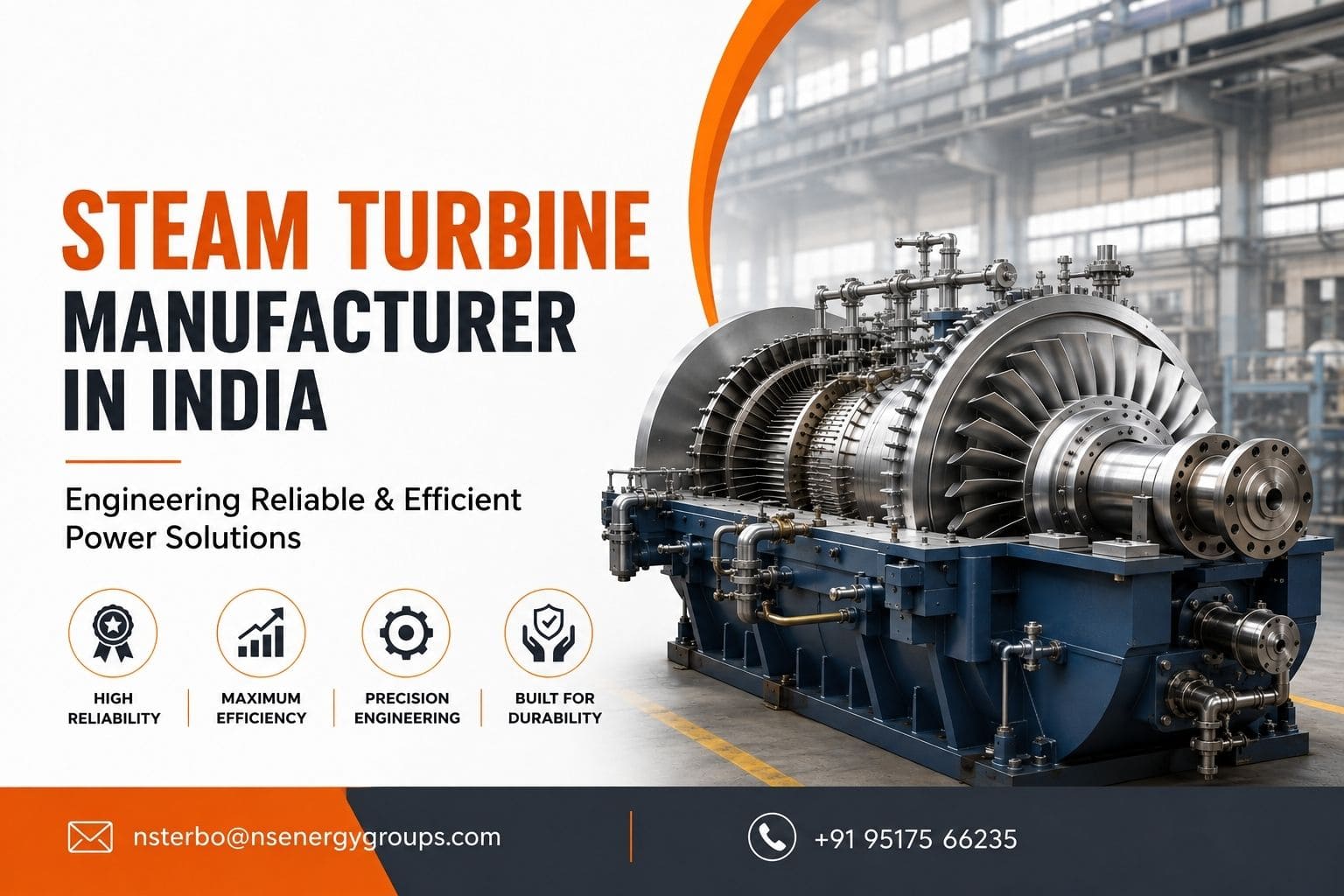
Steam Turbine Manufacturer in India: Engineering Reliable & Efficient Power Solutions
Discover a reliable steam turbine manufacturer in India offering efficient, durable, and customized steam turbine solutions for industrial applications.
Industries today are under increasing pressure to improve energy efficiency, reduce operating costs, and make better use of available resources. For industries that generate or consume large quantities of steam, a well-designed steam turbine system can convert process steam into valuable mechanical or electrical power.
Choosing the right Steam Turbine Manufacturer in India is therefore an important decision. The manufacturer you select can directly influence turbine efficiency, equipment reliability, maintenance requirements, and long-term operating performance.
India has developed strong capabilities in industrial steam turbine manufacturing, offering solutions for applications ranging from sugar and distillery plants to biomass power plants, paper mills, chemical industries, and other process industries.
What Is a Steam Turbine?
A steam turbine is a rotary machine that converts the energy of high-pressure steam into mechanical energy. Steam enters the turbine at high pressure and temperature and expands through specially designed turbine stages. This expansion causes the turbine rotor to rotate.
The mechanical power produced by the turbine can be used in several ways. It can drive equipment such as pumps, compressors, fans, and generators. When connected to an electrical generator, the turbine can produce electricity for industrial use.
Modern steam turbines are designed to achieve efficient steam utilization while maintaining reliable operation under demanding industrial conditions.
Why Choosing the Right Steam Turbine Manufacturer in India Matters
A steam turbine is a long-term industrial investment. Simply selecting equipment based on capacity or price may not deliver the desired results.
A reliable Steam Turbine Manufacturer in India should understand the complete operating requirements of the plant, including:
Steam pressure and temperature
Steam flow rate
Inlet and exhaust conditions
Required power output
Operating load profile
Process steam requirements
Generator or driven-equipment specifications
Installation conditions
Maintenance requirements
A properly engineered turbine can help industries achieve better energy utilization, stable operation, and lower lifecycle costs.
Key Applications of Industrial Steam Turbines
Industrial steam turbines are used across multiple sectors where steam is available as part of the manufacturing or energy-generation process.
1. Sugar Industry
Sugar mills generate significant quantities of steam through their boilers and bagasse-fired systems. A steam turbine can utilize this steam to generate electricity while supporting the plant's process requirements.
In many sugar plants, turbine systems play an important role in cogeneration by producing both process steam and electrical power.
2. Distillery Plants
Distilleries require steam for various heating and processing operations. An appropriately designed turbine can help convert part of the available steam energy into useful power.
This makes steam turbines for distillery plants an important solution for improving overall energy utilization.
3. Biomass Power Plants
Biomass fuels such as agricultural residues can be used to generate high-pressure steam. The steam can then be expanded through a turbine to generate electricity.
For biomass power projects, turbine selection needs to consider steam conditions, operating profile, efficiency, and expected plant load.
4. Paper and Pulp Industry
Paper manufacturing requires substantial amounts of thermal energy and electricity. A steam turbine can help integrate power generation with the plant's existing steam network.
This approach can improve energy utilization and reduce dependence on externally purchased electricity.
5. Chemical and Process Industries
Chemical plants often operate complex steam networks for heating, drying, evaporation, and other processes. Steam turbines can be integrated into these systems to recover energy from available steam.
Depending on the application, turbines may be used for power generation or to directly drive mechanical equipment.
How Does a Steam Turbine Work?
The working principle of a steam turbine is based on the conversion of steam's thermal and pressure energy into rotational mechanical energy.
The basic process involves the following steps:
1. Steam Generation
A boiler or heat recovery system produces high-pressure steam.
2. Steam Admission
The high-pressure steam enters the turbine through the steam inlet system.
3. Steam Expansion
Steam passes through stationary nozzles or turbine stages, where its pressure and velocity change.
4. Rotor Rotation
The high-velocity steam acts on the turbine blades, causing the rotor to rotate.
5. Power Transmission
The rotating shaft transfers mechanical power to a generator or other driven equipment.
6. Exhaust Steam
After passing through the turbine stages, the exhaust steam can be directed toward a condenser or used for industrial process requirements, depending on the system configuration.
This efficient conversion process makes steam turbines suitable for a wide range of industrial applications.
Benefits of High-Efficiency Steam Turbine Systems
A properly engineered high efficiency steam turbine can offer several advantages.
Improved Energy Utilization
Instead of allowing useful steam energy to remain unused, a turbine can convert it into mechanical or electrical power.
Reduced Power Costs
Generating electricity internally can help reduce dependence on grid electricity, depending on the plant's operating conditions and energy requirements.
Better Process Integration
Steam turbines can be designed around the plant's existing steam requirements, making them suitable for cogeneration and process-steam applications.
Reliable Industrial Operation
Industrial turbines are designed to operate continuously under demanding conditions when properly selected, installed, operated, and maintained.
Long-Term Value
A well-designed turbine can provide years of service, making engineering quality and lifecycle performance important considerations during supplier selection.
What to Look for in a Steam Turbine Manufacturer
Selecting a manufacturer should involve more than comparing quotations. Businesses should evaluate the manufacturer's engineering capability, manufacturing quality, service support, and experience with similar applications.
Consider the following factors:
Engineering Expertise
The manufacturer should be able to analyze steam conditions and recommend an appropriate turbine configuration for the application.
Customized Design
Different industries have different steam conditions and power requirements. A customized steam turbine system can often provide better performance than a generic solution.
Manufacturing Quality
Rotor balancing, blade manufacturing, casing quality, bearings, sealing systems, and overall assembly are critical to turbine reliability.
Testing and Quality Control
Proper inspection and testing procedures help verify equipment quality before delivery and installation.
Installation Support
Commissioning a turbine requires careful alignment, piping connections, instrumentation, and operating checks. Technical support during installation can help minimize commissioning issues.
After-Sales Service
Long-term turbine performance depends on regular inspection and maintenance. Therefore, steam turbine maintenance services and technical support should be considered before finalizing a supplier.
Steam Turbine Efficiency: What Factors Affect Performance?
Turbine efficiency depends on several interconnected factors.
Steam Conditions
Inlet pressure, temperature, and steam flow have a direct effect on turbine performance.
Turbine Design
The number of stages, blade design, pressure ratios, sealing arrangement, and internal clearances influence efficiency.
Operating Load
Operating significantly away from the designed load point can affect turbine performance.
Steam Quality
Poor steam quality or excessive moisture can negatively affect turbine components and performance.
Maintenance Condition
Wear, deposits, increased clearances, seal deterioration, and bearing problems can reduce efficiency over time.
Regular inspection and timely maintenance help maintain consistent performance.
Importance of Steam Turbine Maintenance
Even a high-quality turbine requires periodic maintenance. Preventive maintenance helps identify potential issues before they result in unexpected shutdowns.
Typical maintenance activities may include:
Rotor inspection
Blade inspection
Bearing inspection
Seal inspection
Lubrication system checks
Vibration monitoring
Alignment verification
Valve inspection
Performance evaluation
Replacement of worn components
For older equipment, steam turbine overhauling services can help restore operational performance and extend equipment life.
Steam Turbine Manufacturer vs. Supplier: What's the Difference?
A supplier may provide equipment from different manufacturers, whereas a manufacturer is directly involved in engineering and producing the turbine.
Working directly with an experienced Steam Turbine Manufacturer in India can offer advantages such as:
Direct technical communication
Application-specific engineering
Better customization
Manufacturing-level technical support
Easier access to engineering documentation
Long-term service assistance
However, the most important factor is not simply whether a company calls itself a manufacturer or supplier. Buyers should evaluate its actual engineering capabilities, manufacturing infrastructure, references, service network, and experience with comparable installations.
Why India Is Becoming an Important Hub for Steam Turbine Solutions
India has a large industrial base covering sugar, distillery, biomass, paper, chemicals, textiles, and other process industries. This creates strong demand for efficient steam and power-generation solutions.
Indian manufacturers can also provide solutions tailored to local operating conditions while offering competitive manufacturing and service support.
For companies looking for an industrial steam turbine manufacturer, evaluating an Indian manufacturer can therefore be a practical option for both domestic and international projects.
How to Select the Right Steam Turbine for Your Plant
Before selecting a turbine, prepare accurate operating data. This allows the manufacturer to properly size and configure the system.
Important information includes:
Steam inlet pressure
Steam inlet temperature
Steam flow
Exhaust pressure
Required power output
Continuous and peak load
Process steam requirements
Generator specifications
Available installation space
Expected operating hours
The manufacturer can then evaluate the operating conditions and recommend the most suitable configuration.
Why Customization Matters
No two industrial plants operate under exactly the same conditions. A turbine designed for a sugar mill may have different requirements from one used in a biomass power plant or chemical facility.
Customization may involve turbine capacity, extraction arrangements, exhaust conditions, control systems, auxiliary equipment, and generator integration.
This application-specific approach can help improve the overall performance of the steam turbine power generation system.
Conclusion:Steam Turbine Manufacturer in India
A steam turbine can be much more than a power-generation machine. When correctly engineered and integrated, it can become an important part of an industrial plant's overall energy strategy.
Choosing the right Steam Turbine Manufacturer in India means looking beyond the initial equipment price. Engineering capability, turbine efficiency, manufacturing quality, customization, installation support, and after-sales service all contribute to long-term performance.
For industries such as sugar, distillery, biomass, paper, chemical, and other process sectors, the right steam turbine solution can help convert available steam energy into useful power while improving overall energy utilization.
If your plant is planning a new turbine installation, replacement, refurbishment, or capacity upgrade, working with an experienced manufacturer can help you identify a solution aligned with your steam conditions and power requirements.
FAQs:Steam Turbine Manufacturer in India
1. What does a steam turbine manufacturer in India do?
A steam turbine manufacturer designs, engineers, manufactures, supplies, and may also support the installation and commissioning of steam turbine systems for industrial applications.
2. Where are industrial steam turbines used?
Industrial steam turbines are commonly used in sugar mills, distilleries, biomass power plants, paper mills, chemical plants, and other industries where steam is available.
3. How does a steam turbine generate electricity?
High-pressure steam expands through turbine stages and rotates the turbine rotor. The rotating shaft drives an electrical generator, converting mechanical energy into electrical power.
4. Can steam turbines be customized?
Yes. Turbine configuration can be selected according to steam pressure, temperature, flow, exhaust requirements, power output, and specific plant conditions.
5. How can steam turbine efficiency be improved?
Efficiency can be supported through correct turbine sizing, optimized steam conditions, proper operation, regular maintenance, accurate alignment, and timely replacement of worn components.
6. Why is after-sales service important for steam turbines?
Regular inspection and maintenance help identify wear and performance issues early, supporting reliable operation and extending the turbine's service life.
7. What information is required to select a steam turbine?
Key information includes steam pressure, temperature, flow rate, exhaust pressure, required power, operating load, process steam requirements, and generator or driven-equipment details.