7/30/2026
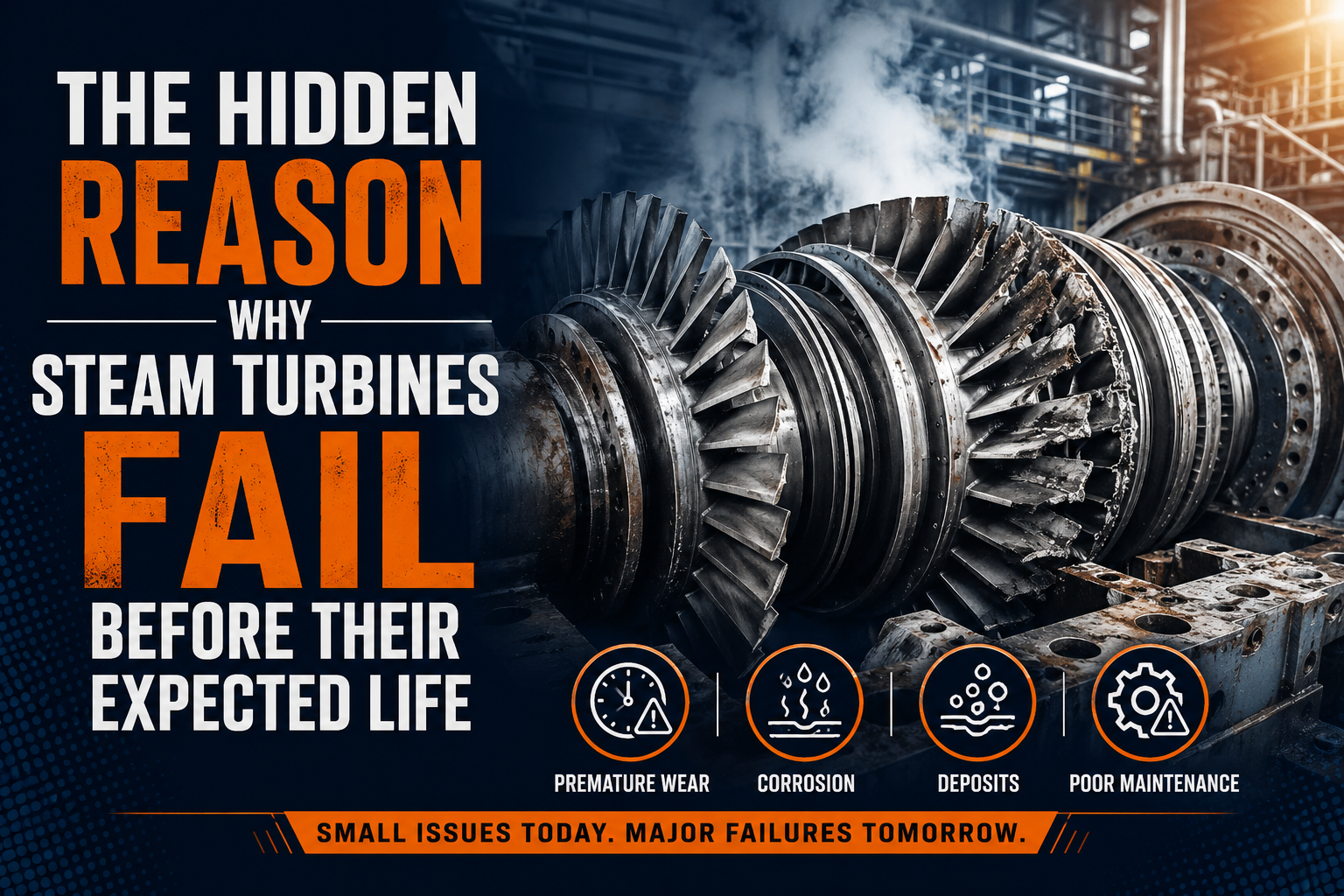
The Hidden Reason Why Steam Turbines Fail Before Their Expected Life
Discover the hidden causes of steam turbine failure, learn how to improve reliability, extend turbine life, and prevent costly industrial breakdowns.
Steam turbines are designed to operate reliably for decades, powering generators, compressors, and critical industrial processes. Yet many industrial facilities experience steam turbine failure much earlier than expected. While ageing is often blamed, the real cause is usually a combination of overlooked operational and maintenance issues that silently reduce performance over time.
Minor problems such as poor steam quality, lubrication issues, excessive vibration, and delayed inspections may seem insignificant individually. However, when left unresolved, they gradually damage critical components, shorten steam turbine life expectancy, and increase the risk of unexpected shutdowns.
Understanding these hidden factors is the first step towards improving steam turbine reliability, reducing maintenance costs, and maximising plant availability.
Also Read: Micro Steam Turbine
The Real Cause Behind Premature Steam Turbine Failure
Contrary to popular belief, most steam turbine failure causes are not sudden mechanical breakdowns. They develop gradually as a result of continuous operation under less-than-ideal conditions.
Small inefficiencies often go unnoticed until they evolve into major failures that require costly repairs and prolonged downtime. A proactive maintenance strategy can prevent most of these issues before they affect production.
1. Poor Steam Quality
Steam is the working fluid of a turbine, and its quality directly influences performance and component life. Wet steam, contaminants, and solid particles can cause blade erosion, corrosion, and deposit formation.
Common consequences include:
Blade erosion and pitting
Reduced aerodynamic efficiency
Corrosion of internal components
Increased maintenance requirements
Declining turbine output
Maintaining dry, clean, and properly conditioned steam significantly improves long-term turbine performance.
2. Excessive Vibration
Abnormal vibration is one of the earliest indicators of developing mechanical problems. Ignoring vibration trends can result in severe steam turbine component failure.
Typical causes include:
Rotor imbalance
Shaft misalignment
Bearing deterioration
Coupling defects
Foundation movement
Continuous vibration monitoring enables maintenance teams to detect problems before they become critical.
3. Lubrication System Problems
The lubrication system protects bearings and rotating components from excessive wear. Even minor oil contamination can reduce bearing life and increase friction.
Common lubrication-related issues include:
Contaminated lubricating oil
Low oil pressure
Incorrect oil viscosity
Water contamination
Blocked filters
Routine oil analysis and filtration are essential parts of effective steam turbine maintenance.
4. Steam Leakage
Steam leakage often develops gradually and is frequently overlooked because the turbine continues operating. However, even small leaks reduce efficiency and increase operating costs.
Steam leakage can lead to:
Steam turbine efficiency loss
Reduced power generation
Increased steam consumption
Higher fuel costs
Lower overall plant efficiency
Regular inspection of labyrinth seals, gland seals, valves, and joints helps minimise these hidden losses.
5. Delayed Preventive Maintenance
Waiting for equipment to fail before performing maintenance is one of the most expensive maintenance strategies.
A structured steam turbine preventive maintenance programme should include:
Scheduled inspections
Vibration analysis
Oil condition monitoring
Alignment verification
Bearing temperature monitoring
Performance testing
Preventive maintenance reduces unexpected failures while extending equipment life.
6. Operating Beyond Design Limits
Industrial plants often demand higher production, causing turbines to operate beyond their intended design conditions.
Frequent overloads, rapid load fluctuations, and repeated start-stop cycles create excessive thermal and mechanical stress that accelerates wear on critical components.
Operating within recommended parameters helps preserve performance and extends service life.
7. Inadequate Inspection of Critical Components
Many internal components cannot be visually assessed during normal operation, making periodic steam turbine inspection essential.
Critical components requiring regular evaluation include:
Rotor
Turbine blades
Bearings
Labyrinth seals
Control valves
Couplings
Turbine casing
Modern inspection methods such as borescope examinations, non-destructive testing (NDT), thermography, and condition monitoring enable early detection of defects before they result in costly failures.
Also Read: Steam Turbine Refurbishment
Why Steam Turbine Failure Analysis Matters
When a failure occurs, replacing damaged components without identifying the root cause often leads to recurring problems.
A comprehensive steam turbine failure analysis examines:
Operating history
Vibration trends
Lubrication records
Steam quality
Temperature data
Wear patterns
Previous maintenance activities
Root cause analysis helps maintenance teams implement permanent corrective actions rather than temporary repairs.
Best Practices to Improve Steam Turbine Reliability
To maximise equipment life and minimise downtime, industrial facilities should adopt the following practices:
Maintain high steam quality.
Monitor vibration continuously.
Perform routine oil analysis.
Follow a preventive maintenance schedule.
Conduct periodic internal inspections.
Monitor bearing temperatures.
Eliminate steam leakage promptly.
Operate within design limits.
Perform root cause analysis after every major failure.
Invest in predictive maintenance technologies.
These practices improve steam turbine reliability, reduce maintenance costs, and significantly extend equipment life.
Conclusion
Premature steam turbine failure rarely results from a single catastrophic event. More often, it is caused by the gradual accumulation of minor issues such as poor steam quality, inadequate lubrication, excessive vibration, steam leakage, and delayed maintenance.
By implementing regular steam turbine inspection, effective steam turbine preventive maintenance, and detailed steam turbine failure analysis, industries can improve operational reliability, reduce unplanned downtime, minimise steam turbine efficiency loss, and extend the overall steam turbine life expectancy.
A proactive maintenance approach not only protects valuable equipment but also ensures consistent power generation, improved operational efficiency, and lower lifecycle costs.
FAQs
1. What is the hidden reason behind premature steam turbine failure?
The most common hidden causes include poor steam quality, inadequate lubrication, excessive vibration, steam leakage, improper alignment, and delayed maintenance. These issues gradually damage critical components and reduce the turbine's service life.
2. What are the early warning signs of steam turbine failure?
Early indicators include increased vibration, unusual noise, higher bearing temperatures, oil contamination, reduced power output, steam leakage, and declining operational efficiency. Identifying these signs early helps prevent costly breakdowns.
3. How can steam turbine reliability be improved?
Improving steam turbine reliability requires routine inspections, predictive maintenance, vibration monitoring, oil analysis, maintaining high-quality steam, and operating the turbine within its design limits.
4. How often should a steam turbine be inspected?
Routine operational inspections should be carried out regularly, while detailed internal inspections should be scheduled during planned shutdowns or overhauls based on the manufacturer's recommendations and operating conditions.
5. Why is steam turbine failure analysis important?
Steam turbine failure analysis identifies the root cause of failures rather than simply replacing damaged parts. This prevents recurring issues, reduces maintenance costs, and improves long-term equipment performance.