9/22/2026
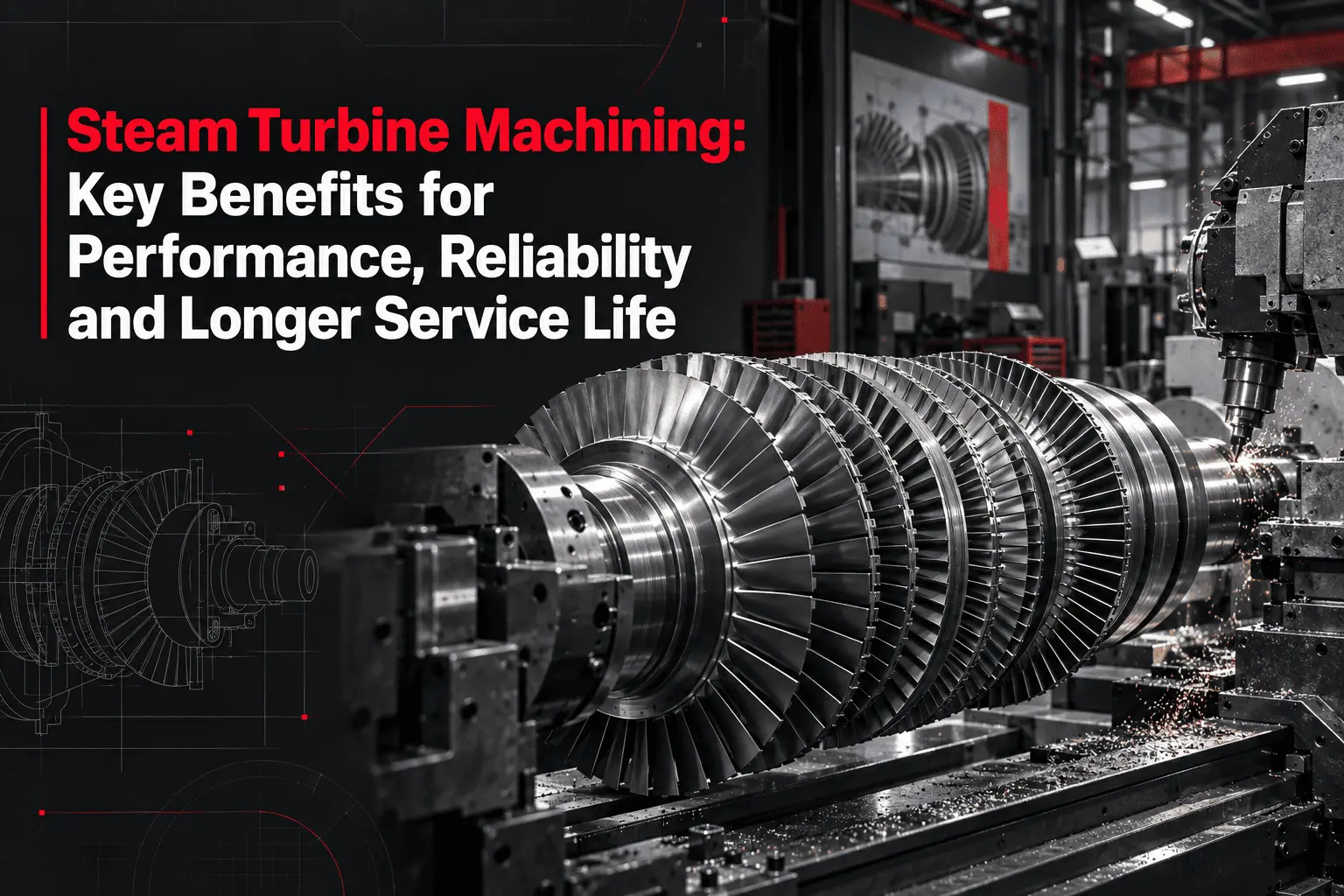
Steam Turbine Machining: Key Benefits for Performance, Reliability and Longer Service Life
Discover how steam turbine machining improves performance, reliability and service life. Explore precision machining solutions from NS Terbo.
Steam turbines operate under high temperatures, pressure and rotational loads. Over time, turbine shafts, rotors, bearing housings, seal areas and coupling faces may experience wear, distortion, corrosion or dimensional variation. Even a minor deviation can affect alignment, vibration, steam sealing and overall turbine reliability.
This is where steam turbine machining becomes essential. It helps restore critical dimensions, surface finish, concentricity and alignment. When supported by proper inspection and engineering controls, precision machining can reduce downtime, extend component life and improve turbine performance.
What Is Steam Turbine Machining?
Steam turbine machining is the controlled process of repairing or restoring turbine components to their required dimensions, tolerances and surface finish.
Depending on the turbine’s condition and the scope of work, machining may be performed at a workshop or directly at the plant through on-site steam turbine machining.
Common machining activities include:
Turbine shaft and rotor journal machining
Bearing and seal-area restoration
Coupling-face machining
Casing joint-face machining
Diaphragm and gland-area machining
Turning, grinding, milling, boring and drilling
Finish machining after metal build-up or repair
Before beginning any machining work, the component must be thoroughly inspected. Its material condition, operating history, dimensions and original specifications should be reviewed to determine the correct repair method.
Why Is Precision Important in Steam Turbine Machining?
Steam turbines contain closely interacting rotating and stationary components. The rotor must operate accurately within the bearings while maintaining the required clearances from seals, diaphragms and other internal parts.
Incorrect dimensions or poor surface finish can contribute to:
Excessive turbine vibration
Steam leakage
Bearing damage
Uneven component wear
Alignment problems
Reduced operating reliability
Unexpected turbine shutdowns
Precision turbine machining helps restore the correct geometry and dimensions of damaged components. It also supports accurate alignment and improves contact between mating surfaces.
Key Benefits of Steam Turbine Machining
1. Restores Critical Dimensions and Tolerances
Continuous turbine operation can cause wear on rotor journals, shaft locations, coupling fits and sealing areas. Steam turbine component machining helps restore these locations to their approved dimensions or prepares them for an engineered repair process.
Maintaining accurate dimensions is essential for:
Correct bearing fit
Proper turbine alignment
Controlled seal clearances
Reliable load distribution
Smooth rotor movement
Restoring these dimensions can help the turbine operate more reliably after reassembly.
2. Helps Reduce Turbine Vibration
Excessive vibration may result from shaft runout, worn journals, misalignment, coupling irregularities, imbalance or incorrect component fits.
Machining is not the solution to every vibration issue, but it can correct dimensional defects identified during turbine inspection.
For example, accurate steam turbine rotor machining can improve:
Journal roundness
Shaft concentricity
Surface finish
Coupling-face accuracy
Bearing seating condition
After machining, the rotor should undergo the required dimensional checks, runout inspection and balancing before being returned to operation.
3. Improves Reliability and Operating Stability
Damaged surfaces and inaccurate component fits can cause repeated wear and premature failure. Precision machining restores consistent contact surfaces and controlled clearances.
When included as part of professional steam turbine repair services, machining can address the actual condition of worn components instead of depending on temporary adjustments.
This helps improve operating stability and reduces the possibility of recurring mechanical problems.
4. Extends Component Service Life
Replacing a major turbine component can involve considerable cost and a long procurement period. When a component remains technically repairable, machining can restore its usability and extend its service life.
However, the repair decision should always consider:
Material integrity
Crack inspection results
Remaining component thickness
Original equipment specifications
Previous repair history
Operating conditions
Engineering acceptance criteria
Components with serious cracks or damage beyond permissible limits may require replacement rather than machining.
5. Reduces Unplanned Downtime
An unexpected turbine shutdown can affect production and increase operating costs. Planned steam turbine maintenance, including dimensional inspection and machining of worn components, allows problems to be corrected during a scheduled outage.
For suitable applications, on-site machining can reduce:
Equipment dismantling
Transportation requirements
Workshop turnaround time
Overall shutdown duration
The suitability of on-site machining depends on component accessibility, repair complexity, equipment condition and the required machining tolerances.
6. Supports Better Steam Sealing
Worn or damaged gland and seal areas can increase steam leakage. Precision machining helps restore the relevant surfaces and maintain the clearances required by the approved repair design.
Improved sealing can help:
Reduce avoidable steam losses
Maintain turbine efficiency
Improve operating safety
Protect nearby components
Support consistent turbine performance
Machining should be combined with an inspection of labyrinth seals, gland components and associated clearances to achieve reliable results.
7. Provides a Cost-Effective Repair Solution
Turbine component repair can be more economical than manufacturing or purchasing a new component, particularly for older turbines with limited spare-part availability.
Steam turbine machining can restore usable components while reducing dependence on lengthy replacement lead times.
However, cost-effectiveness should not be judged only by the machining price. The evaluation should also include:
Expected repair life
Outage duration
Component condition
Operational risk
Replacement lead time
Cost of a repeat failure
8. Supports Complete Steam Turbine Refurbishment
Machining is an important part of many steam turbine refurbishment projects. During refurbishment, turbine components are dismantled, cleaned and inspected before the required repairs are selected.
Worn surfaces may be machined directly or restored through an approved metal build-up process followed by finish machining.
When combined with bearing inspection, seal replacement, blade assessment, rotor balancing and alignment, machining helps restore the turbine to a dependable operating condition.
Steam Turbine Components That May Require Machining
Turbine Rotor and Shaft
The rotor is one of the most critical turbine components. Turbine shaft machining may be required to restore worn bearing journals, seal locations, coupling areas or other damaged surfaces.
Before machining begins, the following should be checked:
Shaft runout
Journal diameter
Rotor straightness
Surface condition
Material hardness
Crack condition
Remaining dimensions
Bearing Housings and Pedestals
Bearing locations require accurate geometry and alignment. Machining may be used to restore housing bores, split-line surfaces or seating areas so that the bearings receive proper support.
Couplings and Flanges
Irregularities on coupling faces can affect alignment and load transfer. Precision machining can restore flatness, parallelism and fit when technically permissible.
Turbine Casings and Joint Faces
Casing distortion, erosion or damage to horizontal joint faces may create sealing and alignment problems. Controlled machining can restore surface flatness and prepare the casing for reliable assembly.
Seal and Gland Areas
Seal locations require carefully maintained diameters and clearances. Machining may be performed during the restoration of gland, labyrinth and packing areas to help control steam leakage.
Workshop Machining vs. On-Site Steam Turbine Machining
Workshop machining provides access to heavy machine tools, controlled working conditions and a broader range of inspection equipment. It is generally suitable when a component can be transported safely and requires extensive restoration.
On-site steam turbine machining is performed at the customer’s plant using portable machining equipment. It may reduce dismantling and transportation requirements for appropriate applications.
The correct method depends on:
Component size
Site accessibility
Required tolerances
Repair complexity
Transportation feasibility
Available outage duration
An experienced provider of steam turbine machining services should inspect the equipment before recommending workshop or on-site machining.
Steam Turbine Machining Process
A professional steam turbine machining project generally follows these stages:
1. Initial Inspection
The service team reviews the turbine’s operating history, reported problems, drawings, previous repairs and current component condition.
2. Dimensional Measurement
The component is checked for diameter, runout, alignment, flatness, concentricity, clearances and surface condition.
3. Non-Destructive Testing
Where required, non-destructive testing is performed to identify cracks, surface defects or material damage before machining.
4. Repair Planning
Machining allowances, final dimensions, surface finish and acceptance criteria are defined based on the inspection results.
5. Machining Execution
The required turning, grinding, milling, boring or other approved machining operations are performed.
6. In-Process Inspection
Dimensions and surface conditions are monitored throughout the machining process to avoid unnecessary material removal.
7. Final Quality Inspection
The completed component is checked for tolerances, surface finish, alignment and dimensional accuracy.
8. Documentation and Assembly Support
Final readings and repair details are documented. The service team may also support turbine assembly, alignment and commissioning.
How to Select a Steam Turbine Machining Services Provider
A machining provider should be selected based on its turbine engineering knowledge as well as its machining capability.
Important factors include:
Experience with different steam turbine makes
Knowledge of turbine components and operating conditions
Workshop and on-site machining facilities
Precision measuring equipment
Inspection and non-destructive testing support
Documented machining procedures
Rotor balancing and alignment capabilities
Ability to provide detailed repair reports
Experience in turbine overhauling and refurbishment
Steam Turbine Machining Solutions from NS Terbo
NS Terbo provides support for steam turbine inspection, machining, repair, refurbishment, overhauling and component restoration.
Our team evaluates the actual turbine condition and develops a suitable repair approach based on dimensional measurements, operational requirements and technical feasibility.
Our machining support can cover:
Turbine rotor and shaft machining
Journal restoration
Coupling-face machining
Bearing housing machining
Casing and joint-face machining
Seal and gland-area restoration
Workshop and on-site machining
Component inspection and dimensional verification
By combining machining with turbine repair, balancing, alignment and overhauling expertise, NS Terbo provides a coordinated solution for improving turbine reliability and service life.
Conclusion
Steam turbine machining plays an important role in restoring component accuracy, controlling vibration-related risks, improving steam sealing and extending turbine service life.
It can also reduce replacement costs and outage duration when the damaged component is technically suitable for repair.
The best results are achieved when precision machining is supported by proper inspection, engineering assessment, balancing, alignment and quality control.
If your turbine is experiencing component wear, steam leakage, excessive vibration or dimensional problems, NS Terbo can inspect the condition and recommend an appropriate machining and repair solution.
Contact NS Terbo to discuss your steam turbine machining, repair or refurbishment requirements.
Frequently Asked Questions
What is steam turbine machining?
Steam turbine machining is the process of restoring or finishing turbine components to their required dimensions, tolerances and surface conditions using operations such as turning, grinding, milling and boring.
Which steam turbine components can be machined?
Common components include turbine rotors, shafts, bearing journals, coupling faces, bearing housings, casing joint faces, gland areas and seal locations. Machining suitability depends on the component’s material condition and inspection results.
How does turbine shaft machining improve reliability?
Turbine shaft machining can restore journal roundness, concentricity, surface finish and correct component fits. These improvements support bearing performance, alignment and stable rotor operation.
Can steam turbine machining reduce vibration?
It can help when vibration is connected to dimensional defects such as shaft runout, worn journals or coupling-face irregularities. A complete vibration investigation is necessary because imbalance, misalignment and bearing condition can also cause vibration.
Is on-site steam turbine machining possible?
Yes. Portable machining equipment can be used for certain casing, flange, boring, milling and shaft-related jobs. Its suitability depends on accessibility, component condition and required tolerances.
Is machining better than replacing a turbine component?
Machining may be faster and more cost-effective when a component remains technically repairable. Replacement may be necessary if cracking, material loss or damage exceeds acceptable engineering limits.
How does steam turbine machining extend service life?
It restores worn surfaces and critical dimensions, helping components maintain the correct fits, alignment and operating clearances. The final service life depends on the component’s condition and the quality of the repair.
Why choose NS Terbo for steam turbine machining services?
NS Terbo combines machining support with inspection, repair, refurbishment, overhauling, balancing and alignment expertise. This provides customers with a coordinated turbine service solution based on the equipment’s actual condition.