6/18/2026
How Labyrinth Seals Improve Steam Turbine Efficiency and Reliability
Learn how labyrinth seals improve steam turbine efficiency and reliability by reducing steam leakage, minimizing maintenance, and boosting performance.
Steam turbines are among the most critical machines used in power generation, process industries, and cogeneration plants. Their efficiency directly impacts fuel consumption, operational costs, and overall plant performance. One of the most important yet often overlooked components responsible for maintaining turbine efficiency is the labyrinth seal.
A properly designed steam turbine labyrinth seal minimizes steam leakage between rotating and stationary components, helping the turbine maintain optimal pressure and energy conversion efficiency. In this article, we will explore how labyrinth seals in steam turbines work, their benefits, applications, and their role in improving turbine reliability.
Also Read: Steam Turbine Casting Thickness: Cost vs Reliability
What Are Labyrinth Seals?
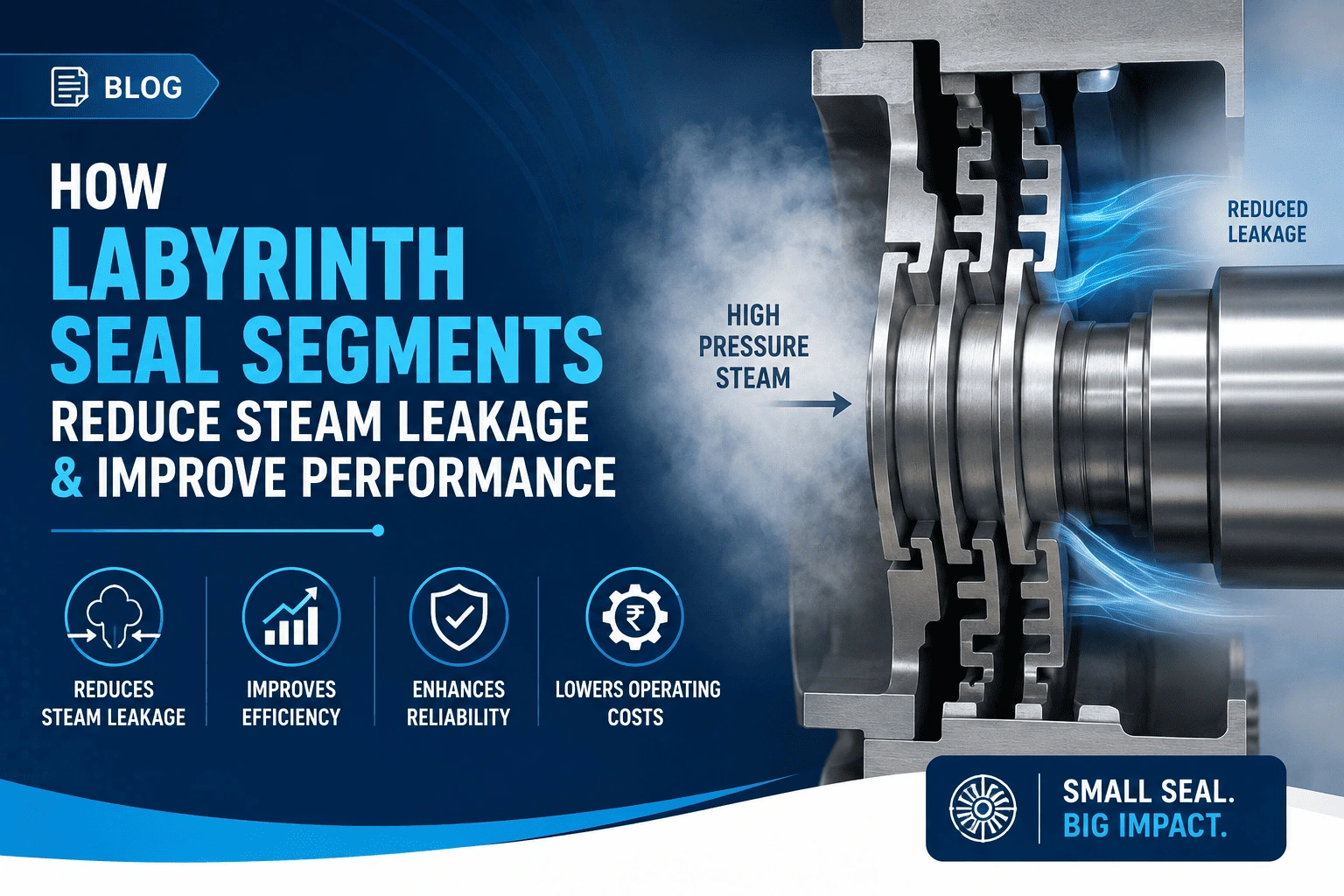
A labyrinth seal is a non-contact sealing device used in steam turbines to control leakage between areas of different pressure. Unlike conventional contact seals, labyrinth seals use a series of carefully engineered teeth or ridges that create a complex path for steam flow.
As steam passes through this maze-like structure, its pressure and velocity are reduced, significantly limiting leakage without physical contact between moving and stationary parts.
Key Components of a Labyrinth Seal
Labyrinth seal segments
Seal teeth
Rotor shaft
Stationary seal housing
Retaining springs and locking mechanisms
These components work together to create an efficient turbine sealing system that minimizes steam losses while maintaining operational safety.
How Labyrinth Seals Work in Steam Turbines
The operating principle of a steam turbine labyrinth seal is based on restricting fluid flow through multiple chambers.
Working Process
High-pressure steam attempts to move toward a lower-pressure area.
The steam encounters a series of labyrinth teeth.
Each tooth creates turbulence and pressure drop.
Steam loses energy as it passes through successive chambers.
The final leakage rate is significantly reduced.
Because there is no direct contact between the rotor and seal, wear is minimized, resulting in longer service life and reduced maintenance requirements.
Why Steam Leakage Is a Major Concern
Steam leakage is one of the primary causes of efficiency loss in turbines. Even small leakage rates can lead to substantial energy losses over time.
Problems Caused by Steam Leakage
Reduced turbine efficiency
Increased fuel consumption
Lower power output
Higher operating costs
Increased maintenance frequency
Reduced equipment lifespan
Implementing high-quality labyrinth seal segments helps prevent these issues and improves overall turbine performance.
Benefits of Labyrinth Seals in Steam Turbines
1. Improved Steam Turbine Efficiency
The primary advantage of labyrinth seals is their ability to reduce steam leakage.
When steam remains within the intended flow path, more thermal energy is converted into mechanical power, resulting in improved turbine efficiency and better power generation performance.
2. Enhanced Turbine Reliability
A reliable sealing system reduces the risk of performance degradation caused by excessive leakage.
Benefits include:
Stable operating conditions
Reduced vibration
Improved rotor stability
Better thermal performance
This contributes significantly to overall steam turbine reliability.
3. Non-Contact Design Reduces Wear
Unlike contact seals, labyrinth seals do not continuously touch the rotor surface.
Advantages include:
Minimal friction
Reduced wear and tear
Longer seal life
Lower maintenance costs
This makes labyrinth seals ideal for high-speed rotating equipment.
4. Lower Maintenance Requirements
Since there is limited mechanical contact, labyrinth seals require less frequent replacement than conventional sealing systems.
This helps reduce:
Plant downtime
Spare part costs
Maintenance labor expenses
5. Increased Equipment Lifespan
By maintaining proper pressure distribution and reducing leakage-related stress, labyrinth seals help extend the lifespan of critical turbine components.
Also Read: Why Are the Front Row Blades Smaller Than Exhaust Stage Blades in a Steam Turbine?
Types of Labyrinth Seals Used in Steam Turbines
Straight-Through Labyrinth Seals
These seals have teeth arranged in a straight path and are commonly used in moderate-pressure applications.
Stepped Labyrinth Seals
Stepped designs provide additional pressure drops and are often used in high-efficiency turbines.
Honeycomb Labyrinth Seals
Honeycomb structures improve turbulence control and offer enhanced sealing performance.
Brush-Labyrinth Hybrid Seals
These combine labyrinth technology with brush sealing elements for superior leakage control.
Applications of Labyrinth Seal Segments
Labyrinth seal segments are widely used in:
Power Plants
Thermal power plants
Biomass power plants
Waste heat recovery systems
Combined cycle power plants
Industrial Applications
Sugar industries
Paper mills
Chemical plants
Petrochemical facilities
Refineries
Marine and Process Industries
Steam turbines used in marine propulsion and industrial processing also rely on efficient labyrinth sealing systems.
Common Causes of Labyrinth Seal Damage
Even though labyrinth seals are highly durable, certain operating conditions can affect performance.
Common Causes Include:
Rotor misalignment
Excessive vibration
Foreign particle ingress
Thermal distortion
Improper installation
Rotor rub incidents
Regular inspections help identify issues before they impact turbine performance.
Best Practices for Maintaining Labyrinth Seals
To maximize the performance of your steam turbine labyrinth seal, follow these maintenance practices:
Conduct Regular Inspections
Check for:
Damaged seal teeth
Excessive clearances
Segment movement
Wear patterns
Monitor Turbine Performance
Unexpected efficiency drops may indicate seal deterioration.
Maintain Proper Rotor Alignment
Correct alignment prevents seal rubbing and premature damage.
Use Quality Replacement Components
High-precision labyrinth seal segments ensure reliable performance and longer service life.
Choosing the Right Labyrinth Seal Manufacturer
When selecting labyrinth seal segments for steam turbines, consider:
Manufacturing precision
Material quality
Engineering expertise
Industry experience
Custom design capabilities
After-sales support
A trusted supplier can significantly improve turbine efficiency, reliability, and operational lifespan.
Why Choose NS Terbo for Steam Turbine Components?
NS Terbo specializes in high-quality steam turbine components and engineering solutions designed for industrial and power generation applications.
Key advantages include:
Precision-engineered labyrinth seal segments
Steam turbine refurbishment services
Performance enhancement solutions
Reliable technical support
Customized turbine component manufacturing
With a strong focus on quality and efficiency, NS Terbo helps industries optimize steam turbine performance while reducing operational costs.
Conclusion
Labyrinth seals in steam turbines play a vital role in reducing steam leakage, improving efficiency, and enhancing equipment reliability. Their non-contact design, low maintenance requirements, and ability to maintain pressure differentials make them one of the most effective sealing solutions for modern steam turbines.
By investing in high-quality labyrinth seal segments and following proper maintenance practices, industries can achieve higher turbine efficiency, reduced operating costs, and longer equipment life. Whether used in power plants, process industries, or cogeneration systems, labyrinth seals remain an essential component for maximizing steam turbine performance.