7/23/2026
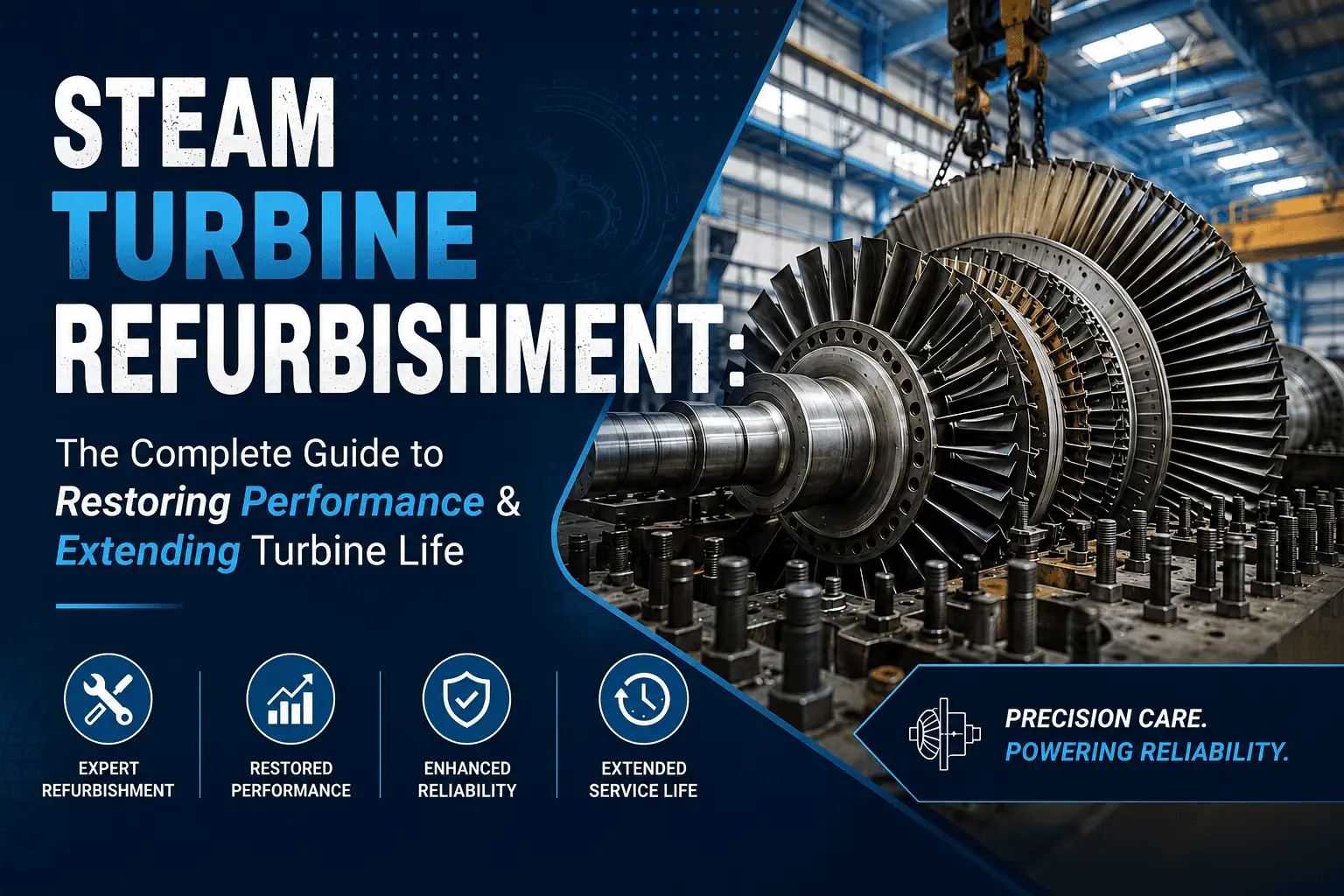
Steam Turbine Refurbishment: The Complete Guide to Restoring Performance & Extending Turbine Life
Restore efficiency with expert steam turbine refurbishment, repair, overhaul, rotor balancing, blade replacement, and maintenance to extend turbine life.
Introduction
Steam turbines are the backbone of power generation and industrial manufacturing, delivering reliable mechanical power for industries such as sugar, paper, chemical, cement, steel, textiles, and biomass. However, continuous operation under high temperatures, pressure, and rotational speeds gradually affects their efficiency and reliability.
Instead of investing in a costly replacement, many industries choose steam turbine refurbishment to restore performance, improve operational efficiency, and significantly extend equipment life. A professionally executed refurbishment combines steam turbine repair, steam turbine overhaul, and steam turbine maintenance to return critical components to optimal operating condition while minimizing downtime and reducing lifecycle costs.
This guide explains the complete steam turbine refurbishment process, the technologies involved, and the key benefits of restoring your turbine rather than replacing it.
Also Read: Steam Turbine Overhauling
What is Steam Turbine Refurbishment?
Steam turbine refurbishment is a comprehensive engineering process that restores worn or damaged turbine components to their original or improved operating condition. It involves detailed inspections, precision machining, component repair, replacement of damaged parts, rotor balancing, and performance testing to ensure reliable and efficient operation.
Unlike routine maintenance, refurbishment focuses on improving the overall health of the turbine, extending its service life, and enhancing long-term operational performance.
Why Do Steam Turbines Require Refurbishment?
Over time, turbine components experience continuous mechanical and thermal stress. These operating conditions can lead to wear, reduced efficiency, and an increased risk of unexpected failures.
Common reasons for refurbishment include:
Blade erosion and corrosion
Rotor imbalance
Shaft wear
Bearing damage
Seal leakage
High vibration levels
Thermal distortion
Fatigue cracks
Declining turbine efficiency
Frequent maintenance shutdowns
Identifying these issues early helps prevent costly failures and ensures uninterrupted plant operations.
Steam Turbine Repair, Overhaul & Refurbishment: What's the Difference?
Although these terms are often used interchangeably, each service addresses different operational requirements.
Steam Turbine Repair
Repair focuses on restoring specific damaged components, such as bearings, shafts, seals, or blades, without dismantling the entire turbine.
Steam Turbine Overhaul
An overhaul involves complete disassembly, cleaning, inspection, replacement of worn components, reassembly, and alignment during scheduled maintenance shutdowns.
Steam Turbine Refurbishment
Refurbishment is a complete restoration program that includes repair, overhaul, precision machining, component upgrades, rotor balancing, reverse engineering, and final performance validation to maximize efficiency and equipment life.
Steam Turbine Refurbishment Process
A successful refurbishment follows a structured engineering workflow to ensure every component meets design specifications.
1. Initial Inspection & Condition Assessment
The process begins with a complete inspection to determine the condition of all critical components.
Typical inspections include:
Visual inspection
Dimensional measurements
Non-destructive testing (NDT)
Wear analysis
Crack detection
Surface inspection
A detailed assessment allows engineers to identify damaged areas and develop an effective refurbishment plan.
2. Steam Turbine Inspection Checklist
A comprehensive inspection checklist helps ensure that no component is overlooked during refurbishment.
Key inspection areas include:
Rotor condition
Shaft runout
Blade integrity
Bearing clearance
Seal condition
Casing alignment
Coupling inspection
Fastener condition
Lubrication system
Steam path components
Thorough inspections reduce the risk of future operational issues.
3. Steam Turbine Repair
Damaged components are repaired using precision engineering techniques to restore dimensional accuracy and mechanical integrity.
Repair activities commonly include:
Shaft journal restoration
Seal repair
Bearing housing restoration
Casing repair
Rotor surface restoration
Precision welding
Machining of worn surfaces
Repairing critical components often provides significant cost savings compared to complete replacement.
4. Reverse Engineering for Turbine Parts
Many industrial turbines operate for decades, making original spare parts difficult to source.
Reverse engineering enables manufacturers to recreate obsolete components using advanced measurement technologies, CAD modeling, and precision machining.
This process helps industries:
Replace discontinued parts
Reduce dependency on OEM suppliers
Shorten maintenance downtime
Improve component availability
Extend equipment life
5. Steam Turbine Blade Replacement
Steam turbine blades are continuously exposed to high-pressure steam, making them susceptible to erosion, corrosion, and fatigue damage.
Replacing damaged blades restores:
Steam flow efficiency
Rotor balance
Power output
Operational reliability
Mechanical safety
Modern blade manufacturing techniques also improve long-term durability.
6. Steam Turbine Rotor Balancing
Rotor imbalance is one of the leading causes of excessive vibration and premature bearing failure.
Dynamic rotor balancing ensures smooth high-speed operation by correcting uneven mass distribution.
Benefits include:
Lower vibration
Increased bearing life
Improved reliability
Reduced mechanical stress
Better operating efficiency
Rotor balancing is one of the most critical stages of steam turbine refurbishment.
7. Precision Machining & Component Restoration
Precision machining restores critical dimensions and surface finishes to OEM specifications.
Typical machining services include:
Shaft grinding
Journal machining
Seal area restoration
Rotor machining
Casing machining
Coupling restoration
Accurate machining improves assembly quality and long-term turbine performance.
8. Assembly & Precision Alignment
After refurbishment, all components are carefully reassembled and aligned.
This stage includes:
Rotor installation
Bearing installation
Coupling alignment
Shaft alignment
Clearance verification
Torque checks
Proper alignment minimizes vibration and ensures smooth operation.
9. Steam Turbine Performance Testing
Before commissioning, the turbine undergoes comprehensive performance testing to verify operational readiness.
Testing typically includes:
Rotor run testing
Vibration analysis
Temperature monitoring
Pressure testing
Steam leakage inspection
Speed verification
Bearing performance checks
Performance testing confirms that the refurbished turbine meets operational and safety standards.
Also Read: Steam Turbine Thrust Pad Failure
Benefits of Steam Turbine Refurbishment
A professionally refurbished turbine offers significant operational and financial advantages.
Improved Operational Efficiency
Restored components improve steam flow and reduce energy losses.
Extended Equipment Life
Refurbishment significantly increases the operational lifespan of critical turbine components.
Reduced Downtime
Scheduled refurbishment minimizes unexpected failures and costly production interruptions.
Lower Maintenance Costs
Repairing and restoring components is more economical than replacing an entire turbine.
Higher Reliability
Refurbished turbines operate with greater stability, reducing the likelihood of emergency shutdowns.
Better Return on Investment
Refurbishment maximizes the value of existing assets while delaying capital expenditure on new equipment.
Steam Turbine Maintenance After Refurbishment
Maintaining a refurbished turbine is essential for sustaining long-term performance.
Best practices include:
Regular inspections
Routine vibration monitoring
Lubrication management
Steam quality control
Predictive maintenance
Scheduled shutdown inspections
Performance trend analysis
A proactive maintenance strategy helps maximize equipment availability and reliability.
Industries That Benefit from Steam Turbine Refurbishment
Steam turbine refurbishment is widely used across industries that rely on continuous and efficient power generation.
Key sectors include:
Power Plants
Sugar Mills
Paper & Pulp
Chemical Processing
Fertilizer Plants
Cement Industry
Steel Manufacturing
Textile Industry
Food Processing
Biomass Power Plants
Oil & Gas Refineries
Each industry benefits from improved efficiency, reduced maintenance costs, and increased equipment reliability.
How to Choose a Steam Turbine Refurbishment Partner
Selecting the right refurbishment company is critical to achieving long-term performance.
Look for a service provider with:
Extensive steam turbine expertise
Advanced precision machining facilities
Reverse engineering capabilities
Dynamic rotor balancing systems
Experienced engineering team
Strict quality control procedures
Proven industry experience
Comprehensive testing and commissioning services
An experienced refurbishment partner ensures your turbine performs reliably throughout its extended service life.
Conclusion
Steam turbine refurbishment is a strategic investment that restores equipment performance, extends service life, and reduces lifecycle costs. By combining steam turbine repair, steam turbine overhaul, precision machining, rotor balancing, blade replacement, reverse engineering, and performance testing, industries can significantly improve turbine reliability while avoiding the high costs of replacement.
Whether your objective is to improve efficiency, reduce downtime, or extend the life of aging equipment, a well-planned refurbishment program ensures your steam turbine continues to deliver dependable performance for years to come.