9/12/2026
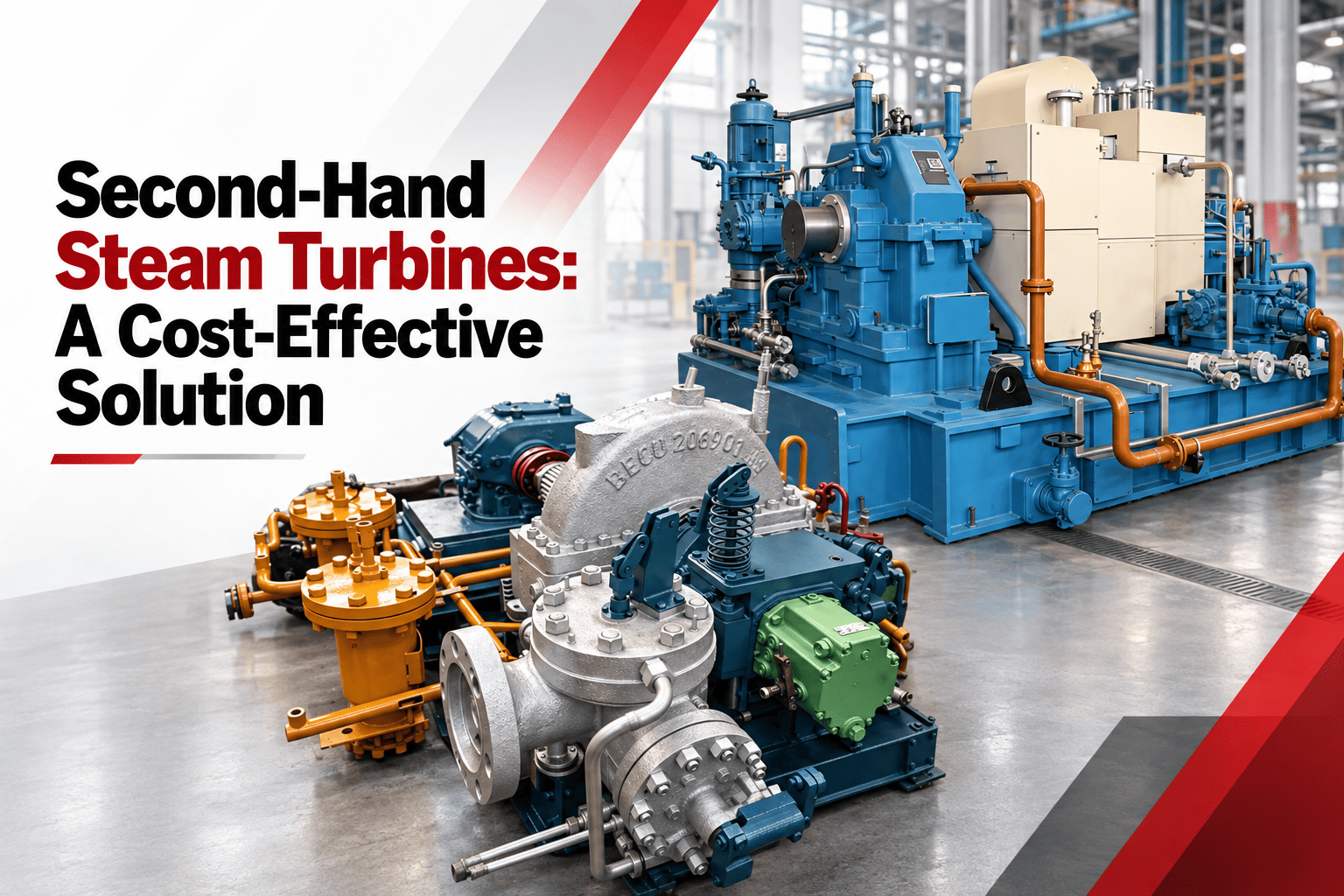
Second Hand Steam Turbines: A Cost-Effective Solution for Industrial Power
Explore how second-hand steam turbines can reduce industrial power costs. Learn about inspection, refurbishment, benefits and buying factors.
Investing in a steam turbine can require significant capital, especially when a plant needs to expand its power-generation capacity or replace existing equipment. For industries working with a limited project budget, second-hand steam turbines can offer a practical and cost-effective alternative to purchasing a completely new system.
However, buying used equipment should never be based on price alone. The turbine’s operating history, technical condition, compatibility and refurbishment requirements must be carefully evaluated. When properly inspected, refurbished and commissioned, a second-hand turbine can provide dependable service for a wide range of industrial power applications.
What Are Second-Hand Steam Turbines?
Second-hand steam turbines are pre-owned turbines that have previously operated in another industrial or power-generation facility. These machines may become available because of plant closure, capacity expansion, process modification or equipment replacement.
Depending on their condition, used turbines may be:
Sold in their existing operational condition
Overhauled before being offered for sale
Completely refurbished and tested
Reconfigured according to a new plant’s requirements
Supplied with a generator, gearbox, condenser or auxiliary systems
A properly refurbished steam turbine is inspected, repaired and restored to make it suitable for reliable operation at its new installation.
Why Are Second-Hand Steam Turbines Cost-Effective?
The biggest advantage of purchasing a used steam turbine is the potential reduction in initial investment. A new turbine involves manufacturing, engineering and extended delivery timelines. A suitable pre-owned turbine may already be available and can often be prepared for installation in less time.
1. Lower Initial Investment
A second-hand turbine generally requires less capital than a new machine. This can make industrial power generation more accessible for plants with restricted budgets.
The total investment will depend on:
Turbine condition
Rated power output
Steam parameters
Required refurbishment
Availability of auxiliaries
Transportation and installation costs
Plants should compare the complete lifecycle cost instead of focusing only on the purchase price.
2. Shorter Project Timeline
Manufacturing a new turbine can involve a considerable lead time. A used steam turbine may already be available for inspection, refurbishment and dispatch.
This can help a plant reduce the time required for:
Equipment sourcing
Manufacturing
Component procurement
Project execution
Power-generation capacity expansion
The actual timeline will depend on the turbine’s condition and the modifications needed for the new application.
3. Suitable for Capacity Expansion
An industrial facility may need additional power without replacing its complete generation system. A carefully selected second-hand steam turbine can support incremental capacity expansion while keeping the investment under control.
It may be suitable for industries such as:
Sugar mills
Paper mills
Textile plants
Chemical facilities
Distilleries
Biomass power plants
Food-processing plants
Captive power facilities
4. Better Utilisation of Existing Equipment
Many steam turbines are removed from service even though their major components still have usable operating life. Inspection and refurbishment can allow such equipment to be reused instead of being discarded.
Reusing serviceable industrial machinery may reduce the need for new material and manufacturing resources. However, this benefit depends on the equipment’s condition and the extent of replacement work required.
Second-Hand vs Refurbished Steam Turbine
Although the terms are sometimes used interchangeably, they do not always mean the same thing.
A second-hand steam turbine is simply a pre-owned machine. It may be sold in its existing condition without any major inspection or restoration.
A refurbished steam turbine has normally undergone a structured process that may include:
Complete dismantling
Cleaning and inspection
Dimensional checks
Non-destructive testing
Rotor runout inspection
Blade and nozzle evaluation
Bearing inspection or replacement
Seal inspection or replacement
Rotor balancing
Reassembly and testing
A documented refurbished turbine generally provides greater confidence than equipment sold without technical evaluation.
Important Factors to Check Before Buying a Used Steam Turbine
Choosing the right turbine requires more than matching the required power output. The turbine must also match the plant’s actual operating conditions.
1. Steam Inlet Parameters
Verify the available inlet steam pressure and temperature. A turbine designed for significantly different steam conditions may not perform safely or efficiently at your plant.
2. Exhaust Conditions
Check whether the exhaust pressure is compatible with the industrial process or power-generation system. Exhaust requirements directly affect turbine selection and expected output.
3. Required Power Output
Confirm the turbine’s rated capacity and expected output under the plant’s actual steam conditions. The original nameplate rating may not represent the output achievable in a different operating environment.
4. Operating History
Request available records related to:
Total operating hours
Previous applications
Shutdown history
Maintenance schedules
Major repairs
Overspeed incidents
Vibration problems
Rotor or blade failures
Incomplete documentation does not automatically make a turbine unusable, but it increases the importance of a detailed technical inspection.
5. Rotor Condition
The rotor is one of the most critical turbine components. It should be examined for:
Cracks
Corrosion
Erosion
Excessive runout
Bent shaft conditions
Blade damage
Journal wear
Evidence of overheating
Previous repair locations
Non-destructive testing and dimensional inspection should be performed wherever necessary.
6. Bearings and Seals
Worn bearings or damaged seals can cause vibration, oil leakage, steam leakage and reduced performance. Journal bearings, thrust bearings, labyrinth seals and carbon seals should be inspected carefully.
7. Availability of Spare Parts
Before purchasing a pre-owned steam turbine, determine whether critical spares can be sourced or reverse-engineered. Difficult-to-find components can increase future maintenance costs and shutdown duration.
Important spares may include:
Turbine blades
Nozzles
White-metal bearings
Labyrinth seals
Carbon seals
Control valves
Emergency stop valves
Couplings
Oil-system components
8. Generator and Gearbox Compatibility
If the turbine is supplied without its original generator or gearbox, verify speed, power, coupling and alignment compatibility. Improper equipment matching can create serious mechanical and operational problems.
9. Governing and Control System
Older turbines may use outdated mechanical, hydraulic or electronic control systems. Evaluate whether the governing system is functional, serviceable and compatible with current plant requirements.
Modernisation may be required to improve:
Speed control
Load control
Protection
Monitoring
Trip functions
Operator visibility
Recommended Inspection Process
A comprehensive inspection should be conducted before finalising the purchase of a second-hand turbine.
Step 1: Review Technical Documents
Study the turbine drawings, nameplate details, operating manual, maintenance records and previous inspection reports.
Step 2: Conduct a Visual Inspection
Check the casing, rotor, bearings, valves, coupling, base frame and lubrication system for visible damage, corrosion or missing parts.
Step 3: Dismantle the Turbine
Where possible, the turbine should be dismantled so that critical internal components can be inspected. An external inspection alone may not reveal internal damage.
Step 4: Perform Dimensional Checks
Measure critical clearances and dimensions, including:
Shaft journals
Bearing clearances
Rotor runout
Thrust clearances
Blade clearances
Seal clearances
Coupling dimensions
Step 5: Perform Non-Destructive Testing
Suitable testing methods may be used to identify surface or internal defects in the rotor, blades, casing and other critical components.
Step 6: Evaluate Repair Requirements
Prepare a technical condition report listing components that can be reused, repaired, reconditioned or replaced.
Step 7: Estimate the Complete Project Cost
The final evaluation should include:
Purchase price
Refurbishment cost
New spare parts
Control-system upgrades
Transportation
Civil and foundation work
Installation
Commissioning
Future maintenance requirements
This provides a more accurate comparison between a second-hand and a new steam turbine.
Steam Turbine Refurbishment Process
The refurbishment scope depends on the condition of the turbine. A typical process may involve:
Dismantling and cleaning
Inspection and dimensional measurement
Non-destructive testing of critical components
Rotor repair and runout correction
Blade or nozzle replacement
Bearing repair or rebabbitting
Seal replacement or remanufacturing
Valve inspection and restoration
Rotor balancing
Casing inspection and correction
Reassembly with specified clearances
Installation, alignment and commissioning
Every refurbished turbine should be supported by inspection records and a clearly defined scope of work.
Potential Risks of Buying a Second-Hand Steam Turbine
Used steam turbines can be cost-effective, but they also carry risks when purchased without proper technical evaluation.
Common risks include:
Hidden rotor or casing damage
Excessive component wear
Missing maintenance records
Obsolete controls
Unavailable spare parts
Incorrect steam-condition matching
High refurbishment expenses
Generator or gearbox incompatibility
Reduced operating reliability
Unexpected commissioning delays
Many of these risks can be reduced through pre-purchase inspection and engineering assessment.
When Is a Second-Hand Steam Turbine a Good Choice?
A used steam turbine may be a suitable option when:
The available project budget is limited
A shorter delivery period is required
The turbine matches the plant’s steam parameters
The machine has a traceable operating history
Critical components are in repairable condition
Spare parts can be manufactured or sourced
Qualified specialists are available for refurbishment
The complete lifecycle cost is commercially viable
It may not be the right choice when the turbine’s condition cannot be verified, major components are severely damaged or extensive modifications are required.
Role of a Steam Turbine Service Provider
An experienced service provider can help determine whether a second hand turbine is technically and commercially suitable for a plant.
Professional support may include:
Pre-purchase technical inspection
Condition assessment
Rotor and casing inspection
Refurbishment planning
Reverse engineering
Spare-parts manufacturing
Rotor balancing
Installation and alignment
Erection and commissioning
Performance evaluation
Troubleshooting and maintenance support
NS Terbo provides engineering support for steam turbine inspection, overhauling, refurbishment, reverse engineering, spares, erection and commissioning. Each turbine should be evaluated according to its actual condition and intended operating parameters.
Conclusion: Second Hand Steam Turbines
Second-hand steam turbines can provide a cost-effective solution for industrial power generation when they are selected through proper engineering analysis. Lower initial investment and potentially shorter project timelines make them attractive, but technical suitability must remain the primary consideration.
Before purchasing a used turbine, verify its operating history, steam parameters, rotor condition, component availability and refurbishment requirements. A detailed inspection and lifecycle cost assessment can help prevent hidden expenses and improve long-term operating reliability.
A second-hand turbine should not simply be viewed as cheaper equipment. When correctly selected, professionally refurbished and properly commissioned, it can become a valuable power-generation asset.
FAQs:Second Hand Steam Turbines
1. Are second-hand steam turbines reliable?
Second-hand steam turbines can operate reliably when their condition is thoroughly inspected and all necessary repairs, balancing and component replacements are completed before commissioning.
2. What should be checked before buying a used steam turbine?
Check the steam parameters, rated output, operating history, rotor condition, blades, bearings, seals, valves, casing, control system and availability of spare parts.
3. Is a refurbished steam turbine better than an untested used turbine?
A properly refurbished turbine generally provides greater confidence because its critical components have been inspected, repaired or replaced according to a defined technical scope.
4. How much does a second-hand steam turbine cost?
The cost depends on capacity, manufacturer, operating condition, included auxiliaries and refurbishment requirements. The purchase price should always be evaluated together with installation and lifecycle costs.
5. Can a used steam turbine be modified for different steam conditions?
Some turbines can be modified, but feasibility depends on their original design and the new operating requirements. A detailed engineering study is required before making such changes.