7/16/2026
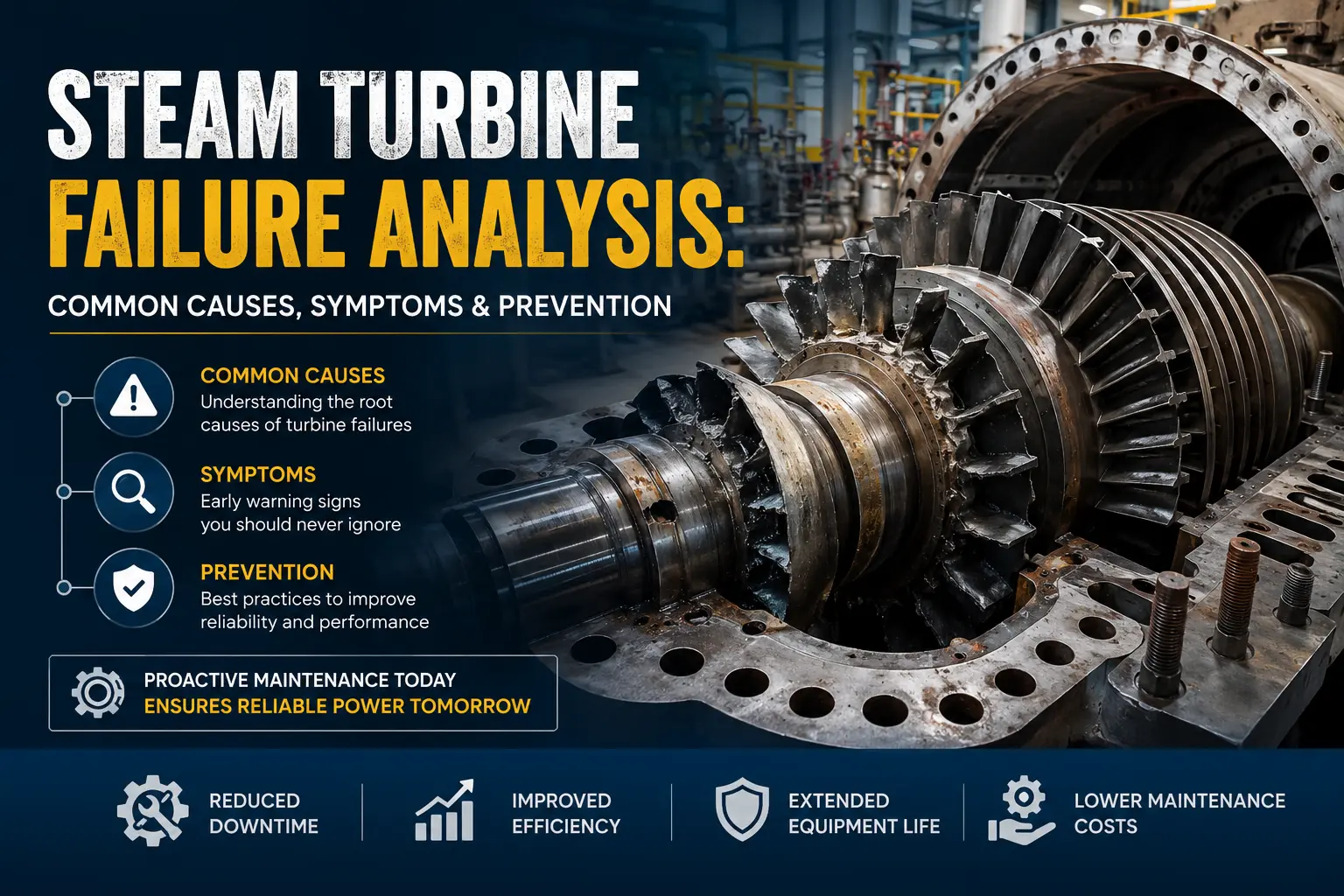
Steam Turbine Failure Analysis: Common Causes, Symptoms & Prevention
Learn Steam Turbine Failure Analysis, common failure causes, symptoms, inspection methods, maintenance practices, overhaul process, and prevention tips.
Steam turbines are among the most critical assets in power plants and industrial process facilities. Their reliable operation directly affects production efficiency, plant availability, and maintenance costs. However, even a minor mechanical issue can develop into a major failure if it is not identified and addressed in time.
Steam Turbine Failure Analysis is a systematic process used to determine why a turbine component failed, identify the root cause, and implement corrective actions to prevent recurrence. Whether the issue involves bearings, rotor, blades, seals, or lubrication systems, a proper failure analysis helps reduce unplanned shutdowns, improve reliability, and extend equipment life.
In this guide, we explore the most common steam turbine failures, their causes, warning signs, and preventive maintenance practices.
Also Read: Steam Turbine Thrust Pad Failure
What is Steam Turbine Failure Analysis?
Steam Turbine Failure Analysis is the engineering process of investigating a failed turbine or damaged component to determine the exact reason behind the failure. The objective is not only to repair the damaged parts but also to eliminate the root cause to avoid repeated failures.
A comprehensive analysis typically includes:
Visual inspection of damaged components
Operational history review
Vibration analysis
Metallurgical examination
Lubrication oil analysis
Dimensional inspection
Rotor balancing and alignment checks
Performance testing
Accurate failure analysis enables maintenance teams to make informed decisions regarding repairs, refurbishment, or complete replacement.
Common Steam Turbine Failure Causes
Understanding Steam Turbine Failure Causes is the first step toward preventing costly breakdowns. The most common causes include:
1. Bearing Failure
Bearings support the turbine rotor and maintain accurate shaft positioning. Poor lubrication, oil contamination, excessive loads, or misalignment can result in bearing wear and eventual failure.
Typical indicators include:
High bearing temperature
Increased vibration
Abnormal noise
Metal particles in lubricating oil
2. Steam Turbine Rotor Failure
Steam Turbine Rotor Failure is one of the most serious mechanical failures because the rotor is the heart of the turbine. Damage may occur due to fatigue, thermal stress, overspeed conditions, corrosion, or improper balancing.
Common rotor issues include:
Shaft cracks
Rotor bowing
Imbalance
Journal damage
Surface wear
Early detection through vibration monitoring and regular inspections significantly reduces the risk of catastrophic rotor failure.
3. Blade Damage
Turbine blades operate under high temperature and high-speed conditions. Erosion, corrosion, fatigue, foreign object damage, and steam impurities gradually weaken blades.
Damaged blades can reduce efficiency, create imbalance, and eventually damage the rotor and casing.
4. Lubrication System Problems
An inadequate lubrication system is responsible for many turbine failures. Common issues include:
Low oil pressure
Oil contamination
Blocked oil filters
Incorrect oil viscosity
Cooling system malfunction
Proper oil quality monitoring is essential for long-term turbine reliability.
5. Misalignment
Improper alignment between the turbine and driven equipment increases shaft loading and vibration. Continuous operation under misaligned conditions accelerates bearing and coupling wear.
6. Seal Damage
Steam leakage caused by worn labyrinth seals reduces turbine efficiency and increases energy losses. Damaged seals also allow contaminants to enter critical areas of the machine.
Also Read: Steam Turbine Rotor Restoration Through Precision Machining
Symptoms of Steam Turbine Failure
Detecting warning signs early allows maintenance teams to intervene before severe damage occurs.
Common symptoms include:
Excessive vibration
Rising bearing temperatures
Increased steam leakage
Abnormal operating noise
Reduced turbine efficiency
Higher steam consumption
Oil contamination
Frequent trips or shutdowns
Rotor instability
Reduced power output
Ignoring these symptoms often leads to extensive repairs and longer plant downtime.
Importance of Steam Turbine Inspection
Regular Steam Turbine Inspection helps identify developing defects before they become major failures. A planned inspection program improves equipment reliability while reducing emergency maintenance costs.
Inspection activities generally include:
Visual examination
Blade inspection
Bearing clearance measurement
Rotor runout inspection
Seal condition assessment
Shaft alignment verification
Coupling inspection
Oil system inspection
Vibration monitoring
Non-destructive testing (NDT)
Scheduled inspections help detect cracks, wear, corrosion, and alignment problems at an early stage.
Steam Turbine Maintenance Best Practices
Effective Steam Turbine Maintenance combines preventive, predictive, and condition-based maintenance strategies.
Recommended maintenance practices include:
Monitor Vibration Continuously
Vibration analysis provides valuable information about rotor imbalance, bearing defects, looseness, and shaft misalignment.
Maintain Lubrication Quality
Regular oil sampling helps detect contamination, moisture, oxidation, and metal particles before serious damage occurs.
Check Rotor Alignment
Routine alignment verification reduces excessive bearing loads and improves equipment life.
Inspect Steam Path Components
Regular examination of blades, diaphragms, nozzles, and seals prevents efficiency losses and unexpected failures.
Monitor Operating Parameters
Keep track of:
Bearing temperature
Oil pressure
Steam pressure
Steam temperature
Axial displacement
Rotor speed
Unexpected changes often indicate developing mechanical problems.
Steam Turbine Overhaul
A planned Steam Turbine Overhaul restores equipment performance and prevents long-term reliability issues.
Typical overhaul activities include:
Complete turbine disassembly
Rotor inspection and balancing
Bearing replacement
Blade repair or replacement
Seal refurbishment
Shaft inspection
Coupling alignment
Lubrication system servicing
Clearance measurements
Performance testing
Proper overhaul planning minimizes downtime while extending turbine service life.
Role of Steam Turbine Spare Parts
Using high-quality Steam Turbine Spare Parts plays an important role in maintaining long-term equipment reliability. Precision-manufactured components improve performance while reducing the risk of premature failures.
Critical spare parts include:
Bearings
Rotor components
Turbine blades
Labyrinth seals
Thrust pads
Diaphragms
Couplings
Oil pumps
Control valves
Gaskets and fasteners
Selecting reliable replacement parts helps maintain design performance and extends operational life.
Industrial Power Plant Maintenance and Reliability
Effective Industrial Power Plant Maintenance relies on proactive monitoring, scheduled inspections, and continuous performance evaluation. Modern facilities increasingly use predictive maintenance technologies such as vibration analysis, oil analysis, thermography, and online condition monitoring to detect developing faults before failures occur.
Integrating these techniques into routine maintenance programs reduces unexpected outages, improves equipment availability, lowers operating costs, and enhances overall plant efficiency.
Conclusion
A structured Steam Turbine Failure Analysis program is essential for identifying root causes, preventing repeated failures, and maximizing turbine reliability. From understanding Steam Turbine Failure Causes to implementing regular Steam Turbine Maintenance, performing timely Steam Turbine Inspection, and scheduling a comprehensive Steam Turbine Overhaul, every step contributes to improved equipment performance and reduced downtime.
By combining preventive maintenance, predictive diagnostics, high-quality Steam Turbine Spare Parts, and systematic root cause investigations, industries can significantly extend turbine life while improving operational efficiency and reducing maintenance costs.