7/29/2026
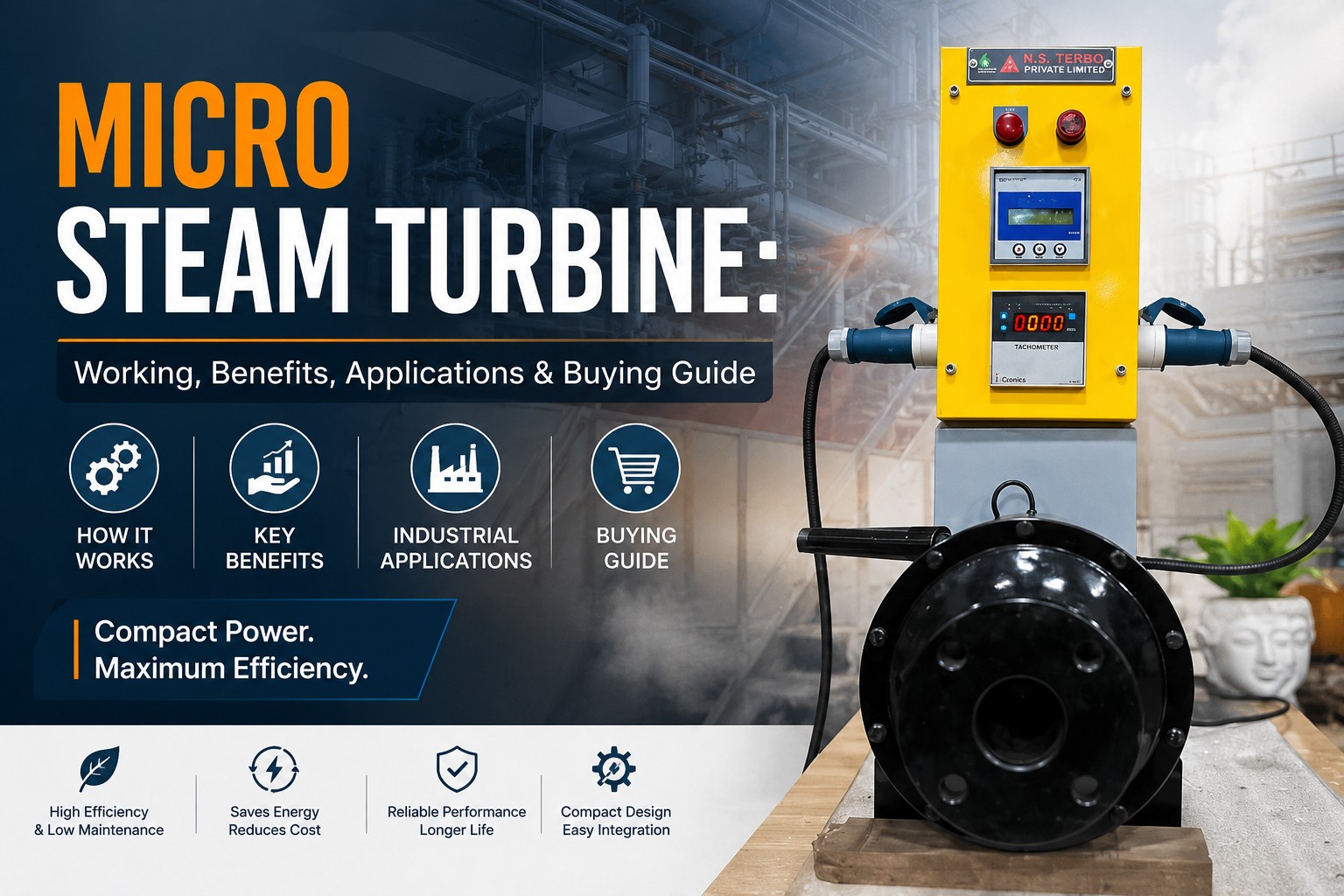
Micro Steam Turbine: Working, Benefits, Applications & Buying Guide
Learn how a Micro Steam Turbine works, its benefits, industrial applications, buying tips, and why it is ideal for efficient industrial power generation.
Introduction
As industries worldwide focus on improving energy efficiency and reducing operating costs, the Micro Steam Turbine has emerged as a practical solution for decentralized power generation. Designed to convert thermal energy into electricity on a smaller scale, a micro steam turbine enables industries to utilize excess steam or waste heat that would otherwise be lost.
Whether integrated into manufacturing plants, biomass facilities, food processing units, or chemical industries, a Micro Steam Turbine provides reliable and cost-effective power while supporting sustainability goals. This guide explains how micro steam turbines work, their benefits, applications, and what buyers should consider before investing.
What is a Micro Steam Turbine?
A Micro Steam Turbine is a compact steam-powered turbine designed for low to medium-capacity electricity generation. Unlike large utility-scale turbines used in thermal power plants, micro steam turbines are engineered for industrial facilities requiring localized power generation.
They efficiently convert steam pressure and thermal energy into mechanical energy, which drives a generator to produce electricity. Their compact design makes them ideal for industries looking to recover energy from existing steam systems or waste heat.
How Does a Micro Steam Turbine Work?
The working principle of a Micro Steam Turbine is based on converting steam energy into rotational mechanical energy.
Step 1: Steam Generation
Steam is produced using boilers, biomass systems, waste heat recovery units, or process heating equipment.
Step 2: Steam Expansion
High-pressure steam enters the turbine through precision-designed nozzles, where pressure energy is converted into high-velocity steam.
Step 3: Rotor Rotation
The steam strikes turbine blades, causing the rotor to spin at high speed.
Step 4: Electricity Generation
The rotating shaft drives an electrical generator, producing power for industrial use.
Step 5: Steam Recovery
Depending on system design, the exhaust steam can be reused for heating, process applications, or condensation, maximizing overall plant efficiency.
Key Benefits of a Micro Steam Turbine
1. Higher Energy Efficiency
Micro steam turbines convert excess steam into useful electricity, significantly improving overall plant efficiency.
2. Reduced Energy Costs
Generating electricity on-site reduces dependency on grid power and lowers operational expenses.
3. Waste Heat Recovery
Industries can utilize waste heat from boilers, furnaces, and manufacturing processes for power generation.
4. Compact Installation
Their small footprint makes installation easier, especially where space is limited.
5. Reliable Industrial Performance
Micro turbines operate continuously with minimal downtime when properly maintained.
6. Lower Carbon Emissions
Improved energy utilization reduces fuel consumption and supports sustainability initiatives.
7. Low Maintenance
Modern designs feature durable components that minimize maintenance requirements and increase equipment lifespan.
Applications of Micro Steam Turbines
Micro steam turbines are widely used across various industries.
Industrial Manufacturing
Generate electricity from existing steam systems while improving overall plant efficiency.
Biomass Power Plants
Convert biomass-generated steam into clean electricity.
Food Processing Industry
Recover steam energy from boilers for efficient power production.
Sugar Mills
Support cogeneration systems by producing electricity alongside process steam.
Paper & Pulp Industry
Utilize steam generated during production to reduce electricity costs.
Chemical Plants
Recover process steam to improve energy efficiency and operational reliability.
Textile Industry
Generate auxiliary power from industrial steam systems.
Pharmaceutical Manufacturing
Ensure continuous and reliable power generation for critical operations.
Why Industries Prefer Micro Steam Turbines
Modern industries are increasingly investing in Industrial Steam Turbine technologies because they offer:
Lower operating costs
Higher energy efficiency
Better utilization of waste heat
Reliable continuous operation
Reduced environmental impact
Improved return on investment (ROI)
Enhanced plant sustainability
Buying Guide for a Micro Steam Turbine
Before purchasing a micro steam turbine, evaluate the following factors:
Steam Pressure & Temperature
Choose a turbine compatible with your available steam conditions.
Power Output
Select the required electricity generation capacity based on your plant demand.
Turbine Type
Choose between back-pressure or condensing configurations depending on your process requirements.
Generator Efficiency
A high-efficiency generator ensures maximum electrical output.
Installation Space
Ensure sufficient space for installation and future maintenance access.
Automation Features
Modern turbines include PLC-based controls, remote monitoring, and automatic safety systems.
Manufacturer Experience
Partner with an experienced Steam Turbine Manufacturer capable of providing engineering support, customization, installation, and after-sales service.
Future of Micro Steam Turbines
With rising electricity costs and increasing emphasis on sustainable manufacturing, micro steam turbines are expected to become a vital component of Industrial Power Generation systems. Their ability to recover waste energy, improve efficiency, and reduce carbon emissions makes them a valuable investment for industries seeking long-term operational savings.
Advancements in turbine design, digital monitoring, and automation are further enhancing reliability and performance, making micro steam turbines an essential part of modern Industrial Energy Solutions.
Conclusion
A Micro Steam Turbine is an efficient, compact, and cost-effective solution for industries seeking reliable on-site power generation. By converting steam into electricity, businesses can reduce energy costs, recover waste heat, improve operational efficiency, and support sustainability initiatives.
Whether used in biomass plants, food processing facilities, paper mills, sugar factories, or chemical industries, investing in a high-quality micro steam turbine from an experienced Steam Turbine Manufacturer ensures dependable performance and long-term value. As industries continue to prioritize energy efficiency, micro steam turbines will play an increasingly important role in future Industrial Power Generation and Industrial Energy Solutions.
FAQs
1. What is a Micro Steam Turbine?
A Micro Steam Turbine is a compact turbine that converts steam into electricity for small and medium-scale industrial power generation.
2. Where are Micro Steam Turbines used?
They are widely used in biomass plants, sugar mills, paper industries, food processing plants, chemical plants, and manufacturing facilities.
3. What are the main benefits of a Micro Steam Turbine?
Key benefits include lower energy costs, waste heat recovery, improved efficiency, reliable power generation, compact design, and reduced carbon emissions.
4. How does a Micro Steam Turbine generate electricity?
High-pressure steam rotates turbine blades connected to a generator, converting thermal energy into electrical power.
5. How do I choose the right Micro Steam Turbine?
Consider steam pressure, temperature, required power output, turbine type, generator efficiency, automation features, available installation space, and the expertise of the manufacturer.