9/10/2026
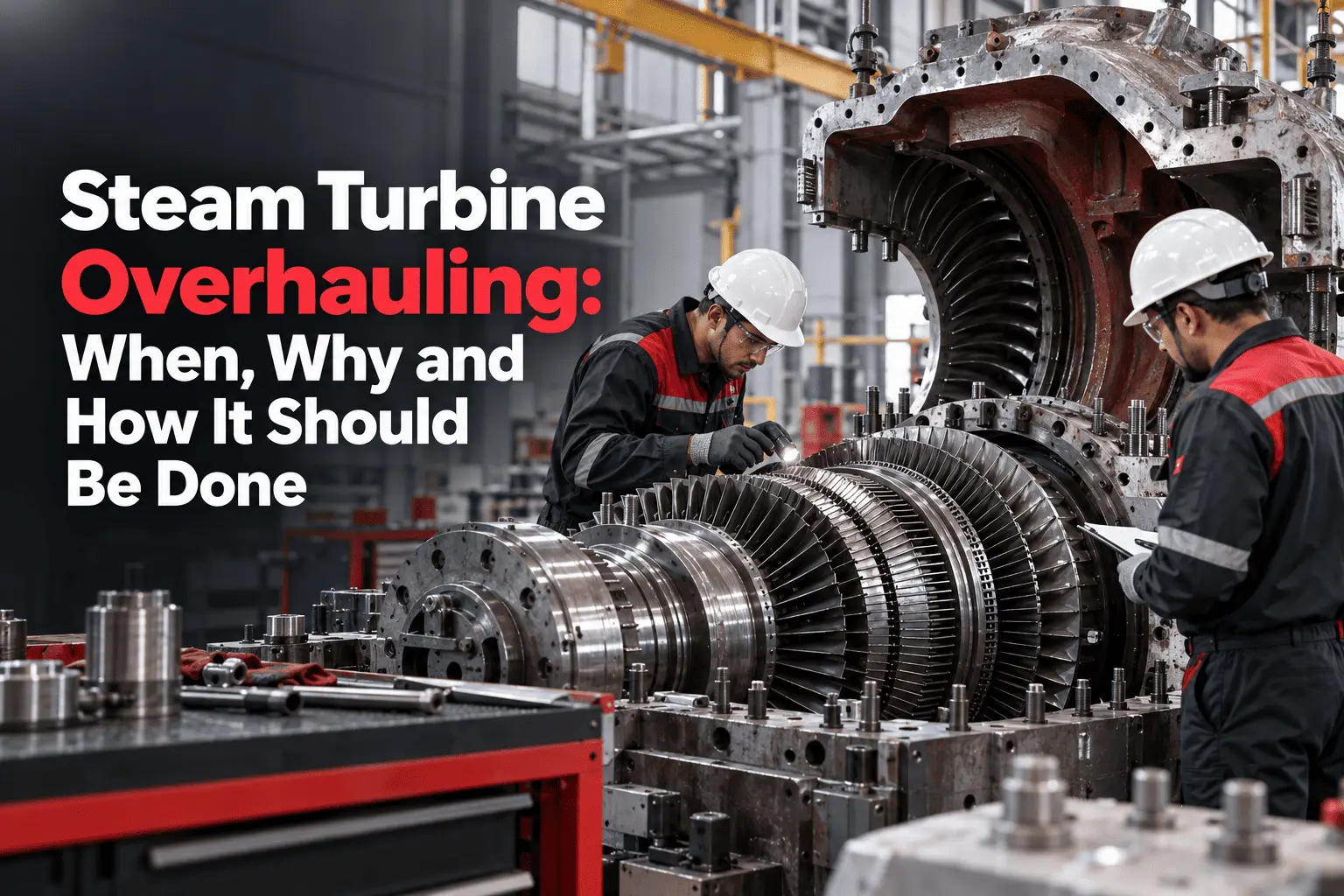
Steam Turbine Overhauling: When, Why and How It Should Be Done
Learn when steam turbine overhauling is required, why it matters and how the complete overhaul process improves efficiency and reliability.
Steam turbines operate continuously under high pressure, temperature and rotational speed. Over time, turbine components may experience wear, deposits, erosion, corrosion, misalignment and other mechanical issues. If these conditions are not identified and corrected at the right time, they can lead to reduced efficiency, excessive vibration, unplanned shutdowns and expensive component damage.
Steam turbine overhauling is a comprehensive inspection and maintenance process performed to assess the internal condition of a turbine, repair damaged components and restore reliable performance. A professionally planned overhaul can improve turbine availability, reduce operational risks and extend the service life of critical components.
This guide explains when steam turbine overhauling is required, why it is important and how the complete overhauling procedure is carried out.
What Is Steam Turbine Overhauling?
Steam turbine overhauling is the systematic process of dismantling, inspecting, cleaning, repairing, replacing and reassembling turbine components. It goes beyond routine steam turbine maintenance because it allows technicians to examine internal components that cannot be properly assessed while the machine is operating.
Depending on the operating hours, turbine condition and maintenance plan, the work may include:
Inspection of the turbine rotor
Checking blades and nozzles
Examination of journal and thrust bearings
Inspection of labyrinth and carbon seals
Measurement of rotor runout
Checking alignment and clearances
Inspection of control valves and emergency stop valves
Cleaning of deposited material
Repair or replacement of damaged components
Rotor balancing, when required
Reassembly and commissioning
The exact scope of a steam turbine overhaul should be determined using operating data, inspection findings and the equipment manufacturer’s recommendations.
Why Is Steam Turbine Overhauling Important?
A turbine may continue operating even when its internal condition is deteriorating. However, delayed maintenance can allow small defects to develop into major failures. Scheduled steam turbine overhauling helps identify these problems before they affect plant production.
1. Restores Turbine Performance
Deposits, damaged blades, incorrect clearances and steam leakage can reduce the turbine’s ability to convert steam energy into useful mechanical power. Cleaning, repairing and correctly adjusting the internal components can support steam turbine performance improvement.
2. Improves Operational Reliability
Components such as bearings, seals, blades and valves are essential for safe and stable turbine operation. Proper inspection during overhauling helps identify excessive wear, cracks, erosion and distortion before they cause an unexpected breakdown.
3. Reduces Unplanned Downtime
Sudden turbine failure can interrupt the complete production process. Planned overhauling allows the maintenance team to arrange manpower, spare parts, tools and shutdown activities in advance, reducing the risk of extended downtime.
4. Supports Steam Turbine Efficiency Improvement
Steam leakage, blade deposits, damaged seals and incorrect operating clearances can increase steam consumption. Restoring the turbine’s internal condition may help improve output and reduce the amount of steam required for operation.
5. Extends Component Life
Timely steam turbine repair prevents damaged components from affecting surrounding parts. For example, a worn bearing or misaligned rotor can create excessive vibration and place additional stress on seals, blades and the turbine casing.
6. Improves Plant Safety
High-speed rotating equipment requires accurate assembly and reliable protection systems. Steam turbine overhauling helps confirm that critical components, valves, trip systems and clearances are in suitable condition before the turbine returns to service.
When Is Steam Turbine Overhauling Required?
The frequency of overhauling cannot be determined by operating hours alone. Turbine design, steam quality, load conditions, maintenance history, vibration trends and previous inspection results must also be considered.
The following signs may indicate that a detailed turbine inspection or overhaul is needed.
Increasing Vibration Levels
A gradual or sudden rise in steam turbine rotor vibration may result from imbalance, misalignment, bearing wear, deposits, rubbing or mechanical looseness. Vibration and phase analysis should be performed to identify the probable cause.
Reduced Power Output
If the turbine produces less power under comparable steam and load conditions, internal deposits, steam leakage, nozzle erosion or blade damage may be affecting performance.
Increased Steam Consumption
A turbine requiring more steam to generate the same output may have efficiency-related issues. Damaged seals, worn flow-path components and incorrect clearances are common areas to investigate.
Abnormal Noise
Unusual rubbing, knocking or metallic sounds can indicate contact between rotating and stationary parts, looseness or internal component damage. The turbine should be inspected before the condition becomes more serious.
Bearing Temperature Increase
High or unstable bearing temperatures may be caused by lubrication problems, bearing wear, incorrect clearances, misalignment or excessive loading. Bearing condition should be carefully assessed during steam turbine servicing.
Oil Leakage or Contamination
Contaminated or degraded lubricating oil can damage bearings and other moving components. The lube oil system, coolers, filters, piping and oil seals should be inspected.
Unstable Speed or Valve Operation
Problems with control valves, the governing system or emergency stop valves may affect speed regulation and turbine safety. These systems must be tested and serviced during the overhaul.
Scheduled Maintenance Interval
Even when no major symptoms are visible, a planned steam turbine overhaul may be required according to the operating schedule, previous findings and manufacturer recommendations.
Types of Steam Turbine Overhauls
The scope of work generally depends on the turbine condition and planned shutdown duration.
Minor Overhaul
A minor overhaul usually focuses on accessible components and condition checks. It may include:
External inspection
Bearing inspection
Valve servicing
Lubrication system checks
Coupling inspection
Alignment verification
Review of vibration and operating data
Major Overhaul
A major overhaul involves opening the turbine casing and inspecting the internal components in detail. It may include complete rotor removal, blade and nozzle inspection, seal replacement, dimensional measurements, repairs and rotor balancing.
The distinction between a minor and major overhaul can vary by turbine design and maintenance policy.
Step-by-Step Steam Turbine Overhauling Procedure
A systematic procedure is essential for maintaining accuracy, safety and traceability throughout the overhaul.
Step 1: Review Operating and Maintenance Data
Before dismantling begins, engineers should review:
Turbine operating hours
Vibration history
Bearing temperature trends
Steam pressure and temperature
Power output
Steam consumption
Previous inspection reports
Known operational problems
Lubricating oil analysis reports
This information helps determine the likely problem areas and required inspection scope.
Step 2: Plan the Shutdown
The overhauling team prepares a detailed schedule covering manpower, tools, measuring instruments, lifting equipment, spare parts and repair facilities. Safety procedures and isolation requirements must also be established before work begins.
Step 3: Shut Down and Isolate the Turbine
The turbine must be safely shut down, cooled and isolated from all energy sources. Steam lines, electrical systems, lubrication systems and connected equipment should be secured according to the plant’s approved safety procedures.
Step 4: Record Initial Readings
Before dismantling, technicians record coupling alignment, bearing clearances, rotor position, axial float, valve settings and other critical measurements. These readings provide a useful reference during inspection and reassembly.
Step 5: Dismantle the Turbine
The turbine is dismantled in a controlled sequence. Components are identified, marked and stored carefully to prevent damage or incorrect reassembly.
Dismantling may include:
Removing guards and insulation
Disconnecting couplings
Opening bearing housings
Removing valves and piping
Lifting the upper casing
Removing seals and diaphragms
Lifting the turbine rotor
Proper lifting methods are essential to protect the rotor, blades and casing.
Step 6: Clean the Components
Deposits, oil, rust and other contaminants are removed using an appropriate cleaning process. Cleaning makes it easier to detect cracks, erosion, corrosion and other surface defects.
Step 7: Perform Detailed Inspection
All major components are visually and dimensionally inspected.
Important inspection areas include:
Rotor journals and thrust areas
Turbine blades and blade roots
Nozzles and diaphragms
Journal and thrust bearings
Labyrinth and carbon seals
Couplings
Control and emergency stop valves
Casing joint surfaces
Lube oil system components
Non-destructive testing may be used where required to identify cracks or hidden defects.
Step 8: Check Rotor Alignment and Runout
Rotor runout, shaft straightness, coupling alignment and bearing positions are checked using calibrated instruments. Incorrect alignment can cause vibration, uneven bearing loading and seal damage.
Step 9: Measure Critical Clearances
Accurate operating clearances are important for turbine performance and safety. Engineers may measure:
Bearing clearances
Axial clearances
Blade tip clearances
Labyrinth seal clearances
Thrust clearances
Coupling gaps
Rotor-to-casing clearances
Measured values are compared with approved technical specifications.
Step 10: Repair or Replace Components
Based on the inspection results, damaged parts may be repaired, refurbished or replaced. Typical work can include:
Bearing remetalling or replacement
Blade and nozzle repair
Labyrinth seal replacement
Rotor journal restoration
Valve refurbishment
Coupling repair
Casing repair
Replacement of worn bushes and sealing components
The selected repair method should consider component condition, material, operating requirements and technical feasibility.
Step 11: Perform Rotor Balancing
If inspection, repair or blade replacement affects rotor mass distribution, turbine rotor dynamic balancing may be required. Correct balancing helps reduce vibration and protects bearings, seals and other rotating components.
Step 12: Reassemble the Turbine
After repairs and final inspections, the turbine is reassembled according to the approved procedure. All critical clearances, bolt-tightening requirements, rotor positions and valve settings are checked and documented.
Step 13: Conduct Alignment and Final Checks
The turbine is aligned with the driven equipment, such as a generator, pump or compressor. Lubrication, control, protection and turning systems are checked before commissioning.
Step 14: Commission and Monitor Performance
The turbine is gradually returned to operation while monitoring:
Speed
Vibration
Bearing temperatures
Oil pressure
Steam conditions
Valve response
Load performance
Abnormal noise or leakage
A final report should document the inspection findings, measurements, repairs, replaced parts and commissioning results.
Common Problems Found During Steam Turbine Overhauling
A detailed overhaul may reveal several conditions that are not visible during normal operation, including:
Blade erosion, deposits or cracks
Rotor imbalance or excessive runout
Worn journal and thrust bearings
Damaged labyrinth seals
Misalignment between the turbine and driven equipment
Nozzle and diaphragm erosion
Excessive internal clearances
Carbon deposits and steam-path contamination
Control valve wear or sticking
Lubrication system contamination
Casing distortion or joint leakage
Coupling wear
Finding these problems early allows corrective work to be completed during a planned shutdown.
How to Prepare for a Successful Turbine Overhaul
Proper planning can significantly improve the efficiency of the overhauling process.
Before the shutdown, plant operators should:
Define the complete overhaul scope
Review previous maintenance records
Arrange critical steam turbine spare parts
Verify the availability of calibrated instruments
Prepare lifting and handling equipment
Establish inspection and acceptance criteria
Coordinate repair facilities and technical specialists
Create a detailed shutdown schedule
Document all measurements and findings
It is also advisable to keep bearings, seals, gaskets, bushes and other frequently required components available to avoid unnecessary delays.
Benefits of Professional Steam Turbine Overhauling Services
Steam turbine overhauling requires specialised knowledge of rotating equipment, clearances, metallurgy, alignment, balancing and turbine controls. Working with an experienced service provider can offer:
Structured inspection and reporting
Accurate dimensional measurements
Identification of the root cause of recurring problems
Access to reverse engineering and remanufacturing support
Proper rotor alignment and balancing
Reliable repair of damaged components
Better planning of spare parts and shutdown activities
Technical assistance during commissioning
A detailed condition report also helps plant owners plan future preventive maintenance and component replacement.
Conclusion
Steam turbine overhauling is essential for maintaining the efficiency, reliability and operating life of turbine equipment. It enables engineers to identify internal wear, restore critical clearances, repair damaged components and address the causes of vibration or performance loss.
The decision to overhaul a turbine should be based on operating data, equipment condition, maintenance history and technical recommendations—not only on fixed operating hours. With proper planning, skilled execution and accurate inspection, a turbine overhaul can reduce shutdown risks and support dependable plant operation.
NS Terbo Pvt. Ltd. provides professional support for steam turbine overhauling, troubleshooting, rotor inspection, bearing and seal refurbishment, blade and nozzle services, reverse engineering, spare parts and commissioning.
Planning a steam turbine overhaul? Contact NS Terbo to discuss your turbine condition, shutdown schedule and service requirements.
Website: www.nsterbo.com
FAQs: Steam Turbine Overhauling
How often should a steam turbine be overhauled?
The interval depends on turbine design, operating hours, steam quality, duty cycle, maintenance history and condition-monitoring results. The manufacturer’s recommendations and actual operating data should be used to plan the overhaul.
What are the signs that a steam turbine needs overhauling?
Common signs include increasing vibration, reduced power output, higher steam consumption, abnormal noise, rising bearing temperatures, oil contamination and unstable valve operation.
How long does steam turbine overhauling take?
The duration depends on turbine size, scope of dismantling, component condition, availability of spare parts and the repairs required. Proper pre-shutdown planning can reduce delays.
What is inspected during a steam turbine overhaul?
The rotor, blades, nozzles, diaphragms, bearings, seals, valves, couplings, casing, lubrication system, alignment and operating clearances are typically inspected.
Can overhauling improve steam turbine efficiency?
Yes. Correcting steam leakage, deposits, damaged flow-path components, misalignment and improper clearances can support improved turbine performance and reduced steam consumption.
What is the difference between steam turbine maintenance and overhauling?
Routine maintenance includes regular checks, lubrication monitoring and external inspections. Overhauling involves dismantling the turbine to inspect, repair and restore internal components.