4/9/2026
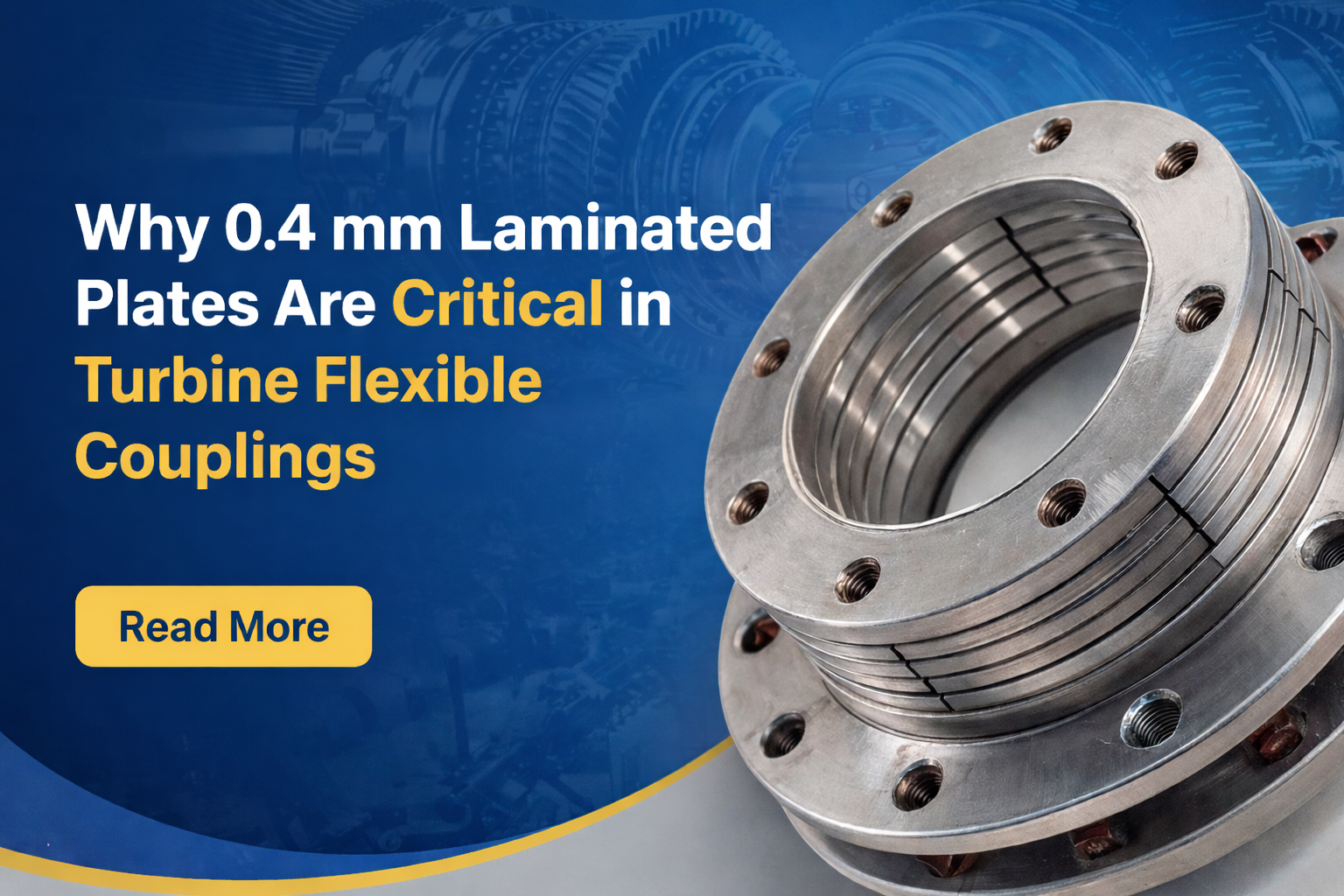
Why 0.4 mm Laminated Plates Are Critical in Turbine Flexible Couplings
Learn how 0.4 mm laminated plates in turbine flexible couplings transmit torque, reduce vibration, absorb misalignment, and prevent costly downtime.
In turbine systems, some of the smallest components play the biggest role in ensuring smooth and reliable operation. One such essential part is the 0.4 mm laminated plate, used in flexible coupling elements.
Though thin in size, these plates are engineered to handle critical mechanical responsibilities between the turbine and driven equipment.
What Are Laminated Plates in Flexible Couplings?
Flexible couplings are designed to connect rotating shafts while allowing slight flexibility. At the core of these couplings are laminated plates — thin metallic layers stacked together to create a strong yet flexible element.
These plates are assembled in the flexible coupling section between the turbine shaft and the driven machine shaft.
Key Functions of Laminated Plates
1. Controlled Torque Transmission
Laminated plates efficiently transfer power from the turbine to the connected equipment while maintaining operational stability.
2. Misalignment Compensation
During operation, minor shaft misalignments can occur due to thermal expansion, load variation, or installation tolerances. Laminated plates absorb these small deviations.
3. Vibration Reduction
They help minimize vibration and reduce the transfer of mechanical stress to critical components like bearings and shafts.
4. Extended Equipment Life
By reducing stress and maintaining smooth torque flow, these plates improve the lifespan of turbines and connected machinery.
Why Their Condition Matters
Despite their durability, laminated plates are subject to fatigue over time. If they crack, weaken, or fail:
Couplings can become rigid
Shaft misalignment stress increases
Vibration levels rise
Bearings and seals may fail prematurely
Unplanned downtime and costly repairs can occur
Importance of Inspection and Timely Replacement
Routine inspection of flexible coupling elements is essential for preventing unexpected failures. Early identification of wear or fatigue in laminated plates can help:
Maintain turbine efficiency
Prevent shutdowns
Improve operational safety
Reduce long-term maintenance costs
Conclusion
In turbine systems, performance and reliability often depend on precision-engineered components that may seem small but are highly critical. The 0.4 mm laminated plates used in flexible couplings are a perfect example — thin in size, but vital in function.
Regular monitoring and timely replacement of these plates is key to ensuring safe, smooth, and efficient turbine operation.