7/14/2026
Steam Turbine Thrust Pad Failure: Causes, Symptoms, Inspection & Prevention
Learn the causes of steam turbine thrust pad failure, common symptoms, inspection methods, troubleshooting, and maintenance tips to improve reliability.
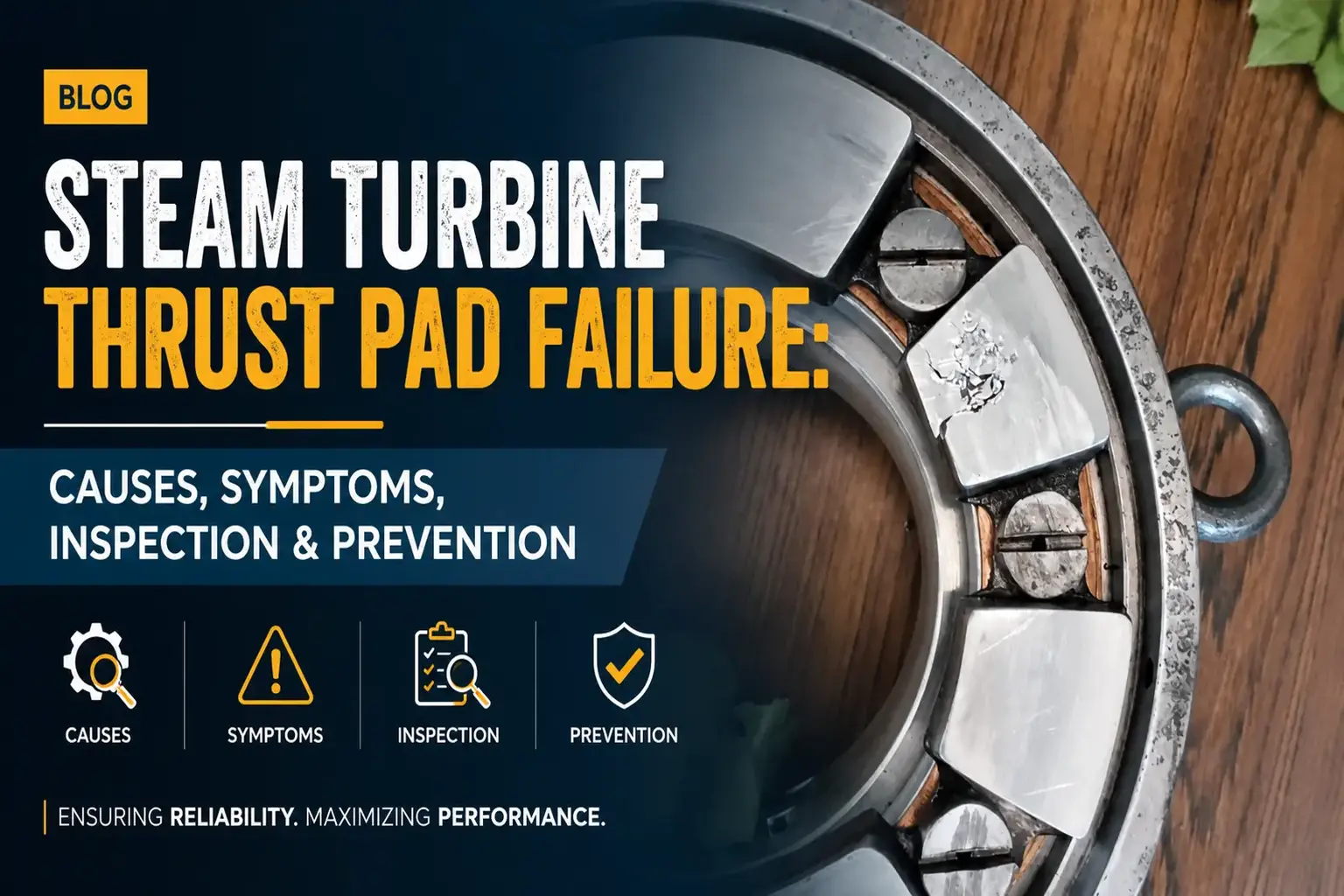
Steam turbine reliability depends on the health of its rotating components, and one of the most critical among them is the thrust bearing. A Steam Turbine Thrust Pad Failure can lead to excessive axial movement, severe rotor damage, unexpected shutdowns, and costly repairs. Even a minor issue with the thrust bearing can quickly escalate into a major mechanical failure if not detected early.
Understanding why thrust pads fail, recognizing the warning signs, and following proper maintenance practices can significantly improve turbine reliability and reduce unplanned downtime.
Also Read: Steam Turbine Rotor Restoration Through Precision Machining
What is a Steam Turbine Thrust Pad?
A thrust pad is a key part of the turbine's thrust bearing assembly. Its primary function is to absorb the axial force generated by steam pressure and keep the rotor in its correct operating position. Unlike journal bearings that support radial loads, thrust bearings are specifically designed to control axial movement of the rotor.
When the thrust pads lose their ability to carry this load, the rotor may shift from its designed position, potentially causing contact between rotating and stationary components.
Common Causes of Steam Turbine Thrust Pad Failure
1. Lubrication Problems
Poor lubrication is one of the leading causes of Thrust Bearing Failure in Steam Turbine systems. Inadequate oil flow, low oil pressure, incorrect oil viscosity, or contaminated lubricating oil reduces the protective oil film between the thrust pad and rotating collar.
Common lubrication issues include:
Low oil pressure
Oil contamination by water or particles
High oil temperature
Blocked oil passages
Incorrect lubricant selection
Without proper lubrication, metal-to-metal contact occurs, resulting in rapid wear and overheating.
2. Excessive Axial Load
Steam turbines are designed to operate within specific thrust limits. Process abnormalities such as sudden load changes, blade damage, pressure imbalance, or improper balancing can generate excessive axial thrust.
When axial loads exceed the bearing's design capacity, thrust pads experience increased stress, accelerated wear, and possible cracking.
3. Rotor Misalignment
Rotor misalignment creates uneven loading across the thrust pads. Instead of sharing the load evenly, one or two pads may carry most of the force, causing localized overheating and premature failure.
Proper alignment during installation and overhaul is essential for reliable operation.
4. High Operating Temperature
Excessive bearing temperatures reduce lubricant effectiveness and weaken the bearing material. Overheating may result from poor lubrication, cooling system problems, excessive load, or restricted oil flow.
Continuous temperature monitoring helps identify developing problems before major damage occurs.
5. Foreign Particle Contamination
Dust, metal particles, carbon deposits, and other contaminants entering the lubrication system can scratch the bearing surface and damage the oil film.
Maintaining clean lubrication systems and replacing filters on schedule significantly reduces this risk.
6. Improper Installation or Maintenance
Incorrect bearing clearance, poor assembly practices, improper preload, or installation errors may shorten bearing life. Precision during overhaul is essential for long-term reliability.
Symptoms of Steam Turbine Thrust Pad Damage
Early detection is the best way to avoid catastrophic failures. Some of the most common Symptoms of steam turbine thrust pad damage include:
Increasing bearing metal temperature
High axial shaft displacement
Excessive vibration levels
Unusual mechanical noise
Declining turbine efficiency
Lubricating oil contamination with metallic particles
Rotor instability
Frequent turbine trips due to protection system activation
Ignoring these warning signs can eventually result in severe rotor damage and extended plant shutdowns.
Steam Turbine Bearing Inspection
Regular Steam Turbine Bearing Inspection is essential for identifying wear before it develops into major failures.
During inspection, maintenance engineers should evaluate:
Bearing surface condition
White metal integrity
Pad wear pattern
Oil film condition
Temperature history
Shaft alignment
Bearing clearance
Rotor axial movement
Lubrication system cleanliness
Modern inspection techniques may also include vibration analysis, oil analysis, thermography, and shaft displacement monitoring for improved predictive maintenance.
Steam Turbine Thrust Bearing Inspection Checklist
An effective Steam turbine thrust bearing inspection checklist should include:
Check bearing metal temperatures
Verify lubricating oil pressure
Inspect oil quality and contamination levels
Measure axial shaft displacement
Examine thrust pad wear patterns
Check bearing clearances
Inspect oil filters and oil passages
Verify alignment readings
Review vibration trends
Inspect thrust collar condition
Confirm proper cooling system performance
Record maintenance observations for trend analysis
Routine inspections help detect developing issues before they affect turbine performance.
Also Read: Why Improvised Supports Are a Serious Risk During Steam Turbine Overhaul
Preventing Steam Turbine Thrust Pad Failure
Effective Steam Turbine Maintenance focuses on prevention rather than repair. Best practices include:
Maintain clean lubricating oil
Monitor bearing temperatures continuously
Perform regular vibration analysis
Inspect thrust bearings during scheduled shutdowns
Verify rotor alignment after maintenance
Replace worn components before failure
Monitor axial displacement trends
Follow OEM maintenance recommendations
Train maintenance personnel on inspection procedures
Predictive maintenance technologies can identify early-stage bearing deterioration long before failure occurs.
Importance of Industrial Steam Turbine Maintenance
Comprehensive Industrial Steam Turbine Maintenance improves equipment availability, increases efficiency, and reduces lifecycle costs. Plants that implement condition monitoring, scheduled inspections, and predictive diagnostics experience fewer unexpected shutdowns and longer bearing service life.
Maintenance should never focus only on replacing damaged parts—it should aim to eliminate the root causes that create those failures.
Professional Steam Turbine Repair Services
When significant thrust bearing damage occurs, expert Steam Turbine Repair Services become essential. Professional repair typically includes:
Root cause failure analysis
Bearing replacement
Rotor inspection
Shaft alignment
Precision machining
Dynamic balancing
Oil system inspection
Performance testing before commissioning
Experienced repair specialists ensure that the underlying problem is corrected rather than simply replacing damaged components.
Conclusion
Steam Turbine Thrust Pad Failure is rarely caused by a single issue. It usually develops from a combination of lubrication problems, excessive axial loads, misalignment, contamination, overheating, or inadequate maintenance. Recognizing the early symptoms, performing routine Steam Turbine Bearing Inspection, following a structured Steam turbine thrust bearing inspection checklist, and implementing a reliable Steam turbine thrust bearing troubleshooting guide are essential for preventing unexpected failures.
By investing in proactive Steam Turbine Maintenance, comprehensive Industrial Steam Turbine Maintenance, and timely Steam Turbine Repair Services, power plants can improve reliability, reduce maintenance costs, extend equipment life, and ensure safe, efficient turbine operation for years to come.