8/19/2026
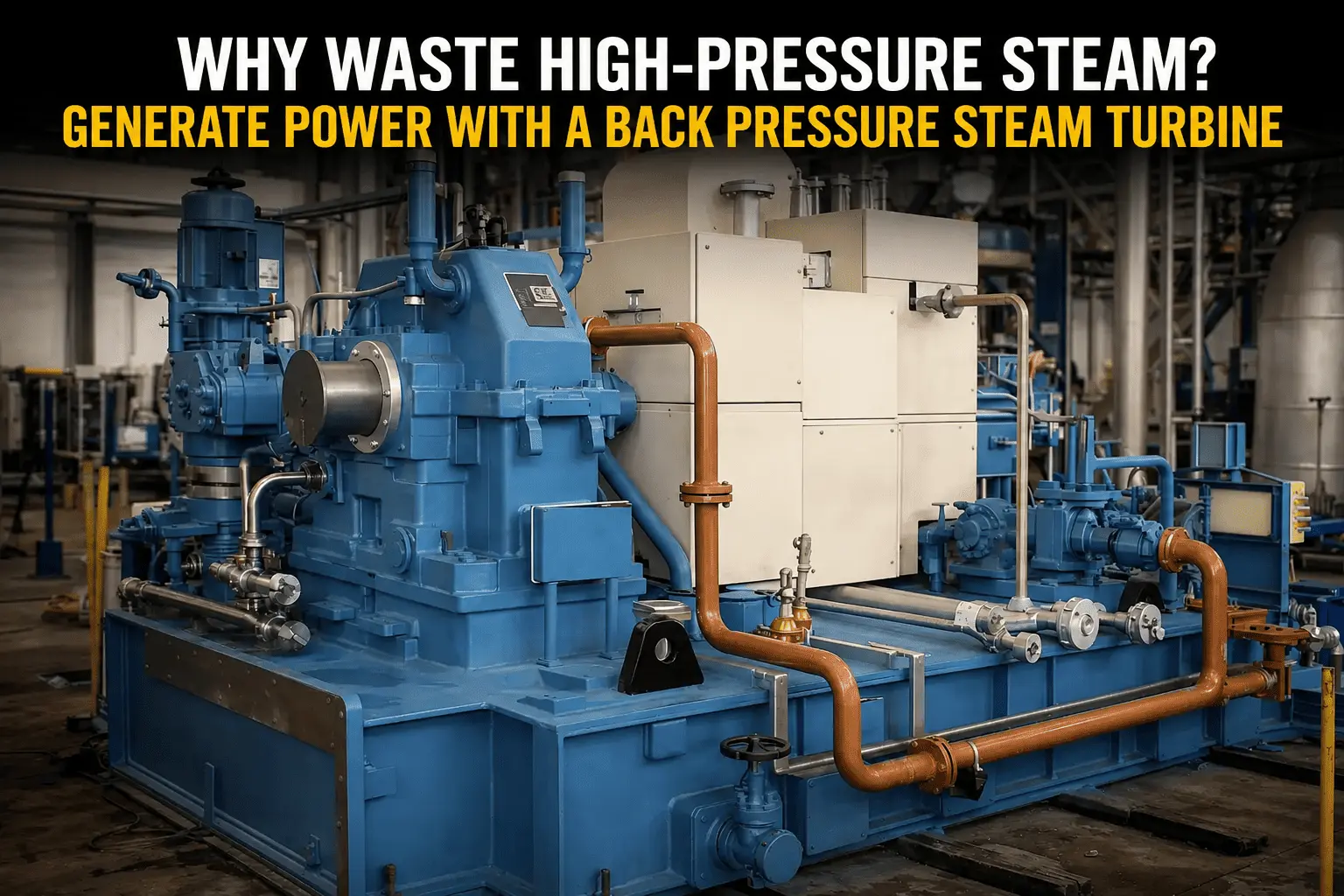
Why Waste High-Pressure Steam? Generate Power with a Back Pressure Steam Turbine
Discover how a Back Pressure Steam Turbine converts high-pressure steam into power while supplying process steam. Explore benefits and applications.
High-pressure steam is one of the most valuable energy resources in many industrial plants. Sugar mills, paper mills, distilleries, chemical plants, biomass facilities, and other process industries generate steam for production and heating applications.
But what happens when high-pressure steam needs to be reduced to a lower pressure for the process?
In a conventional system, a pressure-reducing valve may reduce the steam pressure without recovering that available energy for power generation. A Back Pressure Steam Turbine provides an alternative approach by utilizing the pressure drop to generate mechanical power while delivering exhaust steam at the pressure required by the process.
For industries looking to improve energy utilization, reduce purchased electricity, and make better use of existing steam infrastructure, a Back Pressure Steam Turbine Generator can be an effective solution.
What Is a Back Pressure Steam Turbine?
A Back Pressure Steam Turbine is an industrial turbine designed to expand high-pressure steam and convert its energy into mechanical power.
The turbine shaft is connected to a generator, allowing the mechanical energy to be converted into electricity. After expansion through the turbine, the exhaust steam is delivered at a controlled pressure that can be used for industrial processes.
This makes the system particularly useful for plants that have simultaneous requirements for:
Electricity generation
Process steam
Heating
Drying
Evaporation
Industrial thermal processes
The key advantage is that the same steam can first contribute to power generation and then continue to serve the plant's process requirements.
How Does a Back Pressure Steam Turbine Work?
The operating principle of a Back Pressure Turbine System involves controlled expansion of high-pressure steam.
1. High-Pressure Steam Enters the Turbine
Steam produced by the plant's boiler enters the turbine at a specified pressure and temperature.
2. Steam Expands Through the Turbine
The steam passes through turbine stages where its pressure and thermal energy are converted into mechanical energy.
3. The Turbine Rotor Produces Mechanical Power
The expansion of steam causes the turbine rotor to rotate. This rotational energy is transferred through the turbine shaft.
4. The Generator Produces Electricity
The turbine shaft drives an electrical generator, converting mechanical power into electrical energy.
5. Exhaust Steam Goes to the Process
Instead of exhausting steam into a condenser at very low pressure, a back pressure turbine delivers steam at the pressure required by the downstream process.
This is why a Steam Power Generation System based on back pressure operation can provide both electricity and useful process steam.
Why Use a Back Pressure Steam Turbine for Power Generation?
The main reason is simple: use the available steam pressure drop to generate useful power instead of wasting the available energy during pressure reduction.
Many industrial plants already have high-pressure boilers and require lower-pressure steam for their production processes.
This creates a potential energy-recovery opportunity.
A High Pressure Steam Turbine can be installed between the high-pressure steam supply and the process steam network, depending on the plant's operating conditions.
The turbine utilizes the available pressure difference to generate power before delivering steam to the process.
Back Pressure Steam Turbine vs. Pressure-Reducing Valve
A pressure-reducing valve performs an important process function: it reduces steam pressure.
However, it does not convert the available pressure drop into useful mechanical power.
A Back Pressure Steam Turbine, on the other hand, can utilize this pressure drop for power generation.
In simplified terms:
High-Pressure Steam → Turbine Expansion → Electricity + Process Steam
Instead of:
High-Pressure Steam → Pressure Reduction → Process Steam
The actual suitability of either configuration depends on plant conditions, steam demand, pressure requirements, operating hours, and economic feasibility.
Key Benefits of a Back Pressure Steam Turbine
Improved Steam Energy Utilization
A Back Pressure Steam Turbine can utilize energy available in high-pressure steam before the steam reaches the process.
This can improve the overall utilization of the plant's steam system.
On-Site Power Generation
The turbine can drive a generator to produce electricity for captive consumption.
This can help industrial plants reduce their dependence on externally purchased electricity, depending on the project's economics.
Process Steam Availability
One of the biggest advantages of a back pressure configuration is that the exhaust steam remains useful.
The turbine can be designed around the pressure required by the downstream process.
Better Overall Energy Efficiency
By combining power generation and process steam utilization, industries can potentially achieve better overall energy utilization compared with simply reducing steam pressure.
Suitable for Continuous Industrial Operations
Plants with stable steam flow and long operating hours can be particularly suitable for Steam Energy Recovery applications.
Applications of Back Pressure Steam Turbines
A Back Pressure Steam Turbine Generator can be considered for various industries where high-pressure steam and process steam are both required.
Sugar and Distillery Plants
Sugar mills and distilleries typically have significant steam requirements for production. A turbine can generate electricity while supplying exhaust steam for process applications.
Paper and Pulp Plants
Paper manufacturing uses steam for drying and other thermal processes. A back pressure turbine can integrate power generation with the existing steam system.
Biomass Power Plants
Biomass boilers can produce high-pressure steam that can be expanded through a turbine for electricity generation.
Chemical Plants
Chemical manufacturing processes often require both electrical power and controlled-pressure steam. A properly engineered turbine system can help address both requirements.
Textile Industries
Textile processing can involve substantial steam consumption for heating, drying, and other operations. Steam-to-power integration can improve overall energy utilization.
Food Processing Plants
Steam is commonly used for heating, cooking, sterilization, drying, and evaporation. A suitable turbine system can potentially recover energy before the steam reaches these processes.
What Determines Back Pressure Steam Turbine Capacity?
Choosing the right Industrial Steam Turbine requires more than selecting a desired electrical capacity.
The turbine should be designed according to the actual steam conditions of the plant.
Important parameters include:
Steam Flow Rate
The available steam flow has a direct impact on the potential power output.
Steam Inlet Pressure
Higher inlet pressure can provide greater expansion potential, depending on the system configuration.
Steam Inlet Temperature
Steam temperature affects the available energy and turbine operating conditions.
Exhaust Steam Pressure
This is particularly important for a back pressure turbine because the exhaust steam must meet the requirements of the downstream process.
Operating Hours
A plant operating for extended periods may have greater potential for annual power generation and energy savings.
Process Steam Requirement
The turbine must be selected around the plant's actual process steam demand to ensure reliable operation.
Steam Energy Recovery: An Opportunity for Industrial Plants
Many industrial plants already have the infrastructure required for steam-to-power generation.
For example, a plant may have:
A high-pressure boiler
Continuous steam generation
Process steam requirements
Pressure-reducing stations
High electricity consumption
Long annual operating hours
Under suitable conditions, the pressure drop between the boiler steam and process steam can potentially be utilized for power generation.
This makes Steam Energy Recovery an important consideration when evaluating industrial energy-efficiency projects.
How to Evaluate a Back Pressure Turbine Project
Before investing in a Back Pressure Steam Turbine, industrial buyers should evaluate the complete steam and power profile of the plant.
Key information includes:
Boiler capacity
Steam generation rate
Steam inlet pressure
Steam inlet temperature
Required exhaust pressure
Process steam consumption
Electrical power demand
Annual operating hours
Existing turbine or pressure-reducing system
Grid electricity cost
Generator requirements
Maintenance requirements
A detailed technical and financial assessment can help determine the potential power output and project feasibility.
Why Choosing the Right Steam Turbine Manufacturer Matters
A steam turbine is a critical rotating machine, so selecting an experienced Industrial Steam Turbine Manufacturer is important.
The right manufacturer should understand both the turbine and the industrial process in which it will operate.
Important areas include:
Turbine design
Steam parameter analysis
Turbine capacity selection
Generator integration
Governing system
Control system
Steam inlet arrangement
Exhaust steam arrangement
Installation
Commissioning
Maintenance
Overhauling and refurbishment
A properly engineered turbine system can provide reliable operation while matching the plant's steam and power requirements.
Why Choose NS TERBO?
NS TERBO provides industrial steam turbine solutions for applications where efficient steam utilization and reliable power generation are important.
For industries generating high-pressure steam and requiring lower-pressure process steam, NS TERBO can help evaluate the technical requirements for a suitable Back Pressure Steam Turbine system.
The appropriate configuration depends on steam flow, pressure, temperature, exhaust requirements, power demand, and operating conditions.
Conclusion: Turn High-Pressure Steam into Useful Power
High-pressure steam is more than just a process utility. It can also represent an opportunity for energy recovery and power generation.
A Back Pressure Steam Turbine can utilize the available pressure drop to generate electricity while delivering useful exhaust steam to the industrial process.
For sugar and distillery plants, paper and pulp facilities, biomass plants, chemical industries, textile units, and other process industries, this approach can support better steam utilization and on-site power generation.
If your plant currently reduces high-pressure steam through a pressure-reducing valve, it may be worth evaluating whether that pressure drop could instead contribute to power generation.
NS TERBO can help evaluate your steam parameters and identify a suitable steam turbine configuration for your industrial application.
Frequently Asked Questions
What is a Back Pressure Steam Turbine?
A Back Pressure Steam Turbine expands high-pressure steam to generate mechanical power while exhausting steam at a controlled pressure for use in industrial processes.
How does a Back Pressure Steam Turbine generate electricity?
High-pressure steam expands through the turbine stages and rotates the turbine shaft. The shaft drives a generator, which converts mechanical energy into electricity.
Can a Back Pressure Steam Turbine replace a pressure-reducing valve?
In suitable applications, a turbine can be installed to utilize the available pressure drop for power generation while still supplying process steam at the required pressure.
Which industries use Back Pressure Steam Turbines?
Common applications include sugar, distillery, paper and pulp, biomass, chemical, textile, food processing, and other steam-intensive industries.
What determines the power output of a steam turbine?
Steam flow, inlet pressure, inlet temperature, exhaust pressure, steam quality, turbine efficiency, and operating hours are important factors affecting power output.
Can a Back Pressure Steam Turbine be used for captive power generation?
Yes. A Back Pressure Steam Turbine Generator can be connected to a generator to produce electricity for industrial or captive consumption.
What is Steam Energy Recovery?
Steam Energy Recovery involves utilizing available steam energy that might otherwise be lost during processes such as pressure reduction, with the objective of improving overall energy utilization.
How do I select the right Industrial Steam Turbine?
Selection should be based on actual plant steam flow, pressure, temperature, exhaust pressure, process steam demand, electrical load, and operating hours. A qualified Steam Turbine Manufacturer can perform the necessary technical evaluation.
What makes NS TERBO different?
NS TERBO focuses on industrial steam turbine solutions designed around specific plant operating conditions, including steam parameters, process requirements, power demand, and application requirements.