8/26/2026
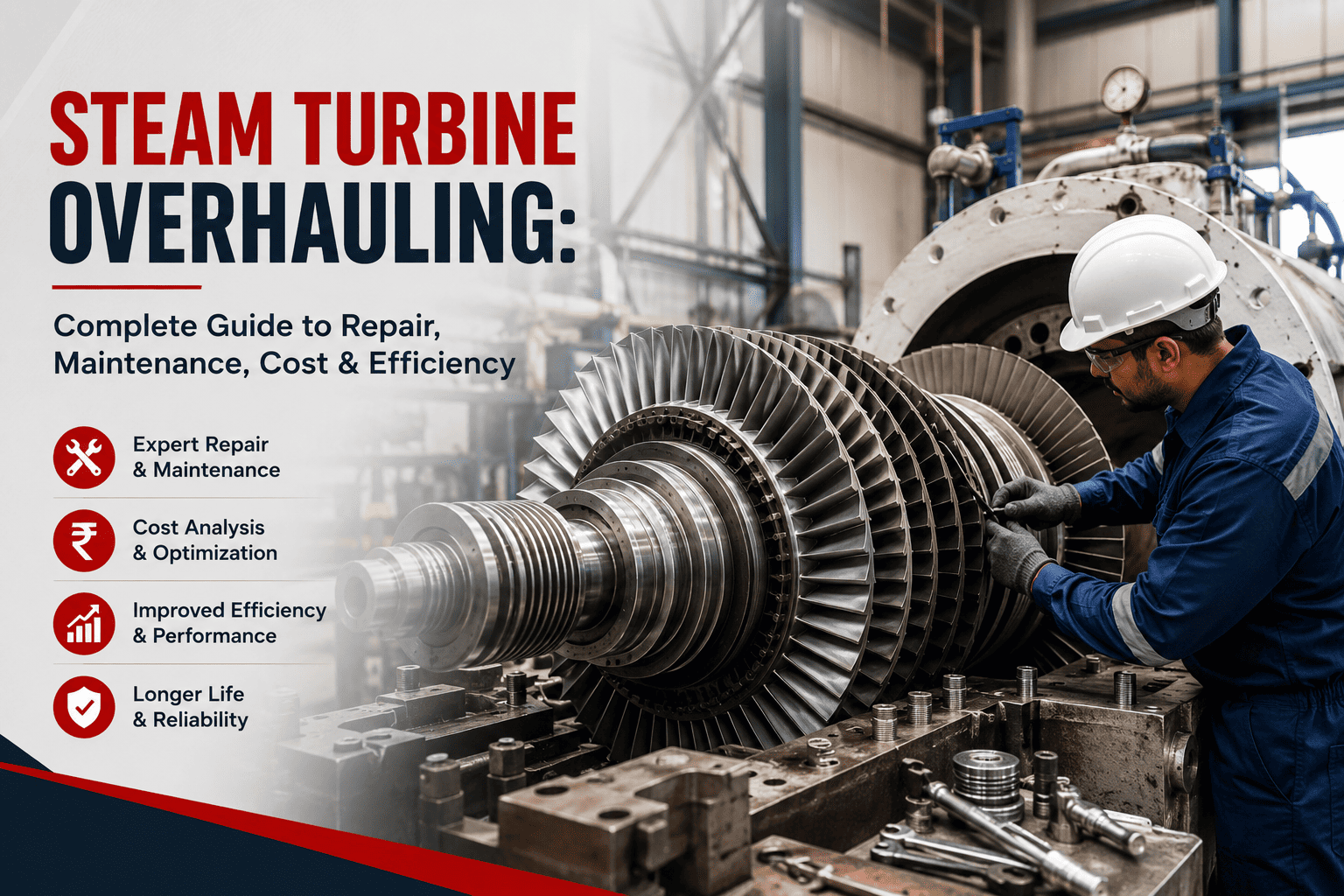
Steam Turbine Overhauling: Complete Guide to Repair, Maintenance, Cost & Efficiency
Steam turbine overhauling, repair, maintenance, cost, refurbishment and efficiency improvement for reliable power plant performance.
A steam turbine is one of the most critical pieces of equipment in a power generation or process plant. It converts steam energy into mechanical power, which is then used to drive a generator, pump, compressor, or other industrial equipment. Over time, continuous operation, high temperatures, pressure, vibration, erosion, and component wear can reduce turbine performance.
This is where steam turbine overhauling becomes essential.
A properly planned overhaul can restore turbine performance, improve reliability, reduce unexpected downtime, and extend the operating life of critical components. For many plants, refurbishing an existing turbine can also be a more economical option than complete replacement.
What Is Steam Turbine Overhauling?
Steam turbine overhauling is a comprehensive inspection, maintenance, repair, and restoration process performed on a steam turbine. The turbine is opened and its major components are inspected to identify wear, damage, deformation, deposits, cracks, erosion, or other abnormalities.
Depending on the turbine's condition, an overhaul may include:
Dismantling and inspection
Rotor inspection and runout checking
Bearing inspection and repair
Blade inspection
Diaphragm and nozzle inspection
Seal inspection and replacement
Coupling inspection
Casing inspection
Shaft and journal inspection
Cleaning and removal of deposits
Alignment and balancing
Replacement or refurbishment of damaged components
Reassembly and testing
The exact scope depends on the turbine design, operating history, condition, manufacturer specifications, and plant requirements.
Why Is Steam Turbine Overhauling Important?
Steam turbines operate under demanding conditions for long periods. Even small changes in clearances, bearing condition, blade profile, or rotor alignment can affect efficiency and reliability.
Regular steam turbine maintenance and periodic overhauling help identify potential problems before they develop into major failures.
1. Restores Turbine Performance
Wear, deposits, damaged seals, and incorrect clearances can reduce turbine efficiency. During an overhaul, these conditions can be identified and corrected.
2. Reduces Unplanned Downtime
Unexpected turbine failure can result in significant production and power-generation losses. Preventive inspection and repair help reduce the risk of sudden breakdowns.
3. Extends Equipment Life
Replacing or refurbishing worn components can significantly extend the useful operating life of a turbine.
4. Improves Reliability
Proper inspection of bearings, rotor, blades, seals, and other critical components helps ensure reliable operation after the overhaul.
5. Supports Better Efficiency
Correcting mechanical issues and restoring designed clearances can contribute to improved steam turbine efficiency and overall plant performance.
Steam Turbine Overhaul Process
A professional steam turbine overhaul process generally follows a systematic sequence.
Step 1: Pre-Overhaul Inspection
Before dismantling, operating parameters and historical data are reviewed. Important information may include:
Steam pressure and temperature
Turbine speed
Vibration levels
Bearing temperatures
Lubrication system condition
Power output
Previous maintenance records
Steam consumption
Previous inspection findings
This information helps engineers identify areas that require special attention.
Step 2: Turbine Shutdown and Isolation
The turbine is safely shut down and isolated from steam, electrical, lubrication, and auxiliary systems according to the plant's safety procedures.
Step 3: Dismantling
The turbine is dismantled carefully so that components can be inspected without causing additional damage. Proper identification and documentation of components are important during this stage.
Step 4: Component Inspection
Critical components are inspected for wear, cracks, erosion, corrosion, deposits, deformation, and dimensional changes.
Major inspection areas can include:
Rotor
Blades
Bearings
Casing
Diaphragms
Nozzles
Seals
Couplings
Journal surfaces
Thrust components
Non-destructive testing may also be considered where appropriate.
Step 5: Rotor Inspection and Runout Checking
The rotor is one of the most important components of a steam turbine. Shaft condition, journals, blade attachment areas, and rotor runout are checked.
Excessive runout or imbalance can contribute to vibration and affect turbine reliability.
Step 6: Bearing Inspection and Repair
Bearings support the turbine rotor and maintain proper running conditions. During steam turbine repair, bearing surfaces, clearances, alignment, and condition are inspected.
Depending on the condition, bearings may require repair, rebabbitting, machining, or replacement.
Step 7: Blade and Diaphragm Inspection
Turbine blades are exposed to high-temperature, high-pressure steam and can experience erosion, corrosion, deposits, or mechanical damage.
Blade condition and clearances are checked, while diaphragms and nozzles are inspected for damage and deposits.
Step 8: Seal Inspection
Steam leakage through worn or damaged seals can negatively affect turbine efficiency. Seals are therefore inspected and repaired or replaced where necessary.
Step 9: Repair and Refurbishment
After inspection, the required repairs are identified. Depending on the condition, components may be:
Repaired
Machined
Reconditioned
Re-babbitted
Balanced
Replaced
This stage is where steam turbine refurbishment can provide a practical alternative to complete equipment replacement.
Step 10: Alignment and Reassembly
After repairs, the turbine is reassembled according to the required specifications. Shaft alignment, clearances, coupling condition, and other critical parameters are verified.
Step 11: Testing and Commissioning
Following reassembly, the turbine is prepared for operation. Operating parameters, vibration, bearing temperatures, speed, and other relevant performance indicators are monitored.
Common Steam Turbine Problems That Require Overhauling
Several issues can indicate the need for a detailed inspection or overhaul.
Excessive Vibration
High vibration can result from rotor imbalance, misalignment, bearing problems, rubbing, or other mechanical issues.
Reduced Power Output
A reduction in power output may be associated with steam conditions, deposits, blade damage, seal leakage, internal clearances, or other turbine-related problems.
High Bearing Temperature
Abnormally high bearing temperature can indicate lubrication problems, excessive load, misalignment, or bearing damage.
Steam Leakage
Damaged or worn seals can increase internal steam leakage and reduce turbine efficiency.
Rotor Runout
Excessive rotor runout can affect turbine stability and contribute to vibration.
Blade Erosion
Steam containing moisture or contaminants can cause erosion over time, potentially affecting blade performance and structural integrity.
Steam Turbine Overhauling Cost
The steam turbine overhaul cost varies significantly depending on the turbine's size, design, operating condition, overhaul scope, and components requiring repair.
Factors that can influence the overall cost include:
Turbine capacity
Turbine make and model
Age and operating history
Extent of component wear
Rotor condition
Bearing condition
Blade condition
Seal replacement requirements
Machining requirements
Spare parts availability
Balancing requirements
Site work and manpower
Testing and commissioning requirements
For this reason, a reliable cost estimate should generally be prepared after reviewing the turbine's technical details and inspection requirements rather than relying on a fixed standard price.
How Overhauling Can Improve Steam Turbine Efficiency
Steam turbine efficiency depends on several mechanical and thermodynamic factors. Mechanical wear, incorrect clearances, damaged blades, steam leakage, and deposits can negatively affect performance.
During an overhaul, restoring components to appropriate dimensional and operational conditions can help minimize performance losses.
Efficiency improvement may involve:
Restoring internal clearances
Repairing damaged blades
Improving seal condition
Correcting rotor alignment
Inspecting diaphragms and nozzles
Removing deposits
Checking bearings
Correcting mechanical imbalance
Verifying steam-path condition
However, the actual efficiency improvement depends on the turbine's initial condition and the specific causes of performance degradation.
Steam Turbine Overhaul vs. Complete Replacement
When an older turbine begins showing performance issues, plant owners often consider whether to overhaul the existing machine or purchase a new turbine.
Overhauling can be attractive when:
The basic turbine design remains suitable.
Major components are repairable.
Replacement parts are available.
The turbine casing and rotor are in acceptable condition.
The required performance can be achieved through refurbishment.
Reducing capital expenditure is important.
A complete replacement may be more appropriate when the turbine has severe structural damage, obsolete technology, poor long-term economics, or when plant requirements have changed substantially.
A technical inspection is therefore important before making the decision.
Importance of Professional Steam Turbine Repair Services
Steam turbines contain precision-machined components that operate at high speed and under demanding conditions. Improper dismantling, measurement, machining, alignment, or reassembly can create further problems.
Professional steam turbine repair services should therefore include proper inspection, dimensional measurement, documentation, component repair, alignment, and testing.
The repair strategy should be based on the actual condition of the turbine rather than replacing components unnecessarily.
How Often Should a Steam Turbine Be Overhauled?
There is no universal overhaul interval for every steam turbine.
The recommended schedule can depend on:
Manufacturer recommendations
Operating hours
Number of starts and stops
Load conditions
Steam quality
Vibration trends
Bearing condition
Previous inspection results
Turbine operating environment
Instead of relying only on a calendar-based approach, plants can combine scheduled maintenance with condition monitoring and historical operating data.
Choosing the Right Steam Turbine Overhauling Partner
Selecting the right service provider is important because the quality of an overhaul directly affects future turbine reliability.
Before selecting a company, consider its:
Experience with similar turbine models
Engineering and machining capabilities
Rotor inspection and balancing facilities
Bearing repair capabilities
Availability of skilled technicians
Inspection and testing procedures
Spare parts and refurbishment capabilities
Site service experience
Documentation and quality-control practices
A technically capable service partner can help identify the actual source of performance problems and develop a suitable repair strategy.
Conclusion: Steam Turbine Overhauling
Steam turbine overhauling is more than simply dismantling and replacing worn components. It is a systematic process of inspection, repair, refurbishment, alignment, reassembly, and testing designed to restore turbine reliability and performance.
With proper steam turbine maintenance, timely inspection, and professional steam turbine repair, plants can reduce unexpected failures, extend equipment life, and potentially improve operating efficiency.
For aging turbines, steam turbine refurbishment can also provide a practical alternative to complete replacement when the existing equipment remains structurally and technically suitable.
N.S. Terbo provides steam turbine engineering, repair, refurbishment, overhauling, spare parts, and related services for power plants and process industries, with solutions tailored to the condition and requirements of individual turbine systems.