10/30/2026
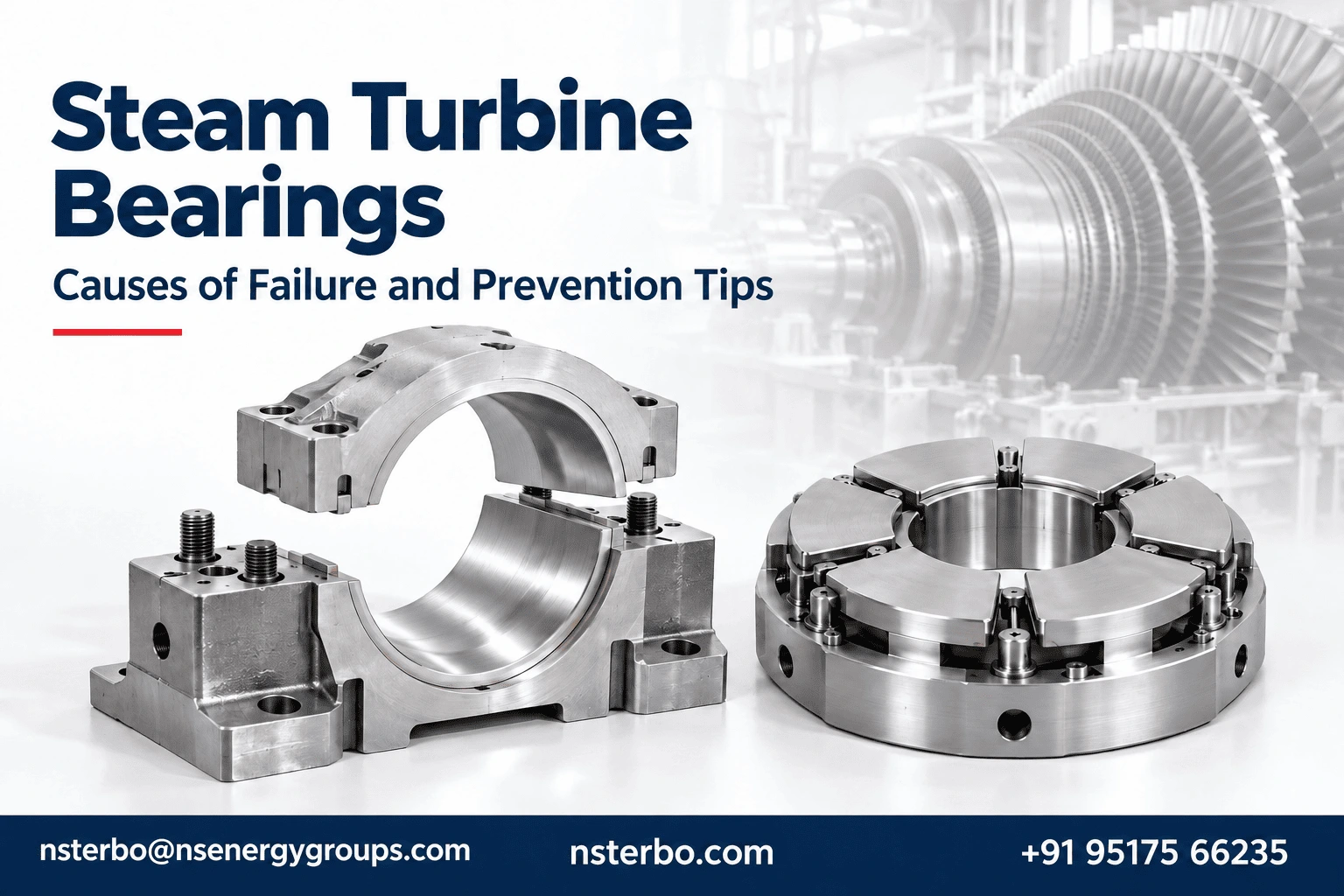
Steam Turbine Bearings: Causes of Failure and Prevention Tips
Learn what causes steam turbine bearings to fail, how to identify warning signs, and maintenance tips to prevent damage and improve reliability.
Steam turbine bearings support the rotor and help maintain its correct operating position. Their condition affects turbine vibration, shaft stability, and overall reliability. When a bearing develops damage, the consequences can include unexpected shutdowns, rotor contact, and costly repairs.
Bearing problems often involve more than a worn component. Poor lubrication, contaminated oil, incorrect clearances, and shaft misalignment can all contribute to failure. Replacing a damaged bearing without identifying the underlying cause can allow the same problem to return.
This article explains common steam turbine bearing failure causes, warning signs to monitor, and practical maintenance measures that help reduce avoidable downtime.
Understanding Steam Turbine Bearings
Many industrial steam turbines use fluid film bearings. During normal operation, a thin lubricating oil film separates the rotating shaft or thrust collar from the bearing surface.
Two important bearing types are journal bearings and thrust bearings.
Steam Turbine Journal Bearings
Journal bearings support radial loads and help control the rotor’s radial position. Their performance depends on suitable oil viscosity, adequate oil supply, correct bearing clearances, and proper shaft condition.
Damage to a journal bearing can affect rotor stability and contribute to increased vibration.
Steam Turbine Thrust Bearings
Thrust bearings carry axial loads and control the rotor’s axial position. They help maintain the required relationship between rotating and stationary turbine components.
Thrust bearing damage can allow excessive axial movement, potentially affecting internal clearances and causing contact between components.
Many turbine bearings have a white metal lining, commonly called Babbitt. The lining provides a suitable running surface, but its condition depends on the operating environment and lubrication system.
Common Steam Turbine Bearing Failure Causes
1. Inadequate Lubrication
Reliable steam turbine bearing lubrication requires the specified oil to reach the bearings at the correct operating conditions.
Restricted oil passages, pump problems, blocked filters, or incorrect oil viscosity can compromise lubrication. If the protective oil film becomes insufficient, contact between surfaces can cause rapid heating and damage.
Prevention tips:
Use the turbine manufacturer’s specified lubricant.
Monitor oil supply pressure, temperature, and flow where instrumentation is available.
Maintain filters and investigate abnormal differential pressure.
Check auxiliary and emergency oil systems according to approved procedures.
Confirm the required lubrication sequence before startup and during shutdown.
2. Lubricating Oil Contamination
Particles and moisture can enter the lubrication system through damaged seals, poor storage practices, maintenance activities, or equipment leaks.
Solid contamination can score bearing surfaces and shaft journals. Water can impair lubricant performance and contribute to corrosion. Bearing maintenance therefore requires attention to both the component and the cleanliness of the entire oil system.
Prevention tips:
Conduct oil analysis at intervals appropriate to operating conditions.
Track particle contamination, water content, and viscosity.
Use clean containers and suitable filtration during oil transfer.
Investigate possible sources of water ingress.
Keep reservoirs, breathers, and inspection openings properly maintained.
3. Excessive Bearing Temperature
High bearing temperature is a warning sign that requires investigation. Possible contributors include inadequate oil flow, high oil inlet temperature, excessive loading, and unsuitable operating clearances.
Excessive heat can weaken the Babbitt lining and lead to wiping, where bearing material becomes smeared or displaced. Bearing metal temperature monitoring helps identify this risk more directly than oil outlet temperature alone.
Prevention tips:
Trend bearing metal temperatures against established operating baselines.
Maintain oil coolers and their cooling water supply.
Investigate temperature changes alongside load, speed, and oil conditions.
Follow manufacturer-approved alarm and trip settings.
Verify sensor condition when readings appear inconsistent.
There is no single safe temperature limit suitable for every turbine bearing. Limits depend on bearing design, materials, instrumentation, and manufacturer requirements.
4. Shaft Misalignment
Incorrect shaft alignment can produce uneven bearing loading. Alignment may be affected by installation errors, thermal expansion, foundation movement, or stresses transferred from connected equipment.
Replacing bearings without correcting alignment problems can result in repeated damage.
Prevention tips:
Check alignment using approved methods and tolerances.
Account for specified thermal growth.
Inspect foundations, mounting bolts, and soft foot conditions.
Assess connected piping and equipment for unwanted forces.
Recheck alignment after major maintenance when required.
5. Incorrect Bearing Clearances
Bearing oil clearance influences oil film formation, leakage, temperature, and rotor behaviour.
Insufficient clearance can restrict the intended operating film and increase heating. Excessive clearance can alter rotor support characteristics and contribute to unstable operation.
Prevention tips:
Measure clearances during installation and planned inspections.
Compare measurements with the correct bearing drawings.
Inspect shaft journals for wear, taper, and surface damage.
Record measurements for future comparison.
Avoid applying generic clearance values to different turbine designs.
6. Excessive Vibration and Abnormal Loading
Rotor imbalance, misalignment, rubbing, looseness, and some operating conditions can increase vibration or change bearing loads.
Vibration alone does not identify the root cause. A useful assessment considers vibration patterns together with temperature, operating load, axial position, and maintenance history.
Prevention tips:
Maintain vibration trends under comparable operating conditions.
Investigate changes after startup, maintenance, or load adjustments.
Check for rotor imbalance and mechanical looseness where indicated.
Monitor axial position on turbines equipped for it.
Correct the identified cause before returning the machine to service.
7. Installation and Repair Errors
Incorrect assembly, blocked oil passages, unsuitable replacement parts, or poor repair quality can reduce bearing reliability.
Bearing shells, pads, locating features, and oil supply arrangements must match the specified design. A replacement that appears dimensionally similar may still have important differences.
Prevention tips:
Verify bearing identification and dimensional requirements.
Keep components clean during assembly.
Confirm oil holes and passages are correctly positioned.
Follow specified assembly and tightening procedures.
Use qualified personnel for inspection, repair, and installation.
Warning Signs of Steam Turbine Bearing Damage
Recognising changes early gives maintenance teams more time to investigate.
Common warning signs include:
Increasing bearing metal temperature.
A sudden change in turbine vibration.
Abnormal rotor axial movement.
Changes in lubricating oil pressure or flow.
Metallic debris detected during inspection or oil analysis.
Unusual noise or evidence of rubbing.
Scoring, cracking, or displaced Babbitt found during shutdown inspection.
These signs can have several causes. A photograph or a single instrument reading is usually insufficient to confirm the failure mechanism.
If protection limits are reached, follow the turbine’s approved response and shutdown procedures.
Steam Turbine Bearing Maintenance: A Practical Approach
Effective steam turbine bearing maintenance combines routine monitoring with planned inspection.
Establish Operating Baselines
Record normal temperatures, vibration, oil conditions, and axial position where available. Compare readings at similar speed and load to distinguish operating changes from developing faults.
Maintain the Complete Lubrication System
Inspect pumps, filters, coolers, reservoirs, control devices, and supply lines. A healthy bearing still depends on a reliable oil system.
Inspect Bearings During Planned Shutdowns
Examine bearing surfaces for scoring, wiping, cracking, and uneven contact patterns. Check journal condition and relevant clearances, and document findings before cleaning or repair.
Investigate Recurring Damage
Repeated bearing failure requires a wider review. Examine alignment, oil quality, bearing geometry, loading, and operating procedures before installing another replacement.
Keep Suitable Spare Parts Available
Maintain critical spares based on turbine importance and procurement lead time. Confirm bearing type, dimensions, material requirements, and interchangeability before ordering.
Should Steam Turbine Bearings Be Repaired or Replaced?
Some white metal bearings may be suitable for professional rebabbitting. Others require replacement because of damage to the backing, dimensional problems, or defects that make repair unsuitable.
A repair decision should consider inspection results, material condition, dimensional requirements, and the bearing manufacturer’s recommendations. Specialist assessment can also help determine whether the damage points to a wider lubrication or alignment problem.
After repair or replacement, correcting the original failure cause remains essential.
Plan Bearing Inspection with NS Terbo
NS Terbo supports industrial steam turbine maintenance and spare parts requirements. For bearing enquiries, share the turbine make and model, bearing identification, available drawings, damage photographs, and recent operating observations.
These details help define the inspection or spare parts requirement and support a more informed technical discussion.
Contact NS Terbo to discuss steam turbine bearings, maintenance, and replacement requirements.
Frequently Asked Questions
1. What causes steam turbine bearing failure?
Common causes include inadequate lubrication, contaminated oil, excessive temperature, shaft misalignment, incorrect clearances, and abnormal loading. Identifying the root cause requires operating data and physical inspection.
2. What are the common signs of steam turbine bearing damage?
Warning signs include rising bearing temperature, increased vibration, abnormal axial movement, and metallic debris. Inspection may reveal scoring, cracks, or smeared Babbitt.
3. How does poor lubrication affect steam turbine bearings?
Poor lubrication can prevent the bearing from maintaining an adequate protective oil film. This can increase friction and temperature, potentially causing surface damage or bearing failure.
4. What is the difference between journal and thrust bearings?
Journal bearings support radial loads and help control radial rotor position. Thrust bearings carry axial loads and control the rotor’s position along the shaft axis.
5. How can steam turbine bearing failures be prevented?
Maintain clean oil, verify lubrication system performance, monitor temperature and vibration, and check alignment and clearances during planned maintenance. Investigate abnormal trends promptly and follow the turbine manufacturer’s operating requirements.