6/16/2026
Steam Turbine Casting Thickness: Cost vs Reliability
Learn how reducing Steam Turbine Casting Thickness affects turbine cost, performance, durability, and reliability. Explore engineering considerations, risks, an
Introduction
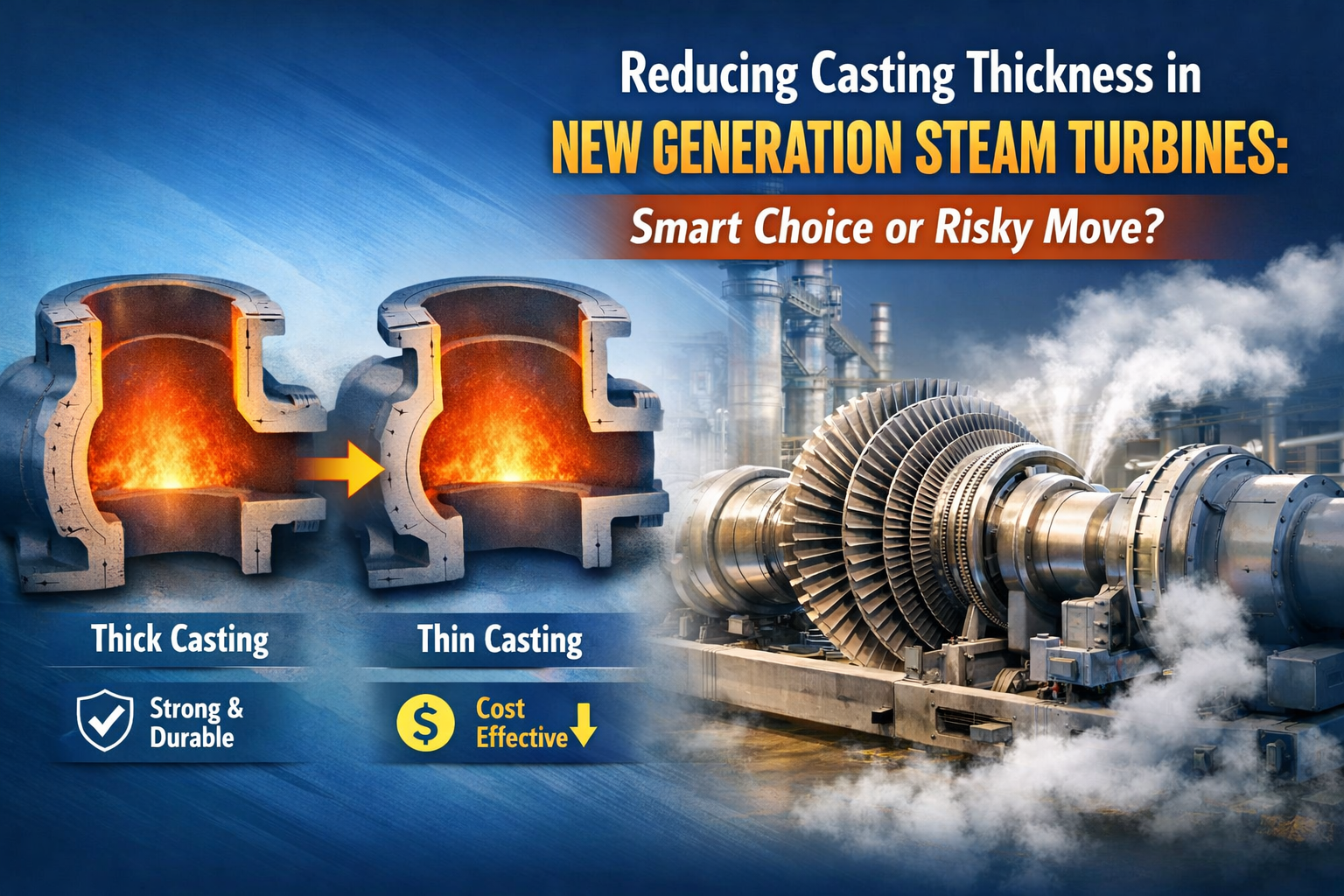
The global steam turbine industry is constantly evolving to meet demands for higher efficiency, lower production costs, and faster project delivery. In recent years, many manufacturers have focused on reducing manufacturing expenses by optimizing material usage in critical components. One notable trend is the reduction of Steam Turbine Casting Thickness in turbine casings and structural components.
While thinner castings can lower production costs and reduce overall turbine weight, this approach raises important questions about durability, reliability, operational life, and long-term performance. For industries relying on continuous power generation and process steam applications, understanding the impact of reduced casting thickness is crucial before investing in a new steam turbine.
This article explores the engineering implications, benefits, risks, and best practices associated with reducing casting thickness in modern steam turbines.
Also Read: Why Are the Front Row Blades Smaller Than Exhaust Stage Blades in a Steam Turbine?
What Is Steam Turbine Casting Thickness?
Steam Turbine Casting Thickness refers to the wall thickness of cast components used in steam turbine construction. These castings include:
Turbine casing
Bearing housing
Valve bodies
Steam chest
End covers
Structural supports
The thickness of these components directly affects:
Mechanical strength
Pressure handling capability
Thermal stability
Vibration resistance
Service life
Traditionally, turbine manufacturers designed castings with higher safety margins to ensure reliable operation under extreme temperatures and pressures.
Why Are Manufacturers Reducing Steam Turbine Casting Thickness?
The primary objective behind reducing Steam Turbine Casting thickness is cost optimization.
Key Reasons Include:
1. Reduced Material Consumption
Less metal means lower raw material costs, especially when using expensive alloy steels and special cast irons.
2. Lower Manufacturing Costs
Thinner castings require:
Less molten metal
Reduced machining time
Lower transportation costs
Faster production cycles
3. Weight Reduction
A lighter turbine is easier to transport, install, and handle during commissioning.
4. Competitive Pricing
Manufacturers can offer lower-priced turbines to gain market share in highly competitive industries.
Impact of Reduced Turbine Casing Thickness
While cost savings may seem attractive, reducing Turbine Casing Thickness can have significant engineering consequences.
Structural Strength Reduction
Steam turbine casings operate under:
High pressure
Elevated temperatures
Continuous thermal cycling
Thinner walls can reduce the component's ability to withstand mechanical stress over long operating periods.
Thermal Distortion Risks
Steam turbines experience frequent heating and cooling cycles.
Reduced thickness may lead to:
Uneven thermal expansion
Distortion of turbine casing
Alignment issues
Increased maintenance requirements
Vibration Sensitivity
A thinner casing may possess lower rigidity, making it more susceptible to:
Mechanical vibrations
Rotor instability
Fatigue failure
These issues can significantly impact turbine efficiency and lifespan.
Also Read: How Steam Turbines Reduce Energy Costs in Textile Plants
Relationship Between Casting Thickness and Steam Turbine Reliability
One of the most important considerations is Steam Turbine Reliability.
Industrial facilities expect turbines to operate continuously for:
Power generation
Cogeneration plants
Sugar mills
Paper mills
Refineries
Chemical plants
Reducing casting thickness without proper engineering validation can result in:
Increased Risk of Cracking
Repeated thermal stress can cause:
Surface cracks
Stress fractures
Casting failures
Reduced Operational Life
Components designed with minimal safety margins may wear faster under demanding operating conditions.
Higher Maintenance Costs
Initial savings from purchasing a lower-cost turbine can be offset by:
Frequent repairs
Unexpected shutdowns
Spare part replacement
Production losses
Modern Engineering Approaches in Steam Turbine Manufacturing
Advanced Steam Turbine Manufacturing techniques allow manufacturers to optimize casting designs without compromising safety.
Finite Element Analysis (FEA)
Modern engineering software helps analyze:
Stress distribution
Thermal expansion
Pressure loading
Fatigue behavior
This enables manufacturers to identify areas where thickness can be safely reduced.
Improved Casting Materials
Advanced alloys provide:
Higher strength
Better thermal resistance
Improved corrosion protection
These materials help compensate for some reduction in casting thickness.
Precision Manufacturing
Modern CNC machining and quality control systems improve dimensional accuracy and structural consistency.
How Industrial Steam Turbine Components Are Affected
Many Industrial Steam Turbine Components depend on adequate casting thickness for long-term reliability.
Turbine Casing
Protects internal rotating parts and contains steam pressure.
Bearing Housing
Supports rotor alignment and minimizes vibration.
Steam Chest
Handles high-pressure steam before entry into turbine stages.
Valve Body Castings
Control steam flow and require structural integrity under fluctuating pressures.
Reducing thickness in these components must be carefully evaluated to avoid operational risks.
Advantages of Optimized Casting Thickness
When properly engineered, optimized casting thickness can offer several benefits:
Lower Capital Cost
Reduced material usage lowers equipment cost.
Faster Manufacturing
Shorter casting and machining cycles improve delivery times.
Improved Transportation Efficiency
Lighter equipment reduces shipping and installation expenses.
Better Resource Utilization
Optimized designs contribute to sustainable manufacturing practices.
Potential Risks of Excessive Thickness Reduction
Over-optimization can create serious operational challenges.
Common Risks Include:
Premature component failure
Excessive vibration
Thermal deformation
Steam leakage
Reduced turbine efficiency
Higher maintenance frequency
Increased lifecycle cost
Therefore, buyers should evaluate not only the purchase price but also the turbine's expected operating life and reliability.
What Buyers Should Consider Before Purchasing
Before selecting a steam turbine, plant operators should review:
Design Standards
Ensure compliance with recognized engineering standards.
Material Specifications
Verify casting material grades and certifications.
Wall Thickness Data
Request detailed drawings and design documentation.
Quality Assurance Procedures
Review:
Non-destructive testing reports
Hydrostatic testing records
Material certificates
Manufacturer Experience
Choose companies with proven expertise in Steam Turbine Manufacturing and long-term field performance.
Why Reliability Should Never Be Sacrificed for Cost
A steam turbine is a long-term industrial asset. While reducing Steam Turbine Casting Thickness can provide short-term cost advantages, reliability remains the most important factor for industrial operations.
A well-designed turbine should balance:
Cost efficiency
Structural strength
Thermal stability
Operational safety
Long service life
Investing in robust and properly engineered Industrial Steam Turbine Components often delivers better lifecycle value than selecting equipment based solely on initial purchase price.
Conclusion
The trend of reducing Steam Turbine Casting Thickness in new-generation turbines reflects the industry's effort to improve cost competitiveness and manufacturing efficiency. However, excessive reduction in Turbine Casing Thickness can negatively impact Steam Turbine Reliability, structural integrity, and long-term operational performance.
Modern engineering tools and advanced materials make it possible to optimize Steam Turbine Casting designs safely, but manufacturers must maintain adequate safety margins and quality standards. For plant owners and engineers, evaluating the complete lifecycle performance of a turbine is far more important than focusing solely on upfront cost savings.
A reliable steam turbine should be engineered not only for today's budget requirements but also for decades of dependable operation.