9/1/2026
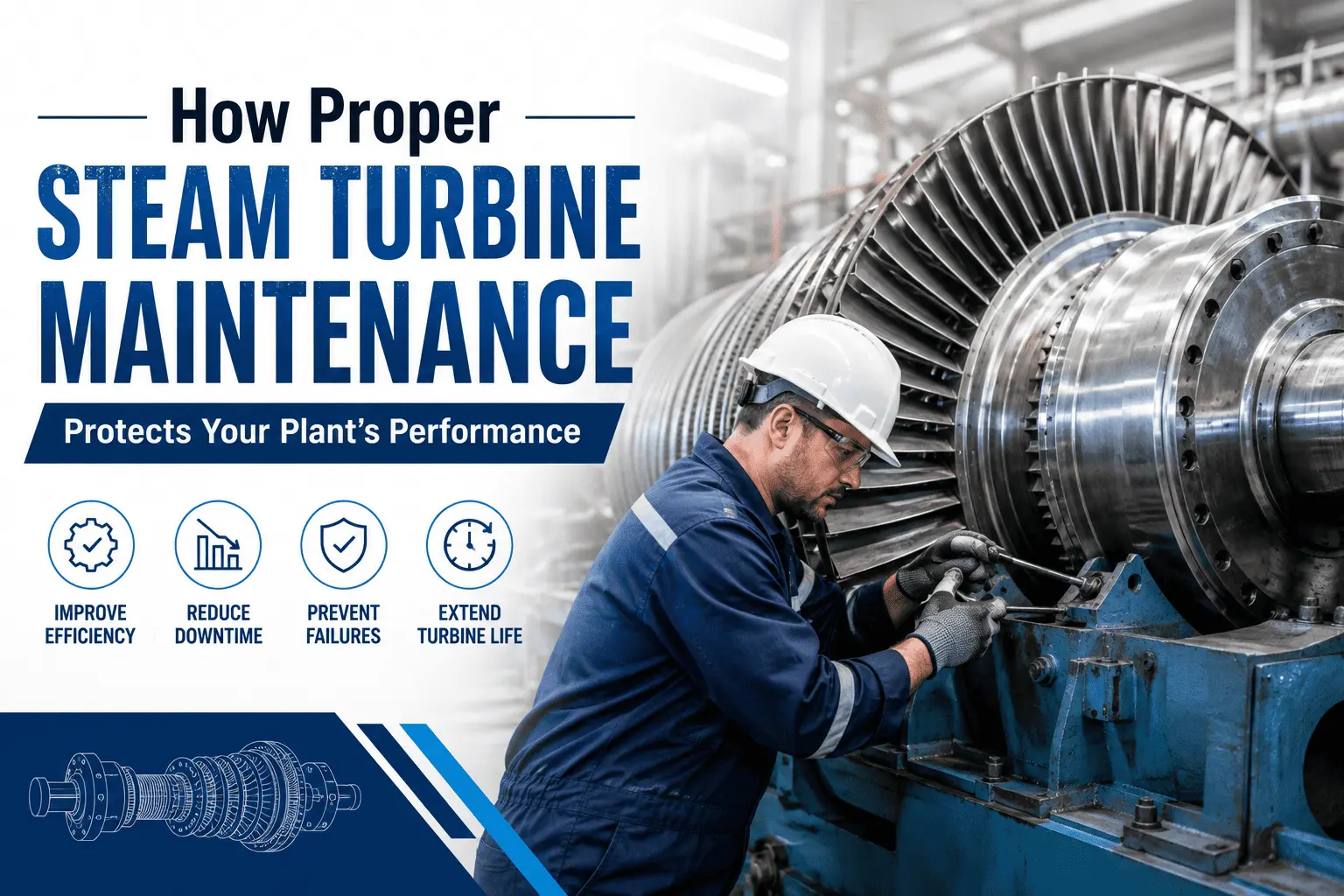
How Proper Steam Turbine Maintenance Protects Your Plant’s Performance
Learn how steam turbine maintenance improves efficiency, reduces downtime, prevents failures, and extends turbine service life.
A steam turbine is one of the most critical pieces of rotating equipment in many industrial power and process plants. It converts steam energy into mechanical power and supports reliable electricity generation, process steam supply, and overall plant productivity. However, even a high-quality turbine can experience performance losses if it is not inspected and maintained properly.
Steam turbine maintenance is therefore not simply a routine engineering activity. It is an important part of protecting turbine efficiency, reducing unexpected downtime, extending equipment life, and maintaining safe plant operations.
Also Read: Steam Turbine Overhauling
Why Is Steam Turbine Maintenance Important?
Steam turbines operate under demanding conditions involving high temperatures, pressure, speed, and continuous mechanical loads. Over time, components such as bearings, seals, blades, valves, rotors, and casings can experience wear or performance deterioration.
Regular maintenance helps identify these issues before they develop into major failures.
An effective maintenance program can help plants:
Improve turbine operating efficiency
Reduce unplanned shutdowns
Identify component wear at an early stage
Minimize steam leakage
Extend turbine service life
Improve operational reliability
Reduce expensive emergency repairs
Maintain consistent power and process steam output
For plants where continuous operation is essential, preventive maintenance can make a significant difference to overall productivity.
Key Areas Covered in Steam Turbine Maintenance
A comprehensive maintenance program should address both the mechanical and operational condition of the turbine. The exact maintenance requirements depend on turbine design, operating hours, load conditions, steam quality, and manufacturer recommendations.
1. Turbine Inspection
Regular steam turbine inspection helps engineers evaluate the condition of critical components. Visual inspections, vibration monitoring, dimensional checks, and other diagnostic techniques can reveal early signs of deterioration.
Important areas may include:
Rotor and shaft condition
Turbine blades
Bearings
Sealing systems
Casing
Couplings
Valves
Lubrication system
Governor and control systems
Early identification of abnormal conditions can prevent minor problems from becoming major equipment failures.
2. Bearing and Lubrication System Checks
Bearings support the rotating shaft and must operate within acceptable temperature and vibration limits. Poor lubrication, contamination, excessive wear, or incorrect clearances can affect turbine performance.
During maintenance, engineers typically examine bearing condition, lubrication quality, oil pressure, temperature, and associated systems.
Proper lubrication reduces friction and helps protect critical rotating components.
3. Checking Blades and Rotor Condition
The turbine rotor and blades are exposed to high-speed rotation and high-energy steam flow. Deposits, erosion, corrosion, imbalance, or mechanical damage can affect performance.
During major inspections, turbine blades may be examined for:
Erosion
Cracks
Deposits
Corrosion
Deformation
Excessive wear
Rotor alignment and balance should also be evaluated where required.
4. Steam Leakage and Seal Inspection
Steam leakage can reduce turbine efficiency and increase energy losses. Sealing systems, including labyrinth seals, should therefore be inspected regularly.
Damaged or worn seals can allow steam to bypass the intended flow path. Addressing these issues during maintenance can help improve turbine performance and reduce unnecessary steam consumption.
5. Vibration and Performance Monitoring
Changes in vibration, bearing temperature, steam consumption, power output, or other operating parameters can indicate developing problems.
Continuous or periodic monitoring allows maintenance teams to compare current operating conditions with historical performance and identify unusual trends.
This approach is particularly useful for steam turbine preventive maintenance, as it allows action to be taken before equipment condition becomes critical.
Also Read: Refurbished Steam Turbines
Steam Turbine Preventive Maintenance vs. Corrective Maintenance
Corrective maintenance generally takes place after a problem has already occurred. While it is sometimes unavoidable, relying entirely on corrective maintenance can result in unexpected downtime and higher repair costs.
Preventive maintenance takes a more proactive approach.
A planned maintenance program may include:
Routine inspections
Lubrication checks
Vibration monitoring
Seal inspection
Alignment checks
Valve inspection
Performance testing
Scheduled shutdown inspections
Major turbine overhauling when required
The objective is to detect deterioration early and maintain the turbine in reliable operating condition.
When Is Steam Turbine Overhauling Required?
Routine maintenance cannot prevent every form of deterioration. After a certain number of operating hours or when inspection results indicate significant wear, steam turbine overhauling may be required.
A major overhaul can involve detailed inspection and servicing of critical turbine components. Depending on the turbine condition, work may include rotor inspection, blade examination, bearing servicing, seal replacement, alignment checks, casing inspection, and other component-level repairs.
The overhaul schedule should be based on operating history, manufacturer recommendations, inspection findings, and actual equipment condition rather than following a fixed schedule alone.
How Maintenance Improves Turbine Efficiency
Turbine efficiency can gradually decline because of steam leakage, deposits, blade deterioration, seal wear, incorrect clearances, mechanical losses, and other operating issues.
Effective maintenance helps restore the turbine closer to its intended operating condition.
For example, identifying worn seals can help reduce steam leakage, while correcting alignment or mechanical issues can reduce unnecessary losses. Cleaning deposits from appropriate components can also support better steam flow.
This makes steam turbine efficiency improvement an important outcome of a well-planned maintenance program.
Choosing the Right Steam Turbine Maintenance Services
Industrial plants often require specialized expertise because steam turbines involve complex mechanical systems and precision components.
When selecting steam turbine maintenance services, companies should consider:
Experience with similar turbine models
Technical expertise in rotating equipment
Inspection and diagnostic capabilities
Rotor and component repair facilities
Availability of replacement components
Reverse engineering capabilities for obsolete parts
Shutdown and overhaul support
Testing and quality-control procedures
Technical after-sales support
The right maintenance partner should be able to understand the turbine's operating history and provide solutions based on its actual condition.
Also Read: The Maintenance Mistake That Reduces Steam Turbine Life
Common Signs That a Steam Turbine Needs Attention
Plant operators should not ignore changes in turbine performance. Some common warning signs include:
Increased vibration
Abnormal bearing temperature
Reduced power output
Increased steam consumption
Unusual noise
Oil contamination
Steam leakage
Frequent control-valve problems
Declining turbine efficiency
Unexpected changes in operating parameters
These signs do not always indicate the same problem, but they should be investigated by qualified maintenance personnel.
Conclusion: Steam Turbine Maintenance
Proper steam turbine maintenance plays an essential role in protecting plant performance and equipment reliability. Regular inspection, preventive maintenance, performance monitoring, timely repairs, and planned steam turbine overhauling can help reduce downtime and extend the operating life of critical turbine components.
Instead of waiting for a major failure, industrial plants can benefit from a proactive maintenance strategy that identifies problems early and keeps the turbine operating efficiently.
For industries that depend on continuous power generation or process steam, investing in professional steam turbine maintenance services is ultimately an investment in long-term plant reliability, efficiency, and productivity.
FAQs: Steam Turbine Maintenance
1. What is steam turbine maintenance?
Steam turbine maintenance involves the inspection, servicing, repair, and monitoring of turbine components to maintain safe, reliable, and efficient operation.
2. How often should a steam turbine be maintained?
Maintenance frequency depends on the turbine design, operating hours, load, steam conditions, manufacturer recommendations, and equipment condition. Routine inspections should be combined with planned major maintenance.
3. What is included in steam turbine inspection?
Inspection can include checking the rotor, blades, bearings, seals, casing, valves, lubrication system, vibration levels, and other critical components.
4. When is steam turbine overhauling necessary?
Overhauling may be required after significant operating hours, during scheduled major shutdowns, or when inspection reveals wear, damage, efficiency loss, or other serious performance issues.
5. Can proper maintenance improve steam turbine efficiency?
Yes. Identifying and correcting issues such as steam leakage, worn seals, deposits, alignment problems, and component deterioration can help improve turbine efficiency and reduce energy losses.