6/20/2026
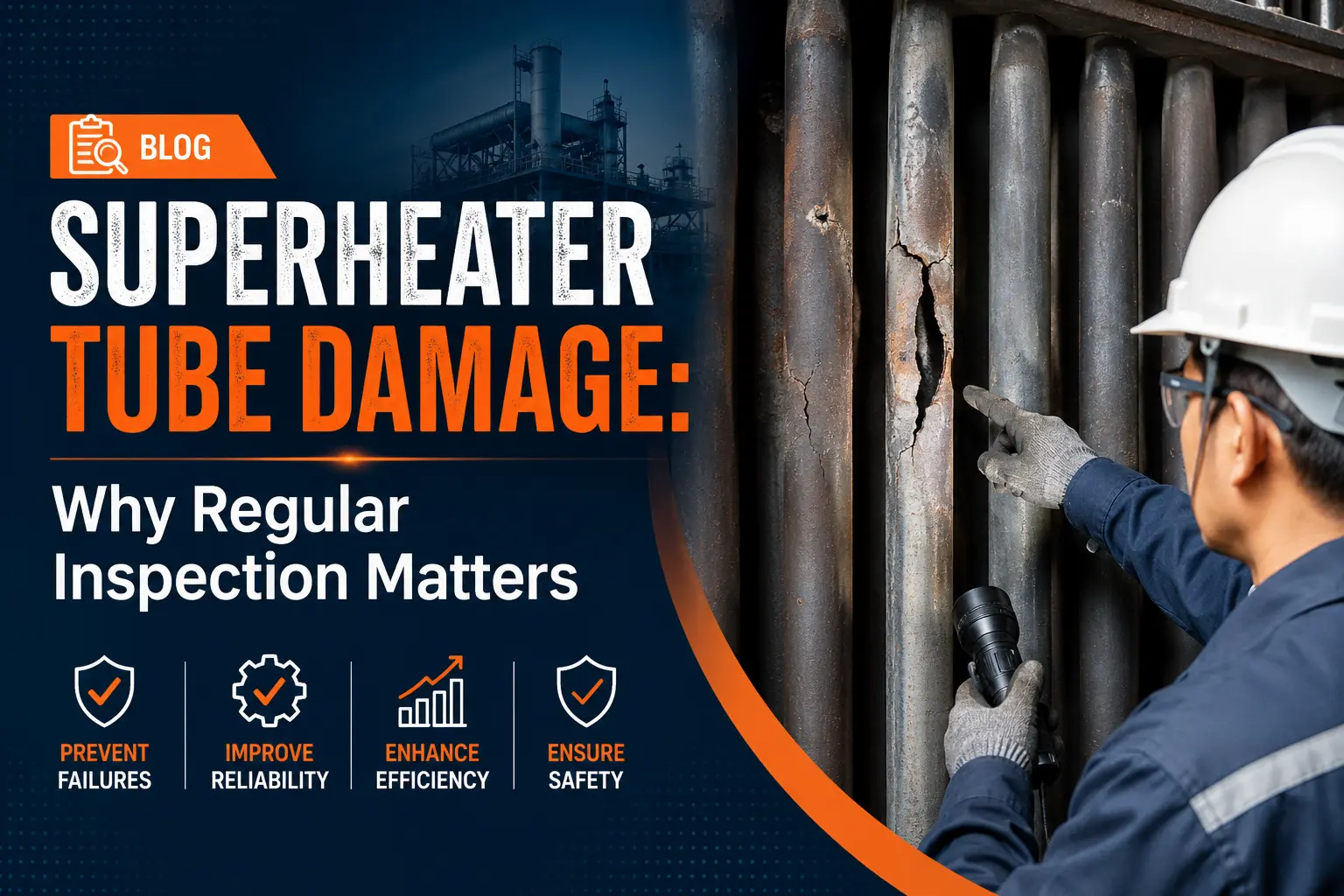
Superheater Tube Damage: Why Regular Inspection Matters
Learn the causes of Superheater Tube Damage, including corrosion and erosion, and why regular inspection helps prevent failures and downtime.
Introduction
In industrial boilers and power generation systems, superheater tubes play a critical role in converting saturated steam into superheated steam, ensuring higher efficiency and improved process performance. However, continuous exposure to extreme temperatures, pressure fluctuations, corrosive gases, and abrasive particles can lead to Superheater Tube Damage, resulting in unplanned shutdowns, costly repairs, and production losses.
Regular inspection and preventive maintenance are essential to identify potential issues before they develop into major failures. Understanding the causes and consequences of tube damage can help plant operators improve reliability, safety, and operational efficiency.
Also Read: How Labyrinth Seals Improve Steam Turbine Efficiency and Reliability
What Is Superheater Tube Damage?
Superheater Tube Damage refers to the deterioration or failure of tubes located in the superheater section of a boiler. These tubes are exposed to high-temperature steam and combustion gases, making them vulnerable to various forms of wear and degradation.
If left undetected, damage can lead to steam leaks, reduced thermal efficiency, equipment downtime, and safety hazards.
Common Causes of Superheater Tube Damage
1. Superheater Tube Corrosion
One of the leading causes of tube failure is Superheater Tube Corrosion. Corrosion occurs when metal surfaces react with corrosive compounds present in fuel, flue gases, or steam.
Common types include:
High-temperature oxidation
Sulfidation corrosion
Acidic corrosion from fuel contaminants
Internal steam-side corrosion
Over time, corrosion reduces tube wall thickness, weakening the structure and increasing the risk of rupture.
2. Superheater Tube Erosion
Superheater Tube Erosion occurs when fly ash, dust particles, or other abrasive materials continuously strike the tube surface at high velocities.
Key factors contributing to erosion include:
High flue gas velocity
Improper burner operation
Excessive ash content in fuel
Poor boiler design or flow distribution
Erosion gradually wears away the tube material, making it susceptible to leaks and failures.
3. Overheating
Excessive temperatures can cause metal creep and loss of mechanical strength. Prolonged overheating may result from:
Restricted steam flow
Deposits on tube surfaces
Improper boiler operation
Malfunctioning control systems
Overheated tubes often exhibit bulging, thinning, and eventual rupture.
4. Thermal Fatigue
Frequent startup and shutdown cycles subject tubes to repeated expansion and contraction. Over time, this creates stress cracks that can develop into serious failures.
5. Deposit Formation
Accumulation of ash, slag, and scale acts as an insulating layer, reducing heat transfer and increasing tube metal temperatures. This accelerates corrosion, erosion, and overheating damage.
Also Read: Steam Turbine Casting Thickness: Cost vs Reliability
The Impact of Boiler Superheater Tube Failure
A Boiler Superheater Tube Failure can have severe operational and financial consequences, including:
Unplanned plant shutdowns
Production losses
Increased maintenance costs
Reduced boiler efficiency
Safety risks for personnel
Damage to surrounding equipment
In critical industries such as power plants, refineries, fertilizer plants, and manufacturing facilities, even a single tube failure can result in significant downtime and revenue loss.
Why Superheater Tube Inspection Is Essential
Regular Superheater Tube Inspection is the most effective way to detect damage before it causes failure.
Inspection programs help identify:
Wall thinning
Corrosion hotspots
Erosion-prone areas
Cracks and stress fractures
Deposits and blockages
Overheating indicators
By detecting these issues early, maintenance teams can plan repairs during scheduled shutdowns rather than responding to emergency breakdowns.
Inspection Methods Used for Superheater Tubes
Visual Inspection
A basic yet valuable method for identifying visible signs of damage such as cracks, deformation, scaling, and discoloration.
Ultrasonic Thickness Testing (UT)
UT measures remaining tube wall thickness and helps identify areas affected by corrosion and erosion.
Non-Destructive Testing (NDT)
Advanced NDT techniques provide accurate assessments without damaging the equipment.
Common methods include:
Ultrasonic Testing (UT)
Magnetic Particle Testing (MT)
Dye Penetrant Testing (PT)
Radiographic Testing (RT)
Eddy Current Testing (ECT)
Metallurgical Analysis
Used to evaluate material degradation, creep damage, and high-temperature failures.
Benefits of Regular Inspection
Implementing a proactive inspection strategy offers several advantages:
Improved Reliability
Early detection reduces the likelihood of unexpected failures.
Reduced Maintenance Costs
Preventive maintenance is significantly less expensive than emergency repairs and forced outages.
Enhanced Safety
Identifying potential failure points protects personnel and equipment.
Increased Equipment Life
Regular monitoring helps maximize the service life of boiler components.
Better Operational Efficiency
Healthy superheater tubes ensure optimal heat transfer and boiler performance.
Best Practices for Preventing Boiler Tube Damage
To minimize Boiler Tube Damage, plant operators should:
Conduct periodic inspections and thickness measurements
Monitor tube metal temperatures
Maintain proper combustion conditions
Control fuel quality and ash content
Remove deposits during planned shutdowns
Implement predictive maintenance programs
Analyze failure trends and recurring issues
A well-planned maintenance strategy can significantly reduce the risk of unexpected failures and improve plant availability.
Conclusion
Superheater Tube Damage remains one of the most common causes of boiler reliability issues across industrial facilities. Factors such as Superheater Tube Corrosion, Superheater Tube Erosion, overheating, and thermal fatigue can gradually weaken tubes and lead to costly Boiler Superheater Tube Failure.
Regular Superheater Tube Inspection is a critical component of any preventive maintenance program. By identifying early signs of degradation and addressing them before failure occurs, facilities can improve safety, reduce downtime, lower maintenance costs, and maximize boiler performance.
Investing in routine inspections today can prevent major operational disruptions tomorrow.