10/19/2026
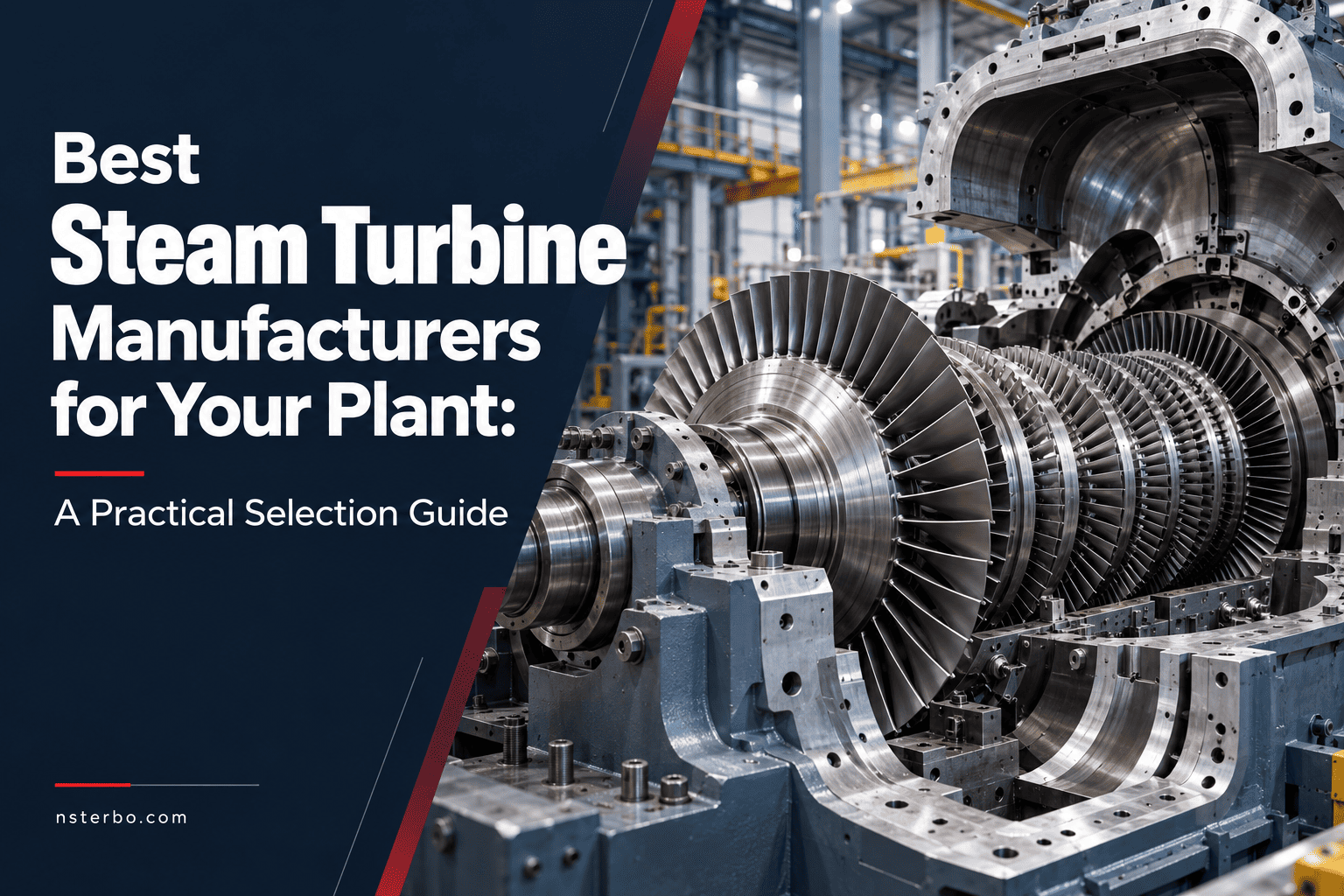
Best Steam Turbine Manufacturers for Your Plant: A Practical Selection Guide
Choose the best steam turbine manufacturers for your plant. Compare turbine types, efficiency, steam requirements, lifecycle costs and after-sales support.
Choosing the best steam turbine manufacturers requires more than comparing prices and power ratings. Your turbine must match the plant’s steam conditions, production requirements and operating schedule. The supplier must also provide clear performance commitments and dependable technical support.
An attractive quotation may leave out installation, auxiliary equipment or essential services. A machine selected for unsuitable operating conditions may struggle to deliver the expected output.
This practical guide explains how to evaluate steam turbine manufacturers and select a solution that fits your plant.
1. Start with Your Plant’s Operating Requirements
Before contacting steam turbine suppliers, prepare a clear technical enquiry. Accurate operating data helps manufacturers recommend suitable equipment and allows you to compare proposals fairly.
Your enquiry should include:
Application: Electricity generation, mechanical drive or combined heat and power.
Inlet steam pressure: Minimum, normal and maximum pressure at the turbine inlet.
Inlet steam temperature: Normal temperature and expected variations.
Available steam flow: Minimum, normal and maximum flow.
Exhaust conditions: Required exhaust pressure or condenser conditions.
Process steam demand: Steam quantity and pressure needed for production.
Power requirement: Expected electrical output or shaft power.
Operating pattern: Annual operating hours, load variations and startup frequency.
Site conditions: Available space, cooling water and electrical infrastructure.
Specify units consistently and identify whether pressure values are gauge or absolute.
Use conditions expected at the turbine inlet rather than assuming that boiler outlet readings will remain unchanged after steam passes through the piping system.
2. Choose the Right Steam Turbine Configuration
The best steam turbine manufacturers should explain how their proposed configuration matches your plant’s heat and power requirements.
Back Pressure Steam Turbines
A back pressure steam turbine generates power while delivering exhaust steam at a pressure suitable for downstream heating or production processes.
It is worth evaluating when your facility has a dependable requirement for both power and process steam.
Condensing Steam Turbines
A condensing steam turbine exhausts into a condenser operating under vacuum. This arrangement is commonly used when electricity generation is the main objective.
The evaluation must include the condenser, cooling system, water availability and associated auxiliary equipment.
Extraction Steam Turbines
An extraction steam turbine supplies steam from intermediate stages for process use or heating. The proposal should specify extraction pressures, flow requirements and the degree of control available.
These configurations serve different operating needs. Selection should follow the plant’s steam balance and energy demand.
3. Compare Performance at Actual Plant Conditions
A turbine’s rated capacity does not establish the output it will deliver at your site.
Ask every manufacturer to calculate performance using the same steam inlet conditions, flow rates and exhaust requirements. Request information for normal operation and the reduced loads your plant expects to use.
Review:
Guaranteed electrical output or shaft power.
Specific steam consumption.
Performance at different operating loads.
Auxiliary power consumption.
Gearbox and generator losses, where applicable.
Conditions and tolerances attached to performance guarantees.
Keep the comparison basis consistent. Turbine shaft power, generator output and net electrical output represent different measurement points.
If one quotation includes auxiliary consumption and another excludes it, the figures need adjustment before comparison.
4. Ask What the Efficiency Figures Mean
Steam turbine efficiency is an important selection factor, but a percentage without a clear definition has limited value.
Ask suppliers to identify whether they are referring to turbine isentropic efficiency, electrical conversion efficiency or overall combined heat and power efficiency.
Also request the operating conditions used for each calculation.
A plant that uses exhaust steam for production must assess useful heat delivery alongside electricity generation. A power-focused installation needs a different assessment.
Evaluate performance across your expected operating range instead of relying on a single full-load figure.
5. Review Engineering Quality and Manufacturing Records
When assessing industrial steam turbine manufacturers, request documentation that supports their quality claims.
Relevant records may include:
Material specifications and traceability.
Rotor balancing reports.
Inspection and test plans.
Non-destructive examination reports.
Dimensional inspection records.
Factory test procedures.
Operating and maintenance manuals.
Clarify which inspections and tests are included in the quotation. Ask whether your representatives can witness agreed tests and how acceptance will be documented.
Reference installations also matter. Look for equipment operating under conditions similar to your proposed application.
6. Evaluate Controls and Plant Integration
A turbine must work with your existing steam system, electrical network and operating procedures.
Discuss the proposed control and protection arrangements during technical evaluation.
Key subjects include:
Speed and load governing.
Overspeed protection.
Lubrication system monitoring.
Bearing temperature and vibration monitoring.
Emergency shutdown functions.
Process steam pressure control.
Generator synchronisation, where applicable.
Interfaces with existing plant controls.
If island operation is required, state this at the enquiry stage. Ask the supplier to explain the complete arrangement needed to support it.
Clearly assign responsibility for configuration, installation, testing and commissioning.
7. Check Maintenance and Spare Parts Support
Steam turbine maintenance and service support should influence the purchase decision from the beginning.
Before selecting a supplier, ask:
Which spare parts should the plant hold?
What are the lead times for critical components?
Who will provide field service?
What maintenance intervals are recommended?
Is operator training included?
What support is available after the warranty period?
Discuss parts such as bearings, seals, blades, control valves and lubrication equipment.
Ask for written service commitments and a recommended spare parts list. These details help your maintenance team plan resources and shutdown work.
8. Compare Total Cost of Ownership
The lowest equipment price may not deliver the lowest lifetime cost.
A practical commercial evaluation should consider:
Equipment and Auxiliary Systems
Confirm whether the quotation includes the turbine, gearbox, generator, controls, lubrication system and other required auxiliaries.
Installation and Commissioning
Account for foundations, piping, cabling, lifting, alignment, site supervision and acceptance testing.
Operating Costs
Compare expected steam consumption and auxiliary electricity use at realistic operating loads.
Maintenance Costs
Include routine inspections, consumables, spare parts and major overhaul requirements.
Downtime and Long-Term Support
Consider service response, component lead times and the production impact of equipment unavailability.
Ask each supplier to identify exclusions clearly. A complete scope makes commercial comparisons more reliable.
9. Verify References and Contractual Commitments
When shortlisting steam turbine manufacturers in India or overseas, request references from comparable installations.
Where practical, speak with plant operating teams about:
Commissioning experience.
Performance under normal plant conditions.
Maintenance requirements.
Spare parts availability.
Technical service response.
The final agreement should define the supply scope, guaranteed performance, inspection procedures, delivery responsibilities, warranty terms and commissioning support.
Specific written commitments give your team a clear basis for project execution and acceptance.
Common Mistakes to Avoid During Steam Turbine Selection
Procurement problems often begin with incomplete data or inconsistent comparisons.
Avoid these mistakes:
Selecting equipment only by its MW rating.
Overlooking variations in steam availability.
Ignoring process steam requirements.
Comparing output figures measured at different points.
Leaving cooling and auxiliary systems outside the assessment.
Assuming every quotation includes installation and commissioning.
Finalising the order before clarifying spare parts and service support.
A detailed enquiry and a documented technical comparison can address these issues before purchase.
How to Shortlist the Best Steam Turbine Manufacturers
Start by identifying suppliers that can meet your operating requirements. Then compare their proposals using the same technical and commercial criteria.
Prioritise:
Suitability for your steam conditions and application.
Clear performance guarantees.
Relevant engineering and manufacturing records.
Experience with comparable installations.
Complete and transparent project scope.
Maintenance and spare parts support.
Realistic lifecycle economics.
The right supplier should explain the proposed solution, document its operating limits and answer technical questions clearly.
For an existing installation, assess whether refurbishment or an upgrade can meet your requirements before committing to replacement.
Discuss Your Steam Turbine Requirements with NS Terbo
A useful technical discussion starts with accurate plant data.
Prepare your steam conditions, turbine details, operating history and performance goals before seeking support.
Contact NS Terbo to discuss steam turbine services, spare parts and refurbishment requirements for your plant.
Visit www.nsterbo.com.
FAQs: Best Steam Turbine Manufacturers
How do I choose the best steam turbine manufacturers?
Evaluate manufacturers against your plant’s steam conditions, power demand and operating schedule. Compare performance guarantees, engineering records, references, supply scope and after-sales support.
What information is required for a steam turbine quotation?
Provide inlet steam pressure and temperature, available steam flow, exhaust requirements, process steam demand, expected power output and operating hours. Include site, cooling and electrical requirements.
What is the difference between back pressure and condensing steam turbines?
A back pressure turbine delivers exhaust steam for downstream use at a specified pressure. A condensing turbine exhausts into a condenser under vacuum and is commonly used for electricity-focused applications.
Can I compare steam turbines by rated capacity alone?
No. Compare output at identical steam conditions and clearly defined measurement points. Also assess steam consumption, auxiliary loads, equipment scope and guarantees.
Why is after-sales support important?
Technical assistance, documentation and spare parts availability help the plant plan maintenance and respond to equipment problems. Clarify these arrangements before purchasing.
Should I refurbish or replace an existing steam turbine?
The decision depends on equipment condition, operating history, required performance and total project cost. A technical assessment should determine whether refurbishment can meet the intended duty.